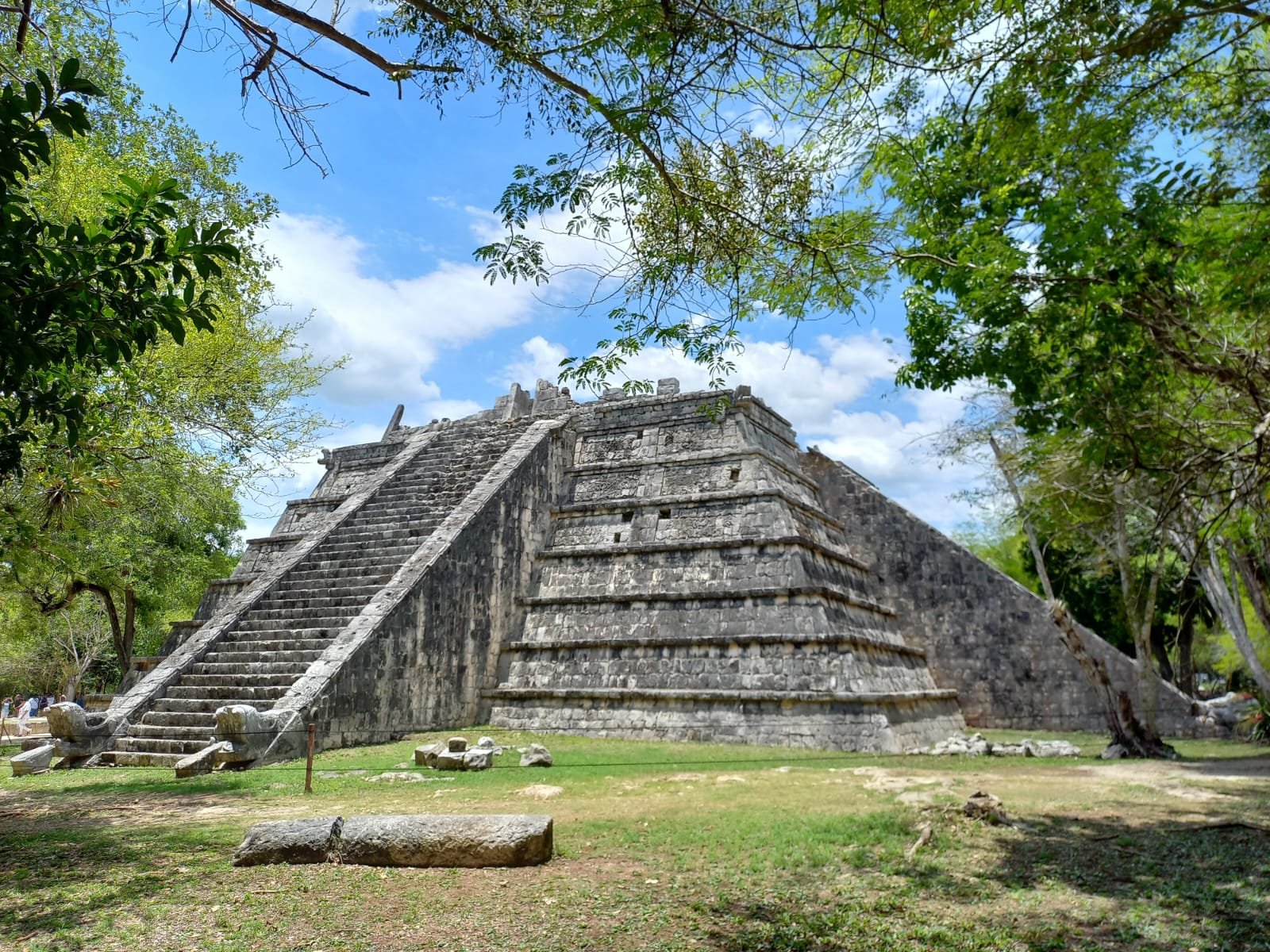
Mérida, Yucatán — The sky will align again with Maya wisdom. From May 22 to 24, the impressive phenomenon of the sun at zenith — when the star is exactly overhead and people, buildings, and vertical objects momentarily cast no shadow — will be observable at several archaeological sites in Yucatán.
The archaeoastronomical event will take place at the pre-Hispanic cities of Acanceh, Aké, Chichén Itzá, Dzibilchaltún, Oxkintok, and Uxmal, demonstrating the importance of zenith observatories in pre-Columbian urban centers, which gave greater chronological precision to their calendars.
Starting Friday, May 22, Yucatán will enter a 57-day period of maximum solar illumination, peaking on June 21 with the summer solstice and ending on July 20 with the second passage of the sun at zenith.
The phenomena will be observed primarily at the Temple of the Seven Dolls in Dzibilchaltún, the Zenith Observatory of Acanceh, El Osario at Chichén Itzá, the Temple of the Pillars at Aké, and the false arch of the Ah Canul Group at Oxkintok.
On these days, from May 22 to 24, the sun will be directly overhead, so people standing or walking will momentarily lack shadows, as will buildings or any fully vertical object.
First, the phenomenon will occur at Uxmal and Oxkintok on Friday, May 22. The sun will rise at 5:17 a.m. and set at 6:33 p.m., reaching its zenith at 11:55 a.m.
On Saturday, May 23, it will happen at Chichén Itzá, at El Castillo, El Osario, the Temple of the Jaguars, and the Temple of the Thousand Columns. Sunrise will be at 5:16 a.m. and sunset at 6:33 p.m.
On Sunday, May 24, the event will occur at the Temple of the Seven Dolls in Dzibilchaltún and at Aké, and will also be perceptible in Mérida. The sun will rise at 5:16 a.m. and set at 6:43 p.m.
For all three days, the sun will be exactly at zenith at 11:55 a.m. This phenomenon happens twice a year; the next will be on July 19.
Both zenith phenomena have the summer solstice as their midpoint, occurring on June 21, with a difference of 57 days, when the sun reaches its maximum northern declination, marking the longest day and shortest night of the year.
More Environment
- Cancún to Host National Climate Change Colloquium in October
- Riviera Maya Hotels Offer Free Nights When Sargassum Blocks the Beach
- Drought Damages Farmland in Felipe Carrillo Puerto as Quintana Roo Assesses Losses
- Cancún Residents Block Avenida Tules Over Sewage Overflow
- Royal Caribbean Collects 997 Tons of Sargassum in Mahahual