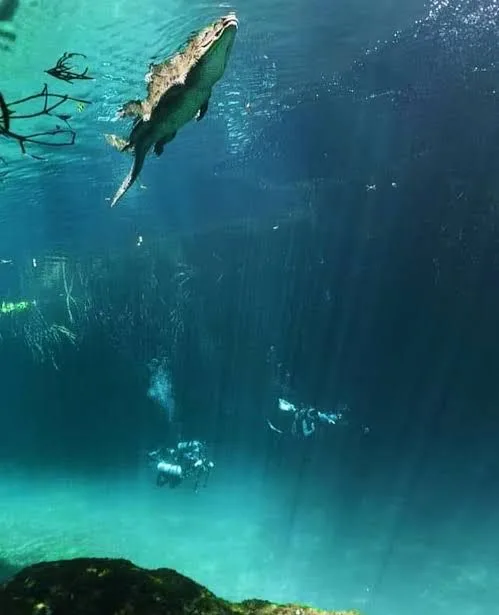
Tulum, Quintana Roo — After a crocodile known as “Panchito” attacked a visitor at Cenote Manatí, municipal authorities announced plans to restrict tourist activities involving swimming, diving, and close encounters with crocodiles in Tulum’s waterways, where such interactions have been promoted for years without visible controls or clear safety measures.
The incident has renewed scrutiny of the lack of regulation in some of the municipality’s natural areas, where tourists and tour operators have regularly interacted with wildlife — particularly crocodiles — despite the risks to both people and animals.
Rocío Peralta Galicia, a collaborator with Tulum’s Environmental Sustainability Department, said officials are working with civil protection authorities to develop recommendations and preventive measures that will define which activities are allowed in cenotes and mangrove areas where these reptiles live.
Planned actions include installing informational and restrictive signage, as well as possible limits on entry or stay in areas with a constant crocodile presence. Authorities are also exploring ways to stop the promotion of tourist activities that involve close interaction with these animals.
“We are making recommendations together with Civil Protection to define permitted and restricted activities within these natural areas,” Peralta Galicia said.
According to authorities, one of the main concerns is that for years, interaction between visitors and wildlife has been normalized at various tourist spots in Tulum, where photos and promotions of tourists swimming or approaching crocodiles were widely shared as part of the experience.
Environmental specialists have repeatedly warned that feeding, chasing, or attempting to interact with these reptiles alters their natural behavior and can increase the risk of attacks. Despite this, recreational activities continue at several cenotes and lagoons in Quintana Roo without visible safety protocols or permanent monitoring.
Following the incident with Panchito, authorities confirmed that the crocodile will not be removed from its natural habitat, as it is a protected species and the attack occurred within its environment. They said efforts should focus on regulating human behavior rather than removing the animal.
Peralta Galicia added that officials will coordinate with federal authorities, particularly the Federal Attorney’s Office for Environmental Protection (PROFEPA), because the crocodile is protected under Mexican Official Standard NOM-059-SEMARNAT-2010.
The case has reignited debate among environmentalists, tourism service providers, and local residents, who have long warned about the pressure on Tulum’s cenote and mangrove ecosystems from tourism growth and commercial exploitation of natural spaces.
Municipal authorities acknowledged the need to strengthen preventive measures and advance stricter rules to prevent further incidents at tourist sites where the presence of wildlife poses a latent risk without adequate controls.
More Environment
- Cancún to Host National Climate Change Colloquium in October
- Riviera Maya Hotels Offer Free Nights When Sargassum Blocks the Beach
- Drought Damages Farmland in Felipe Carrillo Puerto as Quintana Roo Assesses Losses
- Cancún Residents Block Avenida Tules Over Sewage Overflow
- Royal Caribbean Collects 997 Tons of Sargassum in Mahahual
More Tulum
- Tulum Residents Demand Comprehensive Water Quality Study for La Veleta
- Tulum Circula Advises More Than 120 Businesses on Separating and Tracking Waste
- Aeroméxico to Suspend Tulum Flights, Calls It a Temporary Pause
- Tulum Firearms Seizures More Than Double 2024 Total, Officials Say
- Fatal Motorcycle Crash Closes Federal Highway 307 at Tulum