
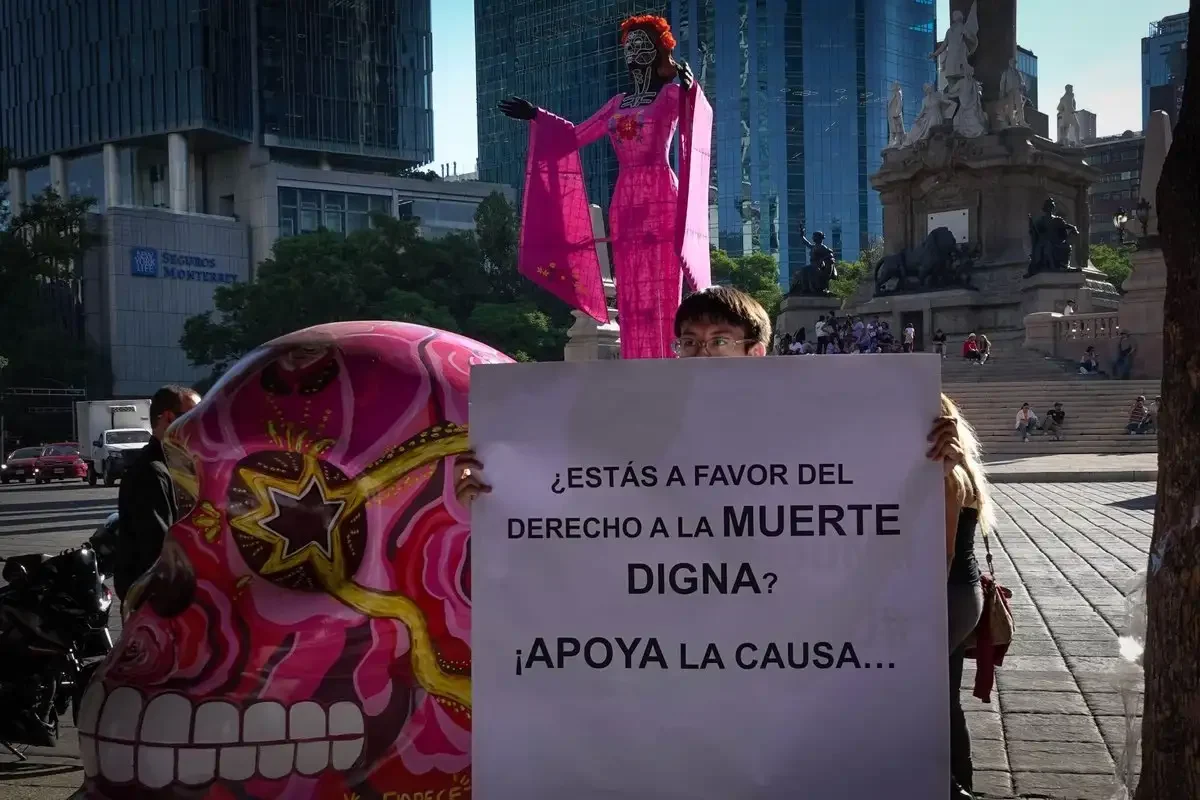
Mexico City — Mexico is grappling with a contentious national debate over euthanasia legalization, spurred by recent developments abroad and a stalled legislative proposal known as the Ley Trasciende bill. The discussion reignites following the case of Spanish woman Noelia Castillo and Uruguay’s recent legalization of euthanasia, highlighting ethical, medical, and legal divides within the country.
Specialists emphasize that euthanasia, where authorized medical personnel administer a painless procedure at a patient’s explicit request, should apply when treatments fail or terminal illness offers no recovery prospects. Globally, fewer than ten nations permit the practice, including the Netherlands, which decriminalized it in 1984 and legalized it in 2022. In Latin America, Colombia legalized euthanasia in 2015, Ecuador in 2024, and Uruguay just days ago.
What the Ley Trasciende Bill Proposes
The Ley Trasciende bill, championed by activist Samara Martínez, aims to reform Mexico’s legal framework around euthanasia. Key provisions include:
- Amending the Federal Penal Code to exempt those who carry out or permit euthanasia from prison sentences.
- Changing Article 166 Bis 21 of the General Health Law, which currently prohibits and classifies euthanasia as mercy killing.
- Allowing the practice for adults over 18 with full mental capacity who suffer from advanced or terminal chronic-degenerative diseases, or disabling or life-threatening health conditions.
- Respecting healthcare professionals’ right to conscientious objection.
Current Options and Legislative Hurdles
For those considering euthanasia in Mexico, Switzerland remains the only country where foreigners can access the procedure, though costs around 800,000 pesos make it largely inaccessible. Domestically, the Ley Trasciende bill, along with 122 other initiatives, has stalled in the Senate Health Commission. Authorities, including Health Secretary David Kershenobich, have not issued the required technical opinion, delaying progress.
Samara Martínez, a 30-year-old with systemic lupus erythematosus and terminal chronic kidney failure, leads the effort, framing it as a matter of human dignity rather than death. “No one wants to die until they are dying,” she told La Jornada in a February 1, 2026, interview with reporter Regina Solórzano. The bill, presented to the Senate in October last year, garnered support from some legislators of the PRI, Morena, PT, and MC parties but none from the PAN. Since November, it has remained with the Senate Health Commission, effectively shelved.
Advance Directives in Mexico
Unlike euthanasia, advance directives are legally recognized in states like Michoacán, Puebla, Chiapas, and Mexico City. This process allows healthy individuals to document their wishes to accept or refuse medical treatments that might “unnecessarily prolong life” in terminal illness cases.
Public Opinion on Euthanasia
Public sentiment leans toward legalization. A 2020 survey by the Center for Public Opinion at the University of the Valley of Mexico found 72% of participants believed euthanasia should be legalized, with 86% agreeing that terminally ill patients should have the right to voluntarily request death. Similarly, a 2022 national opinion survey by the Civil Association for the Right to Die with Dignity reported seven out of ten Mexicans generally supported legalizing the practice.
More Lifestyle
- Brain-Eating Amoeba in Mérida Mall Lake Prompts Surveillance of 240 People
- Puerto Morelos Announces Mar de Almas Janal Pixan 2026 Day of the Dead Festival
- Cancún Property Tax 2026: 100% Fine Discount and 50% Surcharge Cut Available Until September 30
- Cancún Animal Shelter Overwhelmed, Caring for 96 Dogs and Cats
- Playa Spice Returns With Six Weeks of Restaurant Promotions Across Playa del Carmen
