
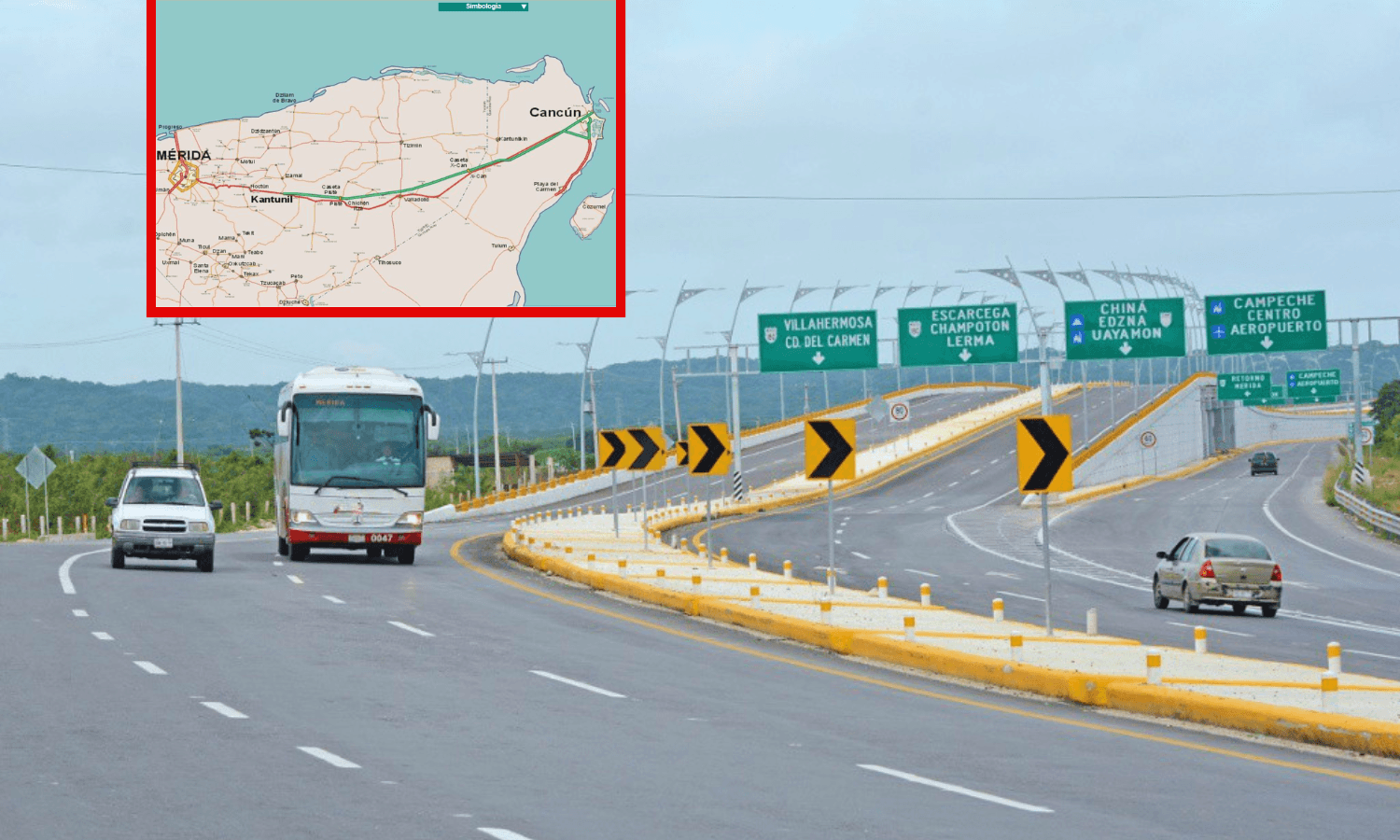
Merida, Yucatan — Traveling across Mexico’s Yucatan Peninsula just became more expensive after toll rates on the Merida-Cancun highway increased by 4.6% in April 2026, making it the country’s third most expensive toll road.
The highway, which connects two of the peninsula’s major tourist destinations, now costs 675 pesos for cars and 337 pesos for motorcycles. Only the Durango-Mazatlán and Tehuacán-Oaxaca highways have higher tolls, both operated by the federal toll road agency Capufe.
Unlike those routes, the Merida-Cancun highway is not operated by Capufe. Instead, EXI Operadora Quantum manages the toll collection centers in Quintana Roo and Yucatan under a concession that runs until 2050, according to Mexican government records.
Mexico’s Most Expensive Toll Roads
Following the nationwide toll rate adjustment that took effect on April 13, 2026, these are Mexico’s ten most expensive highways:
- Durango-Mazatlán: 820 pesos (cars), 410 pesos (motorcycles)
- Tehuacán-Oaxaca: 702 pesos (cars), 313 pesos (motorcycles)
- Merida-Cancún: 675 pesos (cars), 337 pesos (motorcycles)
- Cuernavaca-Acapulco: 670 pesos (cars), 335 pesos (motorcycles)
- La Tinaja-Cosoleacaque: 560 pesos (cars), 280 pesos (motorcycles)
- Estación Don-Nogales: 542 pesos (cars), 271 pesos (motorcycles)
- Barranca Larga-Ventanilla: 490 pesos (cars), 244 pesos (motorcycles)
- Las Choapas-Ocozocoautla: 317 pesos (cars), 158 pesos (motorcycles)
- Córdoba-Veracruz: 282 pesos (cars), 141 pesos (motorcycles)
- Torreón-Saltillo: 276 pesos (cars), 138 pesos (motorcycles)
Toll costs depend on various factors including road length, vehicle type, dimensions, and number of axles.
Tourist Corridor Attractions
The Merida-Cancun highway forms the Yucatan Peninsula’s primary tourist corridor, passing near several major attractions:
- Valladolid: A colonial city midway along the route known for the Zací cenote, historic convents, and local cuisine
- Chichén Itzá: One of the Seven Wonders of the Modern World, accessible via a detour to Pisté
- Local cenotes: Natural sinkholes like Ik-il and Saytún near Pisté and Valladolid
- Connection to Cancun Airport: A 15-kilometer link to the region’s main international airport
The increase confirms that traveling this key southeastern Mexican route will require higher expenses for both tourists and residents in 2026. Travelers planning trips between Merida and Cancun should factor toll costs into their budgets and check updated rates before departure.
More Lifestyle
- Isla Mujeres Ready for Luz y Vida 2026 Festival With Free Pandora Concert
- Moderna COVID-19 Vaccine to Be Offered to Children in Cancún
- Hospital O’Horán Performs First Robotic Appendix Surgery; Patient Treated Free of Charge
- Paraguayan Tourists Challenge Asur Over $30 Exit Fee at Cancún Airport
- Influencer Discards 2,500-Peso SpongeBob Cake at Nickelodeon Riviera Maya, Citing Bad Taste
