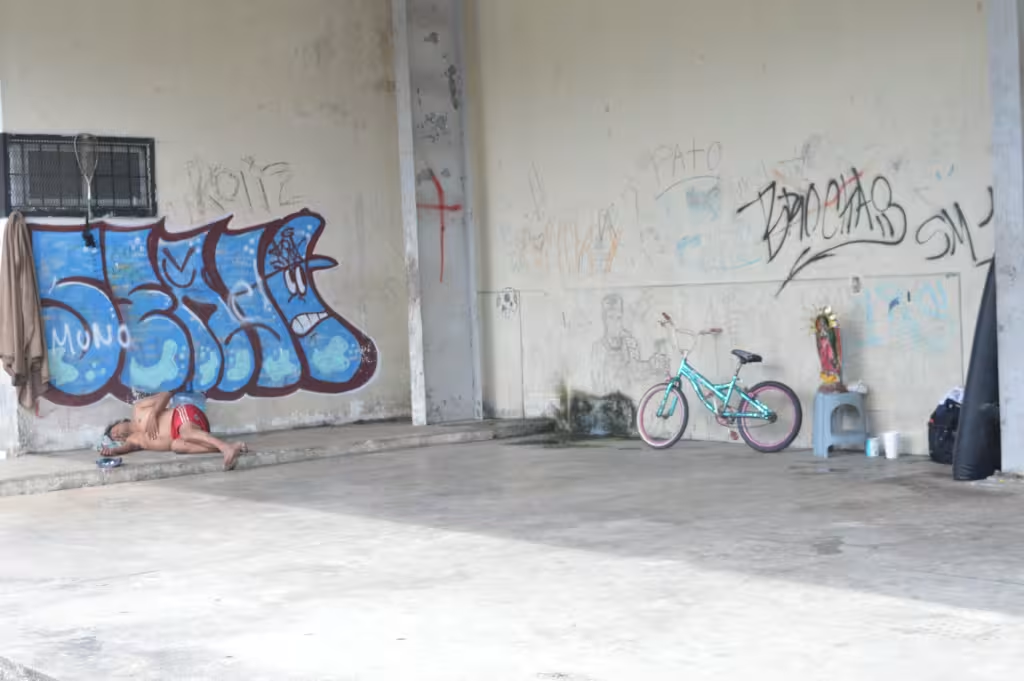
Cozumel, Quintana Roo — The number of people living on the streets in Cozumel has grown significantly over the past year, prompting concern among local authorities, civil organizations, business owners, and residents.
According to recent municipal estimates, between 70 and 120 people now sleep in public spaces on the island, up from 65 to 67 last year. While the figure fluctuates due to mobility, temporary stays in rehabilitation centers, or occasional family support, the upward trend reflects a deepening social problem that requires sustained and coordinated attention.
Experts and officials say the issue goes beyond homelessness. Many cases involve addiction, alcohol abuse, substance use, and untreated mental health conditions. Fabiola Ruiz Gallardo, director of the Youth Integration Center, described the situation as complex, noting that providing temporary shelter is insufficient without addressing the root causes. “It’s not just about lack of housing, but about addictions and mental health issues that require specialized care,” she said.
The most affected areas include the malecón and Avenida Rafael E. Melgar, high-traffic zones for both residents and tourists. The visibility of homeless individuals in these spots has made the problem more apparent in recent months, particularly in areas tied to Cozumel’s tourism industry. Local merchant Diego Martínez said, “It’s becoming more common to see people in these conditions downtown.”
Support organizations note that assistance is not always straightforward, as many individuals refuse institutional help. In some cases, substance dependence or emotional problems hinder their referral to rehabilitation, social services, or community reintegration programs. Berta Gómez, a volunteer with a community aid group, said, “We offer support, but not everyone accepts it.” She stressed the need for ongoing follow-up rather than isolated interventions.
Health and social welfare authorities have emphasized the importance of strengthening coordination among institutions to address the issue from multiple angles. Addiction prevention, psychological care, rehabilitation programs, family reintegration, and social assistance are seen as essential components of a response that cannot rely solely on temporary measures or enforcement operations.
The rise in homelessness also poses challenges for public health, safety, and social perception, especially on an island whose economy depends heavily on tourism. However, specialists and community groups agree that the response must focus on human dignity rather than making the homeless invisible. Comprehensive care should balance the protection of public spaces with the right of vulnerable individuals to receive real, specialized, and continuous support.
As part of ongoing efforts, the Center for Rehabilitation and Assistance for Addiction and Risk in Quintana Roo (CRAADYR) operates in Cozumel with a projected capacity to provide comprehensive care for up to 80 people, offering an important alternative as the problem grows.
The increase in Cozumel’s homeless population reveals a reality that extends beyond the island’s tourist image. It reflects deep social issues combining abandonment, addiction, mental health, lack of family networks, and the need for institutional accompaniment. As the presence of this population continues to grow in public spaces, the challenge for authorities and society will be to build humane, effective, and lasting responses that address not only the visible consequences but also the causes that drive people to live on the streets.
More Lifestyle
- WHO Warns El Niño Poses Major Global Health Threat
- Progreso to Open Historic Muelle de Arcos for Sunset Walk Marking 85 Years
- Cozumel Reports Alcohol and Drug Use Starting at Age 11
- Cancún Officials Urge Residents to Protect Pets After Reported Puma Sighting in Cuna Maya
- Cozumel Launches Rabies Vaccination Drive With 3,000 Free Doses for Pets
More Cozumel
- Cozumel Submarine Power Cable to Be Installed Oct. 5 After 40-Year Wait
- Cozumel Lifeguards Keep Watch Over Playa Caleta After Crocodile Sighting
- Ultramar Ferry Collides With Xcaret Xailing Vessel at Cozumel’s Muelle Fiscal
- Marc Dubrick Dominates Ironman 70.3 Cozumel, Wins Wire-to-Wire
- Cozumel Opens Applications for 2027 Carnival Kings and Queens