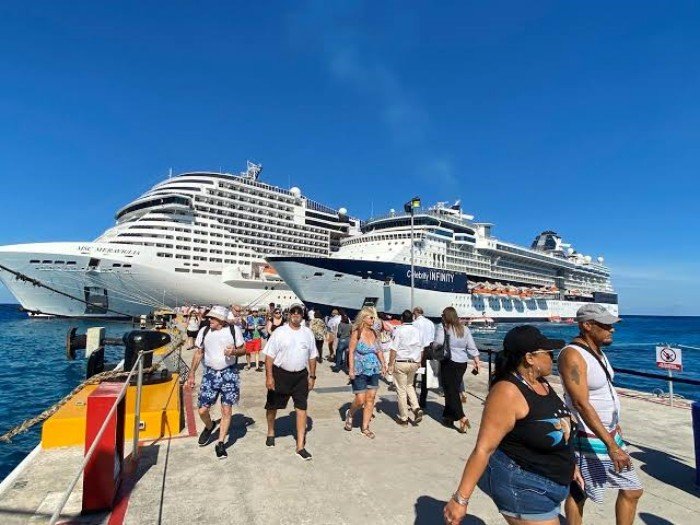
Cozumel, Quintana Roo — Seventy percent of the revenue generated by the tax on cruise passengers goes to Cozumel, funding tourism development projects and bolstering the island’s security, Mayor José Luis Chacón said.
Chacón said his administration’s work to present “executive projects” on behalf of the municipality helped secure that share of the funds.
“We have submitted the projects on time and in proper form, and they are executive projects,” he said. “An executive project means it has its price breakdown, essentially the architectural design, and it’s clear what will be done in the first, third and fourth phases. That helps decisions come out in Cozumel’s favor.”
The mayor said his government is preparing more executive projects to increase the island’s share. Over the past year, several projects funded by these resources have broken ground, and more are on the way, he added.
“More paving is coming, along with the Polifórum and the tourist beautification project for the Municipal Malecón,” Chacón said. “Tourist streets like 30th and 11th will be paved, and there’s a very important security project coming.”
Asked about the $10 increase in the Non-Resident Fee for foreign cruise passengers, which the federal government began applying on Aug. 1, Chacón said the higher fee will further increase benefits for Cozumel.
He added that all projects carried out in Cozumel with these funds require approval not only from authorities but also from representatives of the cruise lines.
“Right now, Cozumel alone has close to 500 million pesos in investment,” Chacón said. “Two years ago it was 128 million pesos, and suddenly it multiplies to 500. It’s a total benefit for the island. The projects have to be approved within the trust fund, in which each one of the cruise representatives also participates.”
More Government
- Polo strengthens to a Category 5 hurricane off Mexico’s Pacific coast in Record Time
- Quintana Roo Climbs 12 Spots to 9th in Competitiveness Index
- Culture Ministry to Inspect Ceremonial Pole Ahead of Voladores de Papantla Return to Tulum
- Cozumel Launches Rabies Vaccination Drive With 3,000 Free Doses for Pets
- Isla Mujeres Collects Over 160,000 Tons of Waste in Five Years
More Cozumel
- Ultramar Ferry Collides With Xcaret Xailing Vessel at Cozumel’s Muelle Fiscal
- Marc Dubrick Dominates Ironman 70.3 Cozumel, Wins Wire-to-Wire
- Cozumel Opens Applications for 2027 Carnival Kings and Queens
- Tulum Tour Guides Pin Recovery Hopes on Cruise Ships and Year-End Holidays
- Cozumel Opens Registration for Day of the Dead Catrina Costume Contest