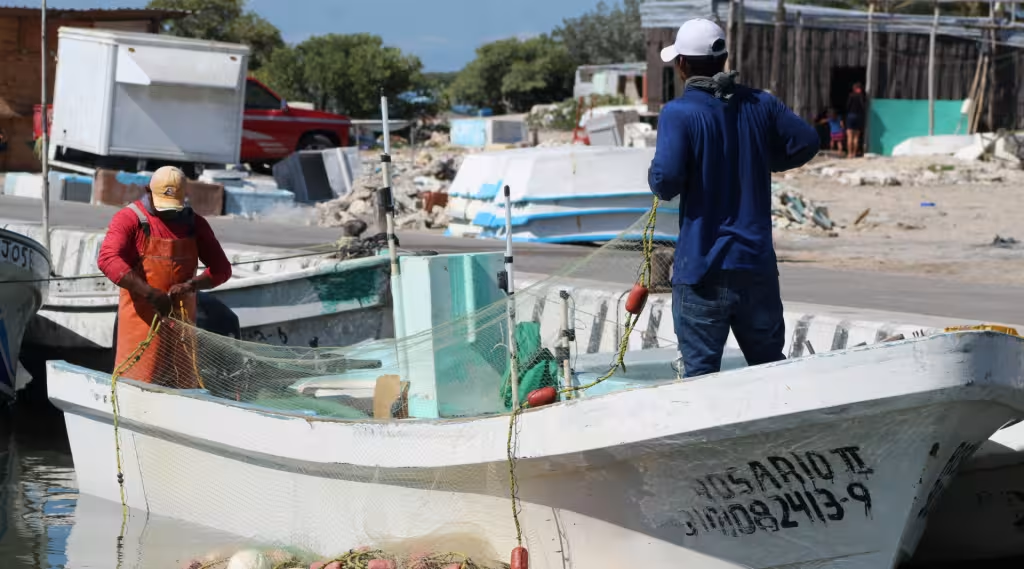
Mérida, Yucatán — The grouper, one of the most iconic and economically valuable fish species in Yucatán, is facing a critical threat from overfishing, weak enforcement of regulations, and failure to protect its reproduction cycles, industry representatives warned.
Enrique Sánchez Sánchez, president of the National Chamber of the Fishing and Aquaculture Industry in Yucatán, said that for decades grouper fishing occurred without sufficient controls, allowing indiscriminate extraction that ignored minimum sizes, closed seasons, and other necessary measures. Although regulations now exist, he noted they are not rigorously enforced.
The situation has worsened due to increased fishing effort and a growing number of vessels targeting the species. This season, about 450 of the 700 registered boats began fishing for grouper, but as weeks passed, low availability forced the active fleet to shrink to just over 200 vessels, according to industry data.
The problem is not a lack of demand — grouper prices remain attractive at 250 to 270 pesos per kilogram — but rather the dwindling resource at sea. Catches have been insufficient to sustain the operations of many boats and cooperatives that depend on the fishery.
Grouper represents a cornerstone of Yucatán’s fishing economy. Fishery leader José Luis Carrillo Galaz noted that the species has a legal fishing season of about 10 months per year, providing a steady income for coastal families. Its decline threatens not only fishermen but also traders, processors, distributors, and entire communities along the supply chain.
Industry representatives called for stronger surveillance, enforcement of minimum size limits, a crackdown on illegal fishing gear, and stricter controls on vessels and permits. They stressed that effective fisheries management must be implemented to prevent unsustainable exploitation.
“It is still possible to reverse the decline of the species, but urgent action is needed,” Sánchez said.
More Environment
- Two Atlantic Low-Pressure Areas Watched; One Shows 40% Cyclone Chance
- Tren Maya Freight Complex in Chetumal to Break Ground in 2027
- Lawmakers Propose One Tree Every 15 Meters in New Quintana Roo Developments
- Bacalar Aims to Show the World Its Appeal Goes Beyond the Lagoon
- Quintana Roo Weighs Permanent Revocation of Permits for Legacy by Awa Playacar After Closure Seals Broken