Cozumel, Quintana Roo — More than 22 hectares of mangrove on Cozumel will be conserved for the next 25 years under a voluntary protection agreement certified by Mexico’s National Commission of Natural Protected Areas (CONANP).
Kuzá Beach & Adventure Park obtained the certification for 22.37 hectares recognized as a Voluntary Area Destined for Conservation (ADVC), a designation that sets up a framework for surveillance, monitoring, research and environmental education, alongside low-impact tourism.
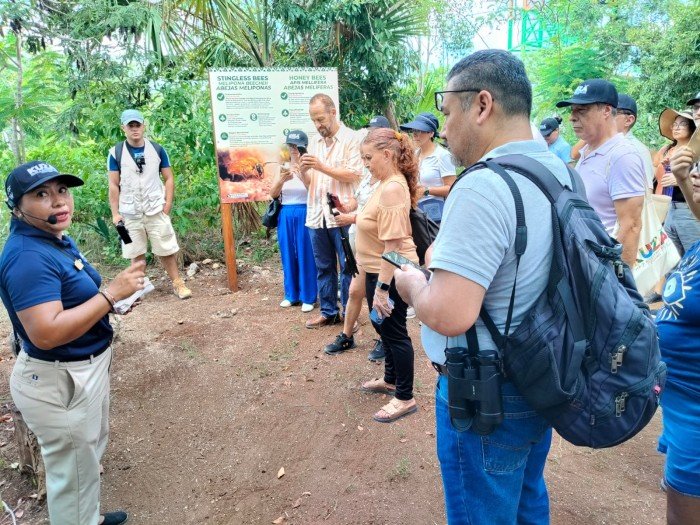
The announcement came with the launch of “Expedición Natural Kuzá,” a new educational experience designed to bring visitors closer to the island’s ecosystems through trails of native vegetation and observation areas for flora and fauna.
What the Tour Includes
- Guided walks through native vegetation to learn about the different mangrove varieties and their role in coastal ecosystems.
- Birdwatching with binoculars and a specialist guide who explains the species found on Cozumel.
- A visit to the park’s meliponary, where guides explain the importance of stingless melipona bees and their part in keeping ecosystems in balance.
The roughly one-hour tour runs twice a day and is designed for groups of up to 20 people. It is open to visitors aged seven and older, and minors must be accompanied by a responsible adult. The park provides support materials and safety equipment for the walk.
Tying Tourism to Conservation
Germán Osorio, president of the Kuzá Beach & Adventure Park board, said the aim is for visitors not only to see Cozumel’s natural attractions but to understand why they must be preserved. He said the certification will allow mangrove protection work to continue over the coming decades.
Mangroves play an essential role along coastlines, offering shelter and habitat to numerous species and helping to maintain environmental balance. Under the ADVC scheme, Kuzá plans to combine tourism with conservation and environmental education, built around knowledge of the island’s ecosystems.
More Environment
- Cancún’s Benito Juárez Recycling Drive Recovers 6.8 Tons of Waste
- US Releases 1 Billion Sterile Flies to Stop Screwworm’s Return
- Delphinus Blue Planet Pulls Out of Deal to Buy The Dolphin Company, Leaving 101 Marine Animals in Limbo
- New Pemex Oil Spill in Gulf Won’t Reach Campeche Beaches, Company Says
- Cozumel Beach Club Kuzá Targets 4,000 Daily Visitors in Protected Area With CONANP Backing
More Cozumel
- Cancún Airport Loses 15% of International Passengers in August
- Cozumel to Host Second Free Rabies Vaccination and Microchip Clinic for Pets
- Yucatan Peninsula Produces Only Half the Electricity It Consumes, CFE Says
- One of Two Men Missing After Jet Ski Trip Between Playa del Carmen and Cozumel Found Alive
- INM Workers in Quintana Roo Allege Corruption Network and Paid Appointment Scheme