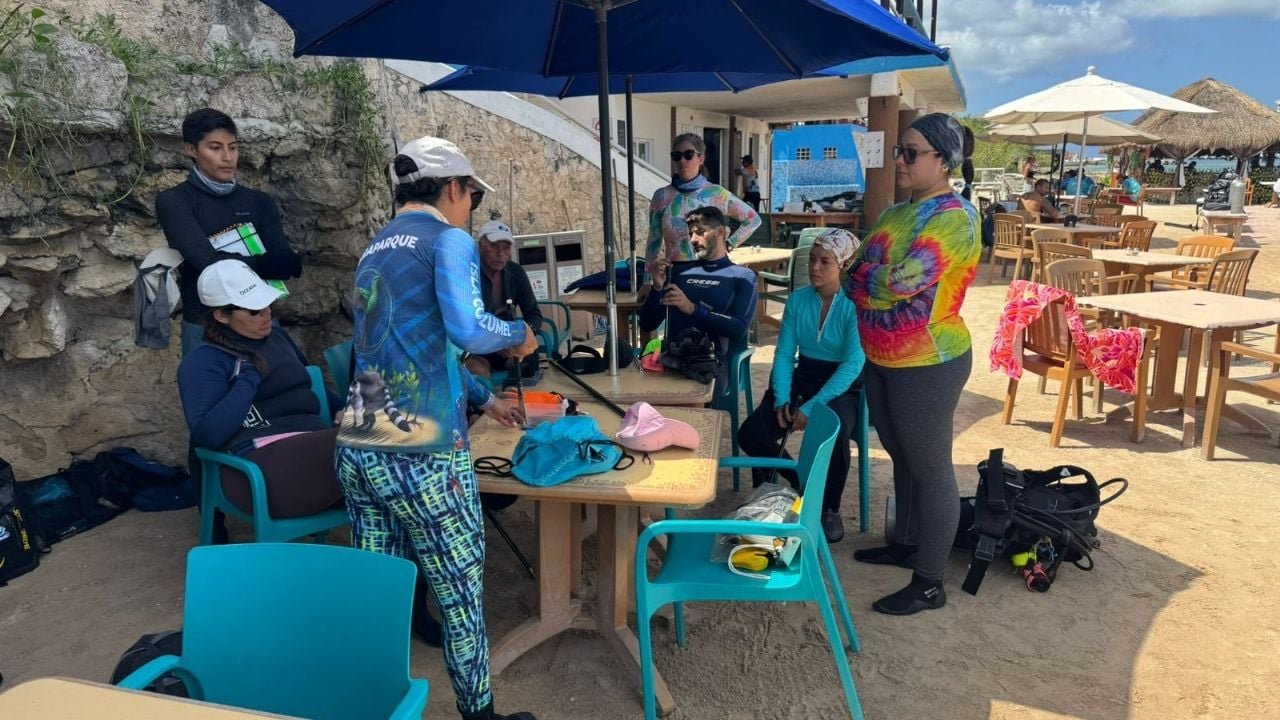
Cozumel, Quintana Roo — Cozumel has formed its first specialized brigade to control the invasive lionfish population, aiming to protect the coral reefs of the Cozumel Reefs National Park (PNAC).
Tourism service providers and volunteers participated in a training session that included both theoretical and practical components. Participants learned safe and effective handling techniques for the species, as well as the ecological risks lionfish pose to local biodiversity.
The brigade has already begun operations with support from the PROREST program of the National Commission of Natural Protected Areas (CONANP). Initial dives within the national park focused on controlling and managing the invasive species.
In previous years, the Cozumel Fishing Cooperative helped capture lionfish, which were sold as an exotic dish in the tourism sector. However, the species migrated to deeper waters, reducing catches. Now that lionfish have returned to Cozumel’s waters, officials see an opportunity to revive this economic activity under a sustainable management framework.
The creation of the brigade marks a significant step in reef conservation and environmental awareness, reinforcing Cozumel’s commitment to protecting its natural resources while promoting sustainable development.
More Lifestyle
- Quintana Roo Expands Distance University Program to 500 Students in Nine Municipalities
- Negroni Week 2026 Brings Riviera Maya Bartenders to Playa del Carmen
- Playa del Carmen Fire Calls Rise 4% on Carelessness and Uncontrolled Burns
- Dengue Cases in Quintana Roo Climb to 310 as Deaths Reach Two
- Cancún Approves 5 A.M. Closing Time for Bars in Tourist Zone
More Cozumel
- Cozumel Releases Nearly 7,000 Sea Turtle Hatchlings in 2026 Nesting Season
- Cozumel Artists Accuse Veracruz Project of Copying Iconic Photo Booth
- Cozumel Welcomes More Than 1,000 Athletes for Astri Triathlon 2026
- Cozumel Launches 2026 Workshops to Strengthen Civil Organizations
- Cozumel Crocodile Sightings Rise With Rains and Habitat Changes, Biologist Says