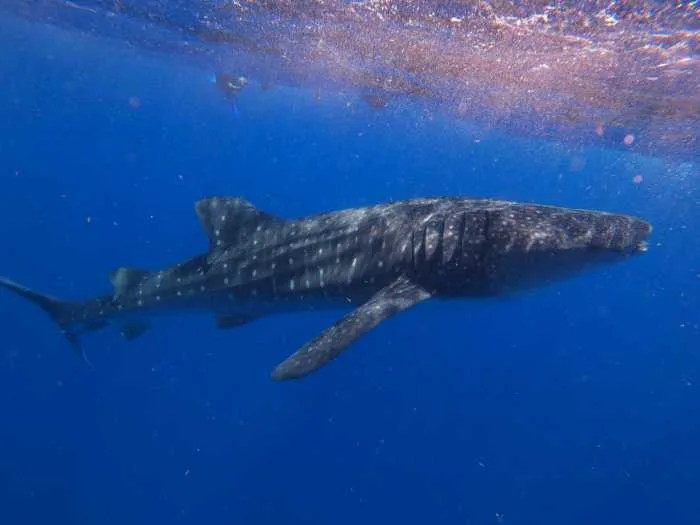
Holbox, Quintana Roo — July and August are the best months for whale shark sightings in Holbox, with more than 150 of the gentle giants visible daily, according to local tour operator Wilbert Camal.
Camal, known to locals as Don Wilbert, said in an interview at the island’s departure pier that the season is now at its peak. He noted that while whale shark tourism draws the most visitors, Holbox also offers bioluminescence tours, local and international cuisine, and other activities.
“We invite everyone to come to Holbox and enjoy this unique spectacle in all of the Caribbean,” Camal said. “All our tour operators are certified, the boats have life-saving equipment, and expert guides guarantee a safe and exciting experience.”
A survey of whale shark swimming tour providers found prices ranging from $180 to $200 (2,970 to 3,300 Mexican pesos), depending on whether the tour includes drinks and snacks. All operators offer bilingual guides.
More Environment
- Cancun’s Tourism Reset: Regenerative Travel Takes Center Stage
- Quintana Roo Moves to Power Public Buildings With Clean Energy
- Hurricane Season 2026: What Quintana Roo Faces Before It Ends Nov. 30
- Mexican Navy Prepares 2027 Sargassum Strategy With 17 New Vessels
- New MARAP App Opens Anonymous Environmental Reporting in Playa del Carmen