
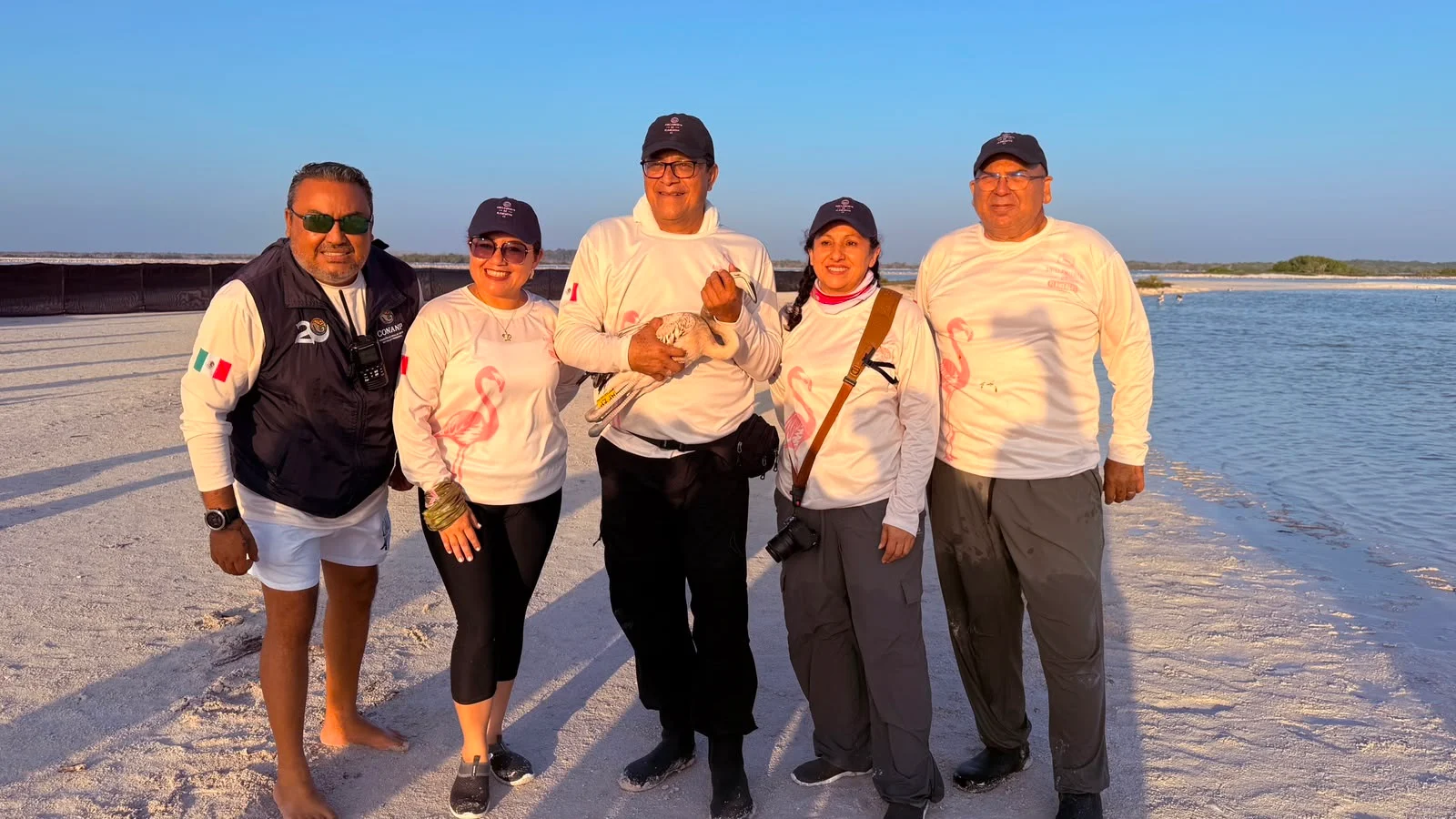
Las Coloradas, Yucatán — The National Commission of Natural Protected Areas (Conanp), through the Ría Lagartos Biosphere Reserve, has banded 425 American flamingos at a site known as Angostura in Las Coloradas, Yucatán.
The banding procedure provides data on the species’ biology to support conservation actions, primarily helping researchers track migratory routes, monitor health, and estimate lifespan.
According to Conanp, the work began with participant registration and a briefing on flamingo handling, including instructions for the banding activities, meeting points, and departure times.
Technicians, working alongside participants, herded the birds into pens and then moved them to processing stations, where they recorded weight, measurements, and medical samples before banding and release.
The biosphere reserve recorded approximately 24,000 flamingos in the nesting zone, and a drone count documented 12,500 nests, with a 63.84 percent hatching rate, producing a total of 7,980 chicks, according to the latest count.
Ría Lagartos is one of the main nesting sites for the species. Flamingos have also nested at the Ría Celestún and Ciénegas biosphere reserves, as well as in the Manglares de la Costa Norte de Yucatán at San Crisanto.
An educational station was set up so participants could learn about the Caribbean flamingo’s life cycle and the importance of the monitoring carried out in the protected area, expanding their understanding of the species’ role in the ecosystem and the need for its conservation.
“This was made possible by the coordinated work of the Ría Lagartos Biosphere Reserve, Conanp’s Yucatán Peninsula and Mexican Caribbean regional directorate, Semarnat’s wildlife directorate in Yucatán, the state Environment Secretariat, the Federal Prosecutor’s Office for Environmental Protection, the Río Lagartos municipal government, and a team of veterinarians and biologists from SENASICA’s permanent Newcastle disease and avian influenza campaign,” Conanp said.
More Environment
- Cancun’s Tourism Reset: Regenerative Travel Takes Center Stage
- Quintana Roo Moves to Power Public Buildings With Clean Energy
- Hurricane Season 2026: What Quintana Roo Faces Before It Ends Nov. 30
- Mexican Navy Prepares 2027 Sargassum Strategy With 17 New Vessels
- New MARAP App Opens Anonymous Environmental Reporting in Playa del Carmen
