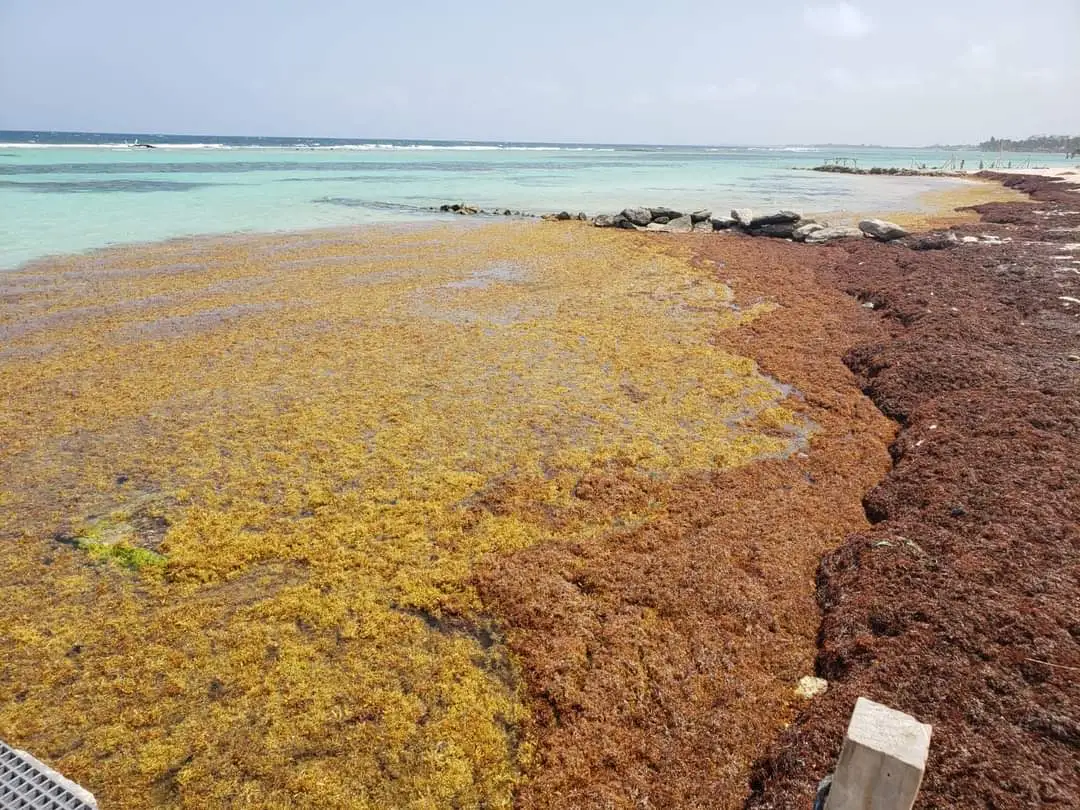
Mahahual, Quintana Roo — The buildup and decomposition of sargassum along the coast of Othón P. Blanco is not only an environmental problem but also a health concern for residents, workers, and tourists in affected areas, as the rotting seaweed releases hydrogen sulfide and ammonia.
About 100 kilometers (62 miles) of the municipality’s Caribbean coastline are affected by the seaweed landings. Where sargassum piles up and begins to break down, it emits gases that produce strong, unpleasant odors — a problem most noticeable along the Mahahual-Xcalak stretch, where locals and visitors are in constant contact with the affected environment.
Exposure to these gases can cause eye, nose, and throat irritation, headaches, nausea, dizziness, and difficulty breathing, especially at high concentrations. People with respiratory conditions may be particularly vulnerable to significant exposure, making the prolonged presence of these gases a concern in areas with the heaviest sargassum accumulation.
According to studies by El Colegio de la Frontera Sur (Ecosur), based in Chetumal, these gases are released during sargassum decomposition and are part of the broader problem facing Quintana Roo’s coastal zone. The seaweed buildup also harms the marine ecosystem and contributes to odors that affect those who live, work, or vacation in the area.
The scale of the issue is reflected in cleanup efforts: during 2026, about 8,000 tons of sargassum have been collected along Othón P. Blanco’s coast. Coastal communities and tourist destinations such as Mahahual remain under pressure, where the constant presence of seaweed and gases from its decomposition is both a nuisance and a potential health risk for anyone near affected areas.
More Environment
- Cancun’s Tourism Reset: Regenerative Travel Takes Center Stage
- Quintana Roo Moves to Power Public Buildings With Clean Energy
- Hurricane Season 2026: What Quintana Roo Faces Before It Ends Nov. 30
- Mexican Navy Prepares 2027 Sargassum Strategy With 17 New Vessels
- New MARAP App Opens Anonymous Environmental Reporting in Playa del Carmen