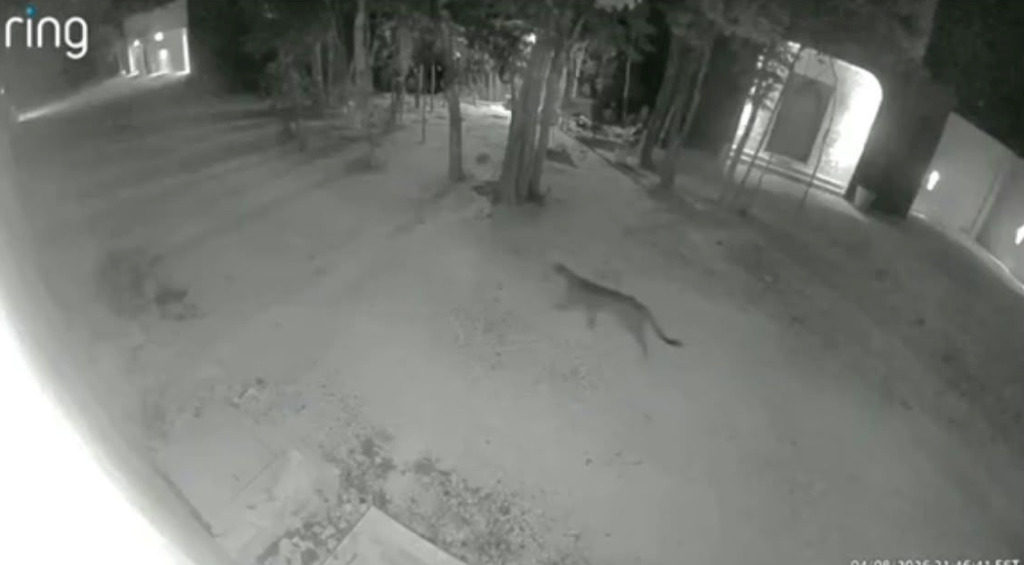
Tulum, Quintana Roo — Authorities are urging residents of the La Veleta neighborhood to stay calm and take precautions after a series of wild animal sightings, including a feline captured on neighborhood security cameras.
Rocío Peralta Galicia, a collaborator with the municipal environmental sustainability office, said the most recent sighting of a wild cat — the species was not identified — should be treated responsibly and without generating alarm among the public.
She explained that Tulum lies within the natural habitat of several wild feline species, making it important for residents to know how to react during an encounter and to adopt measures that reduce the risk of incidents.
One of the key recommendations is to keep pets sheltered, particularly at night. Peralta Galicia noted that habitat loss, deforestation, construction, and hunting have reduced the availability of natural prey, sometimes forcing wild animals to move through urbanized areas.
In many cases, she said, the animals are simply passing through areas that historically formed part of their natural routes. She called on residents to avoid sensationalism or extreme reactions when encountering wildlife.
“If you have the privilege of seeing one, which is very rare, stay calm and slowly back away in the opposite direction. They always leave when they see or even smell us,” she said.
The official also urged people not to approach, chase, or attempt to feed wild animals, and to keep dogs and cats indoors, especially at night.
Residents of La Veleta report at least five recent sightings of different wild animals in the area. The situation has caused concern among neighbors, but it also shows that wildlife still uses these spaces as part of their natural corridors.
The environmental authorities are calling for stronger prevention and responsible coexistence with wildlife, especially in a region where urban growth continues to encroach on what were once natural corridors.
More Environment
- Cancun’s Tourism Reset: Regenerative Travel Takes Center Stage
- Quintana Roo Moves to Power Public Buildings With Clean Energy
- Hurricane Season 2026: What Quintana Roo Faces Before It Ends Nov. 30
- Mexican Navy Prepares 2027 Sargassum Strategy With 17 New Vessels
- New MARAP App Opens Anonymous Environmental Reporting in Playa del Carmen
More Tulum
- Former Tulum Treasurer Sentenced to Nearly 4 Years for Unlicensed Firearms
- Heavy Rains Flood Streets and Homes Across Quintana Roo, Cutting Power and Commerce
- Riviera Maya Hotel Chief Calls Tulum Airport ‘Critical’ as Airlines Exit
- Tulum Rethinks Real Estate Growth Over Risks to the Great Maya Aquifer
- Tulum Hosts Nine US Universities and Team Mexico at NCAA Division II Golf Shootout