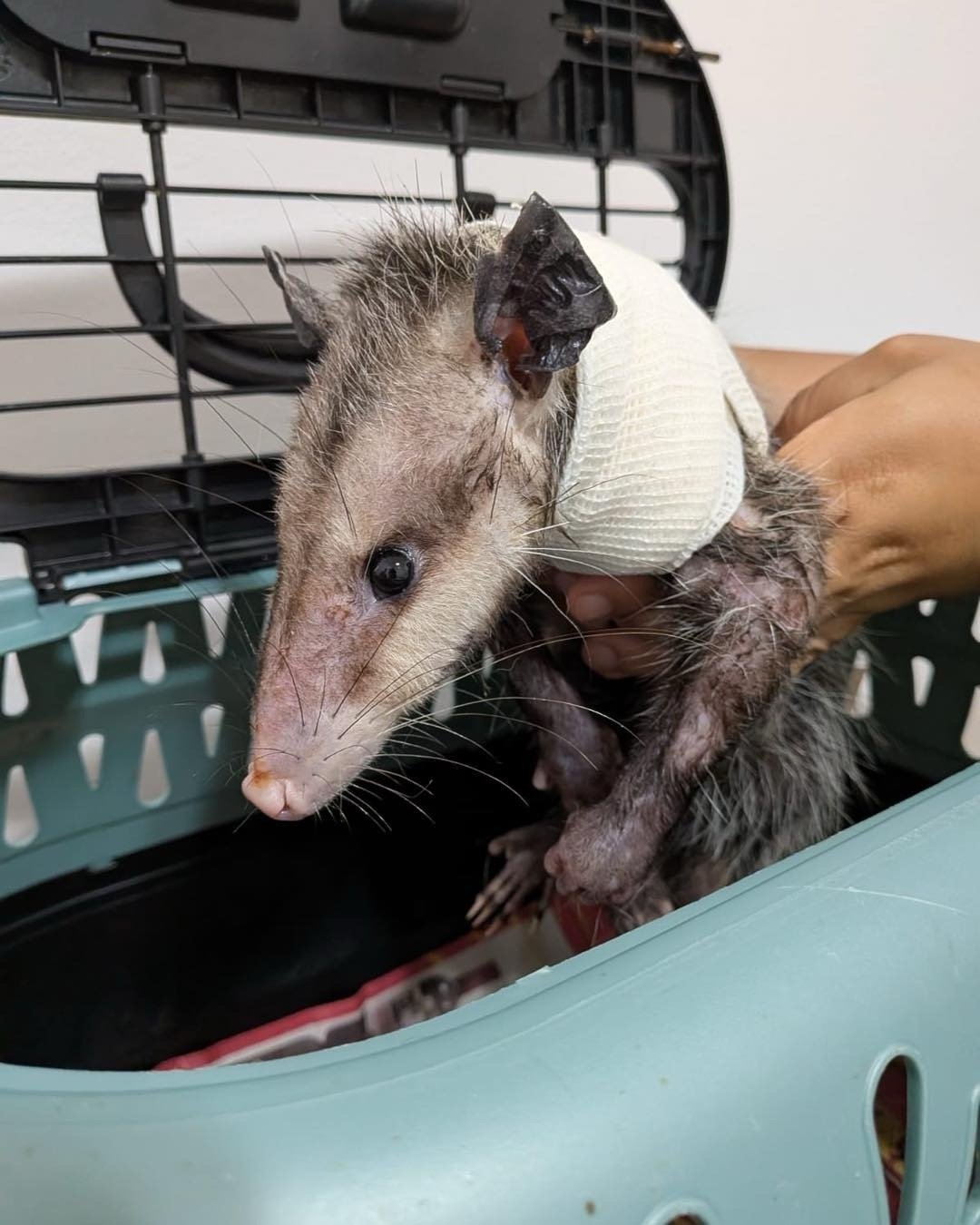
Puerto Morelos, Quintana Roo — A citizen wildlife organization reported two opossum deaths caused by screwworm in the municipality of Puerto Morelos, raising alarms among rescue and wildlife care groups.
According to the group Tlacuatitlán, the first case occurred on April 27. Vice President Eugenia Poblete said the situation reflects a health problem that is no longer limited to livestock, as it was previously, but is now also affecting pets and wild species.
“I never thought we would need to use tubes for screwworm samples. Throughout the south and much of the country, there is an alert,” Poblete said.
She detailed that the larvae were removed from the affected animal and sent for analysis to the National Service of Health, Safety and Agri-Food Quality (Senasica).
The second death was reported on April 29. In a public message, the organization called the situation an emergency and warned of the need to strengthen protective measures, especially for vulnerable animals under their care.
Screwworm, caused by the larva of a fly, is known to infest open wounds in animals and humans, causing severe tissue damage if not treated promptly. The group stressed that the risk has expanded in recent weeks, with presence in various parts of the country.
In response, Tlacuatitlán called on the public to support with financial or material resources to build screened enclosures to protect the animals under their care and reduce the risk of new infestations.
Yucatan Among Hardest Hit by Screwworm
Yucatan remains one of the most affected states in the country by screwworm, a plague that now not only impacts livestock but has also increased infections in humans and, significantly, in dogs, one of the species most affected by myiasis caused by the fly Cochliomyia hominivorax.
As of May 1, health authorities confirmed two new human cases in the state, bringing Yucatan’s cumulative total to 26 infections and keeping it in third place nationally for the fourth consecutive week.
Meanwhile, data from Senasica places the state second nationally in active cases among dogs, behind only Veracruz.
Nationally, as of May 4, there were 23,155 cumulative cases of myiasis in dogs since the outbreak began on November 20, 2024. Currently, 25 of the country’s 32 states report at least one active case, with Veracruz, Yucatan and Chiapas leading.
The epidemiological report indicates that Mexico had 1,689 active cases in various animal species, of which 96 correspond to Yucatan. Of these, 64 are in dogs, followed by 22 in cattle and smaller numbers in pigs, sheep, cats and one horse.
Within the state, Merida concentrates the highest number of reports with 39 active cases, followed by Tekax and Progreso. Infections have also been identified in municipalities such as Hunucma, Uman and Valladolid. In the national cumulative, Yucatan ranks fourth with 2,033 cases recorded since 2024.
More Lifestyle
- Measles Cases Surge 1,940% in Mexico’s Yucatan Peninsula
- Mexico Proposes 35% Increase in Migration Fee for Visitors With Paid Work
- Humanoid Robots in Mexico: What They Cost and What They Offer
- Cancún’s Nichupté Bridge Draws 3,500 for Third Puenteando Nichupté Edition
- Cancún Launches Operation to Protect Blue Land Crabs During Migration to the Sea
More Puerto Morelos
- Explosion and Fire at OXXO Store in Puerto Morelos Leaves Worker Shaken
- Puerto Morelos Pursues New Maritime Trade Route to Central America
- Could Holbox, Felipe Carrillo Puerto and Puerto Morelos Become Pueblos Mágicos?
- Caribbean Grill Festival Returns to Puerto Morelos With More Chefs, Music and Local Producers
- Puerto Morelos Approves Funds to Protect Beaches and Strengthen Sargassum Response