
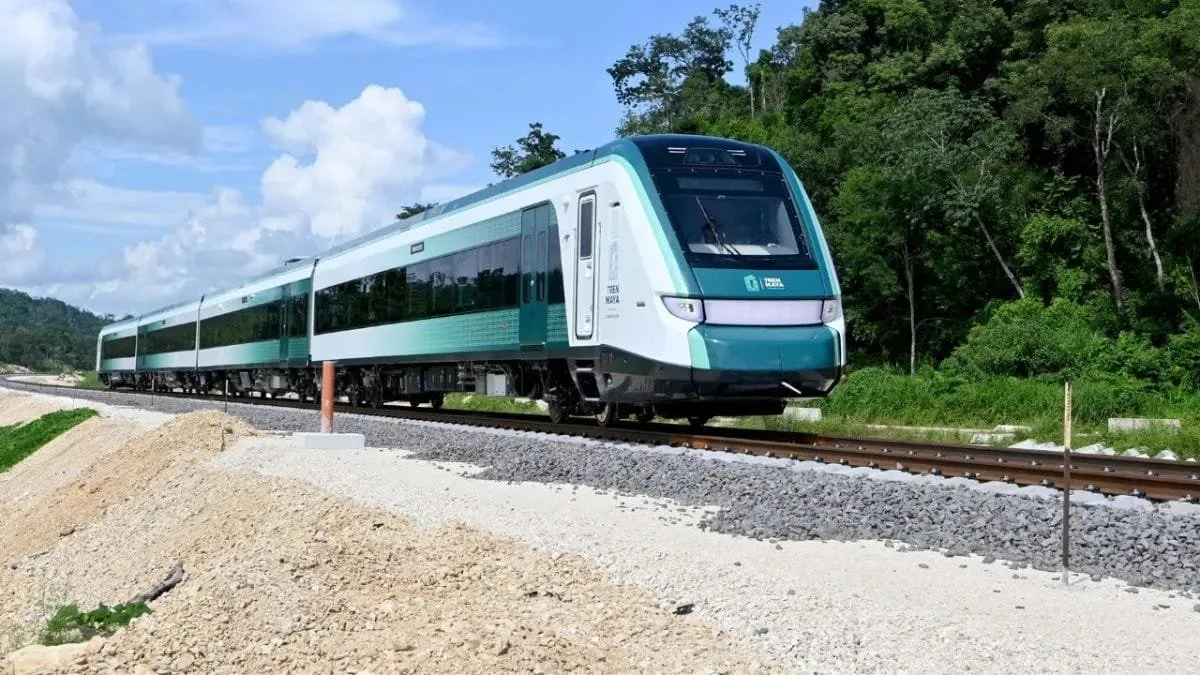
Cancún, Quintana Roo — Despite being a focal point for flagship federal projects such as the Tren Maya, the Tulum International Airport, and other investments tied to the government’s southeastern development strategy, Quintana Roo’s economy contracted by 8.68% in 2025. Analysts warn that the temporary boost from mega-infrastructure projects has run its course.
“The 2022-2024 bubble is behind us, and reviving the region’s economic activity will not be easy,” said Carlos Ramírez, a consulting partner at Integralia, noting that the south-southeast region lost momentum after the completion of several major federal initiatives launched under former President Andrés Manuel López Obrador.
In recent years, Quintana Roo was presented as a cornerstone of the federal strategy to spur economic growth in the southeast, primarily through the Tren Maya, a railway that crosses much of the Yucatán Peninsula, along with complementary tourism and airport infrastructure.
However, an economic analysis released this week indicates that much of the growth observed between 2022 and 2024 was driven by extraordinary spending on construction and public works, creating a temporary effect that began to fade once the projects were completed.
The report notes that the economic downturn was not limited to Quintana Roo. Campeche saw a 13.57% contraction and Tabasco a 4.82% decline in 2025, with the latter also affected by the slowdown following the construction of the Dos Bocas refinery.
The loss of dynamism is also beginning to show in formal employment, particularly in construction-related activities, as contracts and payrolls shrink after the completion of federal mega-projects.
Although financial institutions such as BBVA forecast a gradual recovery driven by tourism, services, and the 2026 FIFA World Cup, specialists argue that the main challenge for Quintana Roo will be converting large federal projects into permanent economic growth rather than temporary cycles of public investment.
More Tourism
- Quintana Roo to Add 10,000 Hotel Rooms by 2028
- Brain-Eating Amoeba Confirmed in Mérida Lake: What to Know in Quintana Roo
- Cancún Hoteliers Plan Rate Hikes of Up to 35% for Winter Season
- Holbox Hotel Occupancy Falls to 43.8% Ahead of Winter Season
- Ángeles Viajeros to Take 16 Children With Cancer to Cozumel for a Week by the Sea
More Quintana Roo
- Drought Crisis Forces Quintana Roo Wildlife to Seek Water Near Roads and Towns
- Quintana Roo Graduates 244 New Police Officers and Debuts First Bomb Squad
- Morena Taps Gino Segura as Quintana Roo Governor Candidate
- Quintana Roo Marks 216th Anniversary of Mexico’s Independence With Statewide Celebrations
- Quintana Roo Expands Tourist Police Force With Specialized Training Programs