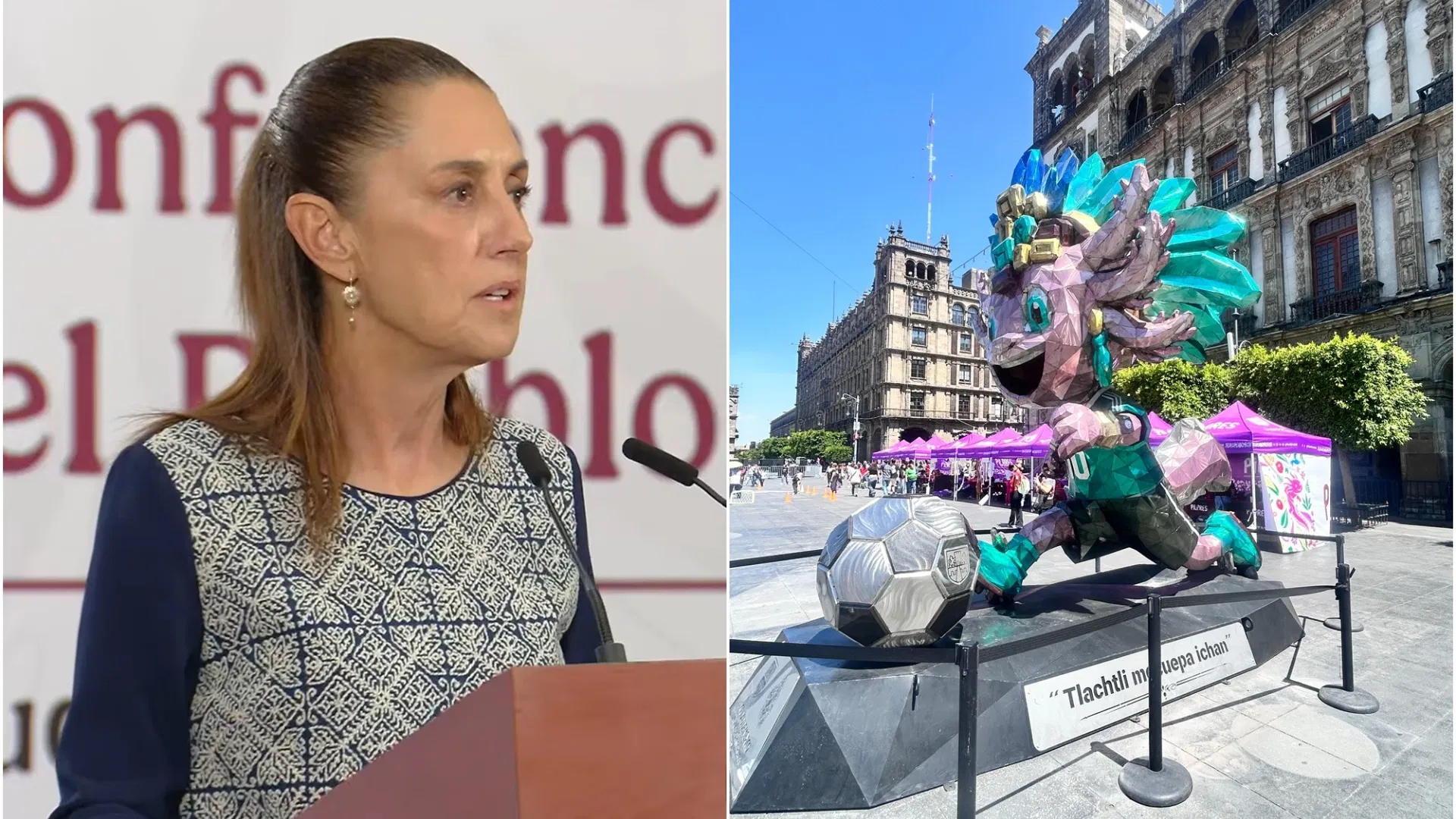
Mexico City — President Claudia Sheinbaum defended the use of the axolotl and the color lilac in infrastructure and street furniture projects across the capital, arguing that the city should embrace a visual identity rooted in its cultural heritage, biodiversity, and the aesthetic recovery of public spaces.
During her morning press conference, Sheinbaum said urban transformation cannot be limited to a “gray” vision based solely on concrete and cement. Instead, it must incorporate symbols that connect with the city’s history, culture, and natural patrimony.
“The city doesn’t have to be gray,” Sheinbaum said, backing the capital administration’s strategy to integrate colors, urban art, and emblematic figures into public infrastructure, transportation, and community spaces.
Axolotl as Environmental and Cultural Symbol
The axolotl, an endemic species of the Valley of Mexico and one of the most representative animals of Xochimilco, has been adopted as a visual emblem in recent urban projects due to its ecological and cultural significance.
Sheinbaum said criticism of these elements reflects a resistance to recognizing the country’s cultural diversity and indigenous roots, particularly those linked to the Valley of Mexico’s historical traditions.
Capital Administration Bets on Colorful Urban Spaces
The defense of the lilac color and biodiversity-related visuals is part of an urban policy aimed at reshaping public spaces through artistic interventions, facade restoration, and community identity projects.
In recent years, the capital has promoted mural programs, architectural lighting, and rehabilitation of deteriorated areas to transform the urban environment and improve perceptions of safety and coexistence.
The city administration argues that urban design also influences mood, community appropriation, and the collective identity of residents.
Sheinbaum’s remarks come amid debate on social media over the use of colors and symbols in public infrastructure, particularly after the appearance of lilac elements and axolotl figures in various urban spaces.
More Lifestyle
- Taco Social Run to Bring Recreation, Live Music and Street Tacos to Cancún’s Avenida Yaxchilán
- Playa del Carmen to Renew Eight Blue Flag Beach Certifications, Eyes Two More
- Cancún Sets October Dates for Free Dog and Cat Sterilization Clinics
- Quintana Roo Governor Urges Youth to Help Draft New Rights Law
- Playa del Carmen Reviews Parking Meter Concession Over Alleged Violations