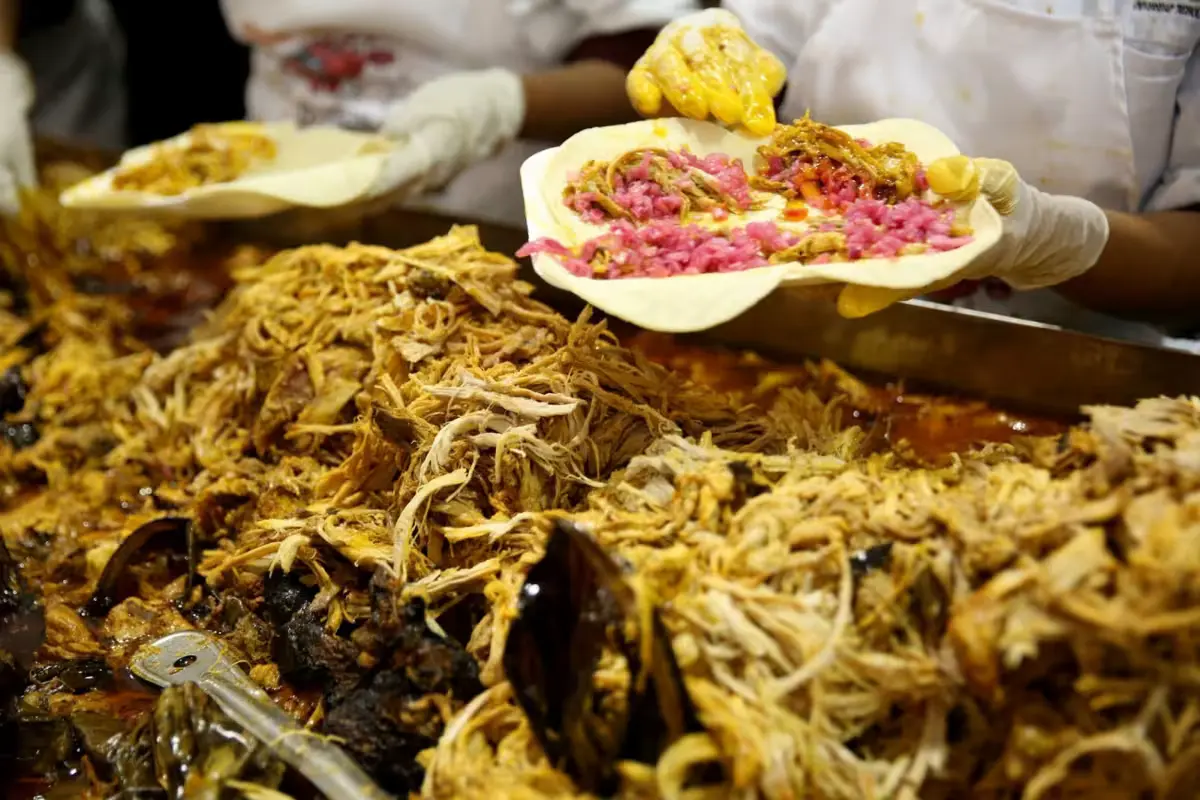
Mérida, Yucatán — In Yucatán, Sunday has its own scent. Long before the day gets too hot, lines begin forming at markets, loncherías, street stands, and neighborhood kitchens. The air fills with achiote, sour orange, roasted pork, warm tortillas, and the sharp bite of pickled red onion.
The reason is simple: Sunday is cochinita day.
Cochinita pibil is one of Yucatán’s most beloved dishes, but it is more than just a weekend craving. For many families, it is part of the rhythm of life. It appears at breakfast, after Mass, before a family visit, on the way home from the market, or as the unofficial cure for a long Saturday night. In Mérida and towns across the state, Sunday cochinita is as much a social ritual as a meal.
The dish is usually served in tacos or tortas, with pickled red onion and habanero salsa on the side. The pork is marinated in recado rojo, a deep red seasoning paste made with achiote, spices, garlic, and sour orange juice. When cooked properly, the meat becomes tender enough to fall apart, carrying the earthy flavor of achiote and the brightness of citrus.
The tradition has deep historical roots.
The custom of eating cochinita pibil on Sundays is often traced to the colonial period, when pigs were typically slaughtered on Saturday afternoons. Before refrigeration, the meat had to be prepared and eaten quickly. Families would marinate the pork, wrap it in banana leaves, and cook it slowly overnight using a method inherited from Maya cooking traditions.
By Sunday morning, the cochinita was ready.
The word “pibil” comes from the Maya word pib, meaning an underground oven. Traditionally, a pit was dug into the ground, lined with hot stones, and filled with wrapped food before being covered with earth. The trapped heat cooked everything slowly and evenly for hours, giving the meat its soft texture and subtle smoky flavor.
Today, not every vendor uses an underground pit. Many prepare cochinita in ovens or commercial kitchens, especially in cities. But the technique, flavor profile, and timing still carry the memory of the original method.
That is part of what makes cochinita pibil so important. It brings together Maya cooking techniques, Spanish-introduced pork, local citrus, banana leaves, and achiote, a seed native to the tropical Americas. Like so many great Mexican dishes, it tells a history of adaptation in one bite.
And while tourists may encounter cochinita on restaurant menus any day of the week, locals know Sunday is when it really matters. The best places often sell out early. People bring containers to take it home by the kilo. Families gather around the table with stacks of tortillas, fresh bread, and enough salsa to remind everyone to proceed with caution.
In Yucatán, cochinita pibil is not treated like a special-occasion dish because it is rare. It is special because it is shared, repeated, and expected. It belongs to Sunday morning.
For visitors, finding a good cochinita stand in Mérida is one of the easiest ways to understand local food culture. Go early, follow the line, and don’t overthink it. Order a taco, add pickled onion, go easy on the habanero, and you’ll understand why Yucatecans built a whole day around it.
More Lifestyle
- Taco Social Run to Bring Recreation, Live Music and Street Tacos to Cancún’s Avenida Yaxchilán
- Playa del Carmen to Renew Eight Blue Flag Beach Certifications, Eyes Two More
- Cancún Sets October Dates for Free Dog and Cat Sterilization Clinics
- Quintana Roo Governor Urges Youth to Help Draft New Rights Law
- Playa del Carmen Reviews Parking Meter Concession Over Alleged Violations
More Quintana Roo
- Quintana Roo Remains Far from Electronic Voting, INE Official Says
- Sargassum Influx Triggers Two Types of Wildlife Die-Offs in Quintana Roo
- Experts Highlight Social Memory as Key to Disaster Prevention in Quintana Roo
- Quintana Roo to Launch World’s First Formal Sargassum Fishery With 840 Fishermen
- INE Opens 2026-2027 Federal Electoral Process in Quintana Roo, Vows to Tackle Voter Apathy