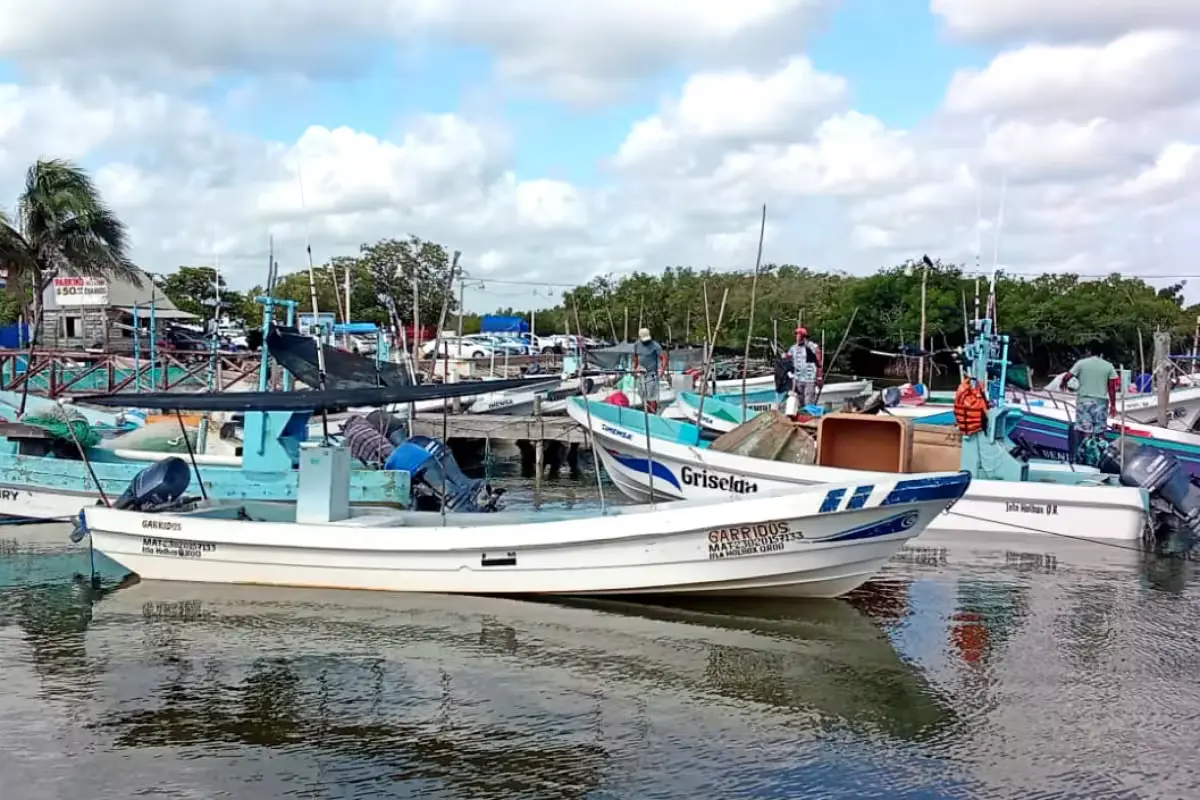
Lazaro Cardenas, Quintana Roo — Cooperatives and fishermen in the region are facing one of the worst crises in recent years due to a drastic drop in catches of scale fish. The situation has left most boats docked, as the cost of going out to sea exceeds the earnings from fishing trips.
According to Alberto Perez Villatoro, representative of the Federation of Fishing Cooperatives of the northern zone of Lazaro Cardenas, the paralysis is not only due to the scarcity of fish in national waters but also to strong international competition. He explained that prices in Mexico are conditioned by wholesalers and supply from Honduras, Nicaragua, Brazil, Cuba, and the Bahamas. This has forced many fishermen to rely solely on the federal Bienpesca program while waiting for the lobster season to begin on July 1.
Fishing activity along the coast has practically stopped. Each trip represents a high economic risk due to fuel, bait, and maintenance costs, with no guarantee of recovering the investment. “Few dare to go out because sometimes they don’t even recover their expenses,” Perez Villatoro said.
The inactivity has also hit the economy of coastal communities. Cash flow has dropped significantly, and many families survive thanks to the Bienpesca subsidy. Although this support has provided temporary relief from debts and basic needs, the sector acknowledges that economic incentives do not solve a problem rooted in climate and structural issues.
In addition to low production, fishermen face difficulties in the marketing chain. Middlemen and large buyers delay purchases to wait for international market fluctuations before setting local prices. This is compounded by the saturation of imported products from Central America, the Caribbean, and South America in hotels and restaurants, further reducing the value of Mexican fish.
The sector is demanding broader public policies to cope with closed seasons and “dead sea” periods. Proposals include training and equipment programs to promote aquaculture and controlled species cultivation, aiming to diversify income, reduce pressure on endemic species, and ensure family livelihoods.
For now, expectations are pinned on the start of lobster fishing, an activity that historically revives the regional economy. Until then, the docks remain full of idle boats and fishermen waiting for a respite from nature and the market.
More Lifestyle
- Taco Social Run to Bring Recreation, Live Music and Street Tacos to Cancún’s Avenida Yaxchilán
- Playa del Carmen to Renew Eight Blue Flag Beach Certifications, Eyes Two More
- Cancún Sets October Dates for Free Dog and Cat Sterilization Clinics
- Quintana Roo Governor Urges Youth to Help Draft New Rights Law
- Playa del Carmen Reviews Parking Meter Concession Over Alleged Violations