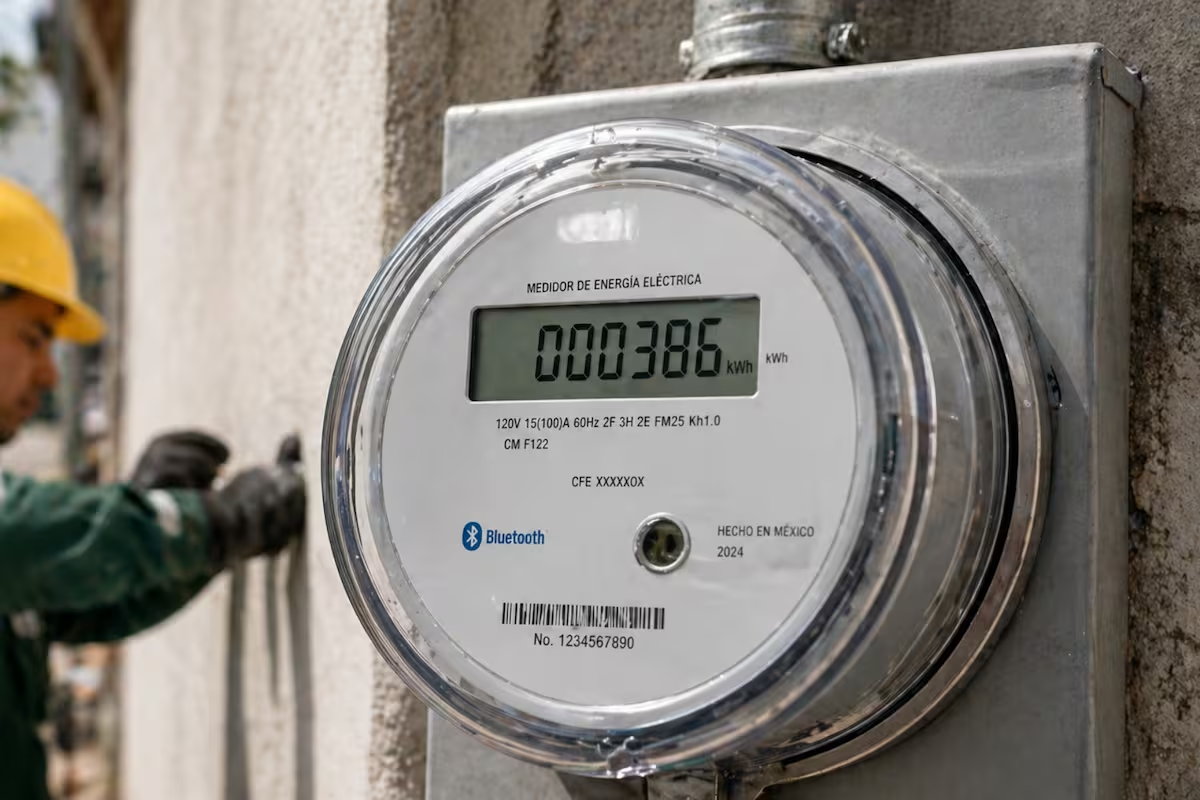
Mexico City — Mexico’s Federal Electricity Commission (CFE) is moving ahead with a nationwide modernization of its electricity meters, replacing older analog and electromechanical devices with smart meters using Advanced Metering Infrastructure, or AMI.
The change is intended to make billing more accurate, reduce estimated charges, detect service problems faster, and combat electricity theft, including illegal bypasses commonly known in Mexico as diablitos.
The new meters record consumption in greater detail and transmit information remotely, which means CFE can read usage without sending a worker to manually check the meter. In many cases, the technology also allows the utility to detect irregularities, faults, voltage issues, or interruptions more quickly. Some AMI systems also allow remote disconnection and reconnection, reducing the need for in-person visits once a bill is paid or a technical issue is resolved.
For households, the biggest practical change should be billing accuracy. Traditional meters often rely on periodic readings, and when access is difficult or readings are delayed, customers may receive estimated bills. Smart meters are designed to reflect actual consumption, giving users a clearer picture of how much electricity they are using. That matters especially in hot regions like Quintana Roo, where air conditioning can push households into higher consumption tiers during the warmest months.
CFE has said replacements are being carried out based on technical criteria, including meters that have reached the end of their useful life, equipment that is damaged or obsolete, devices without available replacement parts, and areas selected for infrastructure upgrades. The rollout is gradual and does not yet have a publicly confirmed completion date for every state or municipality.
The installation should be free for standard residential customers. Authorized CFE technicians are expected to arrive in uniform, carry official identification, use marked vehicles, remove the old meter, install the new one, place security seals, and provide proof of the replacement. CFE has warned that users should not pay technicians or third parties for a standard meter replacement. Any attempted charge should be treated as irregular and reported through official channels.
There are exceptions. CFE has clarified that certain special installations may require equipment provided by the user, including some new developments with restricted access, vertical condominium projects, properties with solar panels or distributed generation, or medium-voltage interconnections. Outside those specific technical cases, CFE says the supply and installation of the meter generally falls to the utility.
The anti-theft component is also significant. Illegal connections and meter tampering create losses for the system and can create safety risks for neighbors, buildings, and maintenance crews. Smart meters make it easier to identify abnormal consumption patterns and possible manipulation, allowing CFE to respond faster. For communities that have dealt with overloaded circuits or questionable connections, this could help reduce strain on the local grid.
The change does raise questions. More detailed consumption data means CFE will need to protect user privacy and communicate clearly about how the information is used. Customers will also need guidance on how to read the new meters and what to do if a bill changes suddenly after installation.
For Riviera Maya residents, the rollout comes at a time when electricity reliability is already a major concern. Playa del Carmen and other fast-growing areas of Quintana Roo have seen increasing pressure on transformers, circuits, and substations during periods of extreme heat. Smart meters will not solve the region’s capacity problems on their own, but they may help CFE identify failures, overloads, and irregular usage more quickly.
In short, the new meters are part of a larger shift toward a more digital electrical grid. For customers, the key points are simple: the change is gradual, standard replacements should be free, technicians should be properly identified, and anyone trying to charge for a basic meter swap should be reported.
More Lifestyle
- Taco Social Run to Bring Recreation, Live Music and Street Tacos to Cancún’s Avenida Yaxchilán
- Playa del Carmen to Renew Eight Blue Flag Beach Certifications, Eyes Two More
- Cancún Sets October Dates for Free Dog and Cat Sterilization Clinics
- Quintana Roo Governor Urges Youth to Help Draft New Rights Law
- Playa del Carmen Reviews Parking Meter Concession Over Alleged Violations