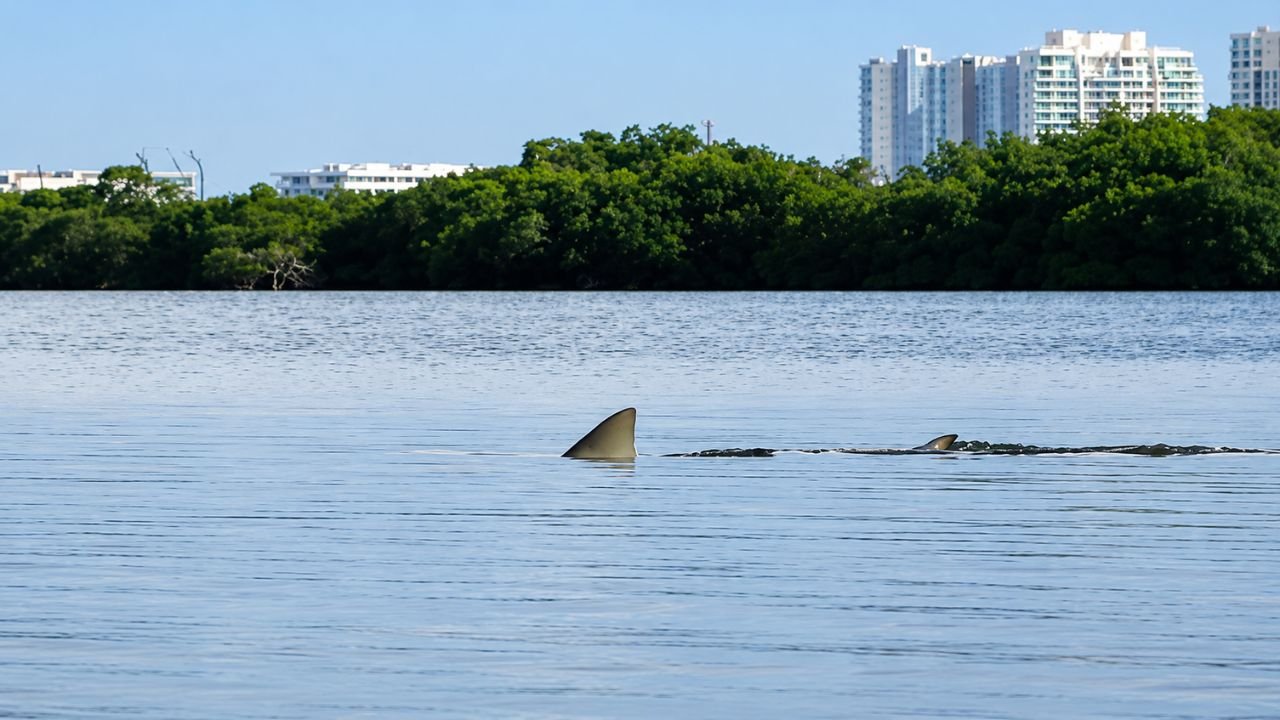
Cancún, Quintana Roo — Scientists are deploying a cutting-edge genetic technique to study sharks and rays in the Nichupté and Bojórquez lagoon system, marking the first such effort in the Mexican Caribbean.
Adán Caballero Vázquez, a researcher at the Yucatán Scientific Research Center (CICY), is leading the project, which uses environmental DNA (eDNA) to identify which species enter these coastal waters to feed, shelter, or reproduce.
Traditional monitoring methods — relying on sporadic sightings or physical captures — are costly and stressful for the animals, especially in an urban mangrove environment. eDNA analysis, by contrast, allows scientists to detect genetic material shed naturally by marine life through skin cells, mucus, feces, and urine found in water and sediment samples.
“Monitoring is not easy and requires a large budget, but the interesting thing is that it increases the richness of organisms that can be identified,” Caballero Vázquez said.
The most common shark species documented in the lagoon system are the bull shark and the nurse shark. Both use these shallow, protected waters as critical nursery and refuge areas during early life stages and reproductive periods.
By processing the genetic material in the lab, the CICY team aims to build the first systematic inventory of sharks and rays in Cancún’s lagoons — data that could inform environmental management policies and help mitigate urban impact on the ecosystem.
More Environment
- Playa del Carmen Unveils Recycled-Plastic Lifeguard Tower at Playa 72
- Chankanaab Park Eyed as Site for Cozumel’s First Dolphin Sanctuary
- Tulum Launches Credentialing Program for Parque del Jaguar Tourism Workers
- Cancún to Host National Climate Change Colloquium in October
- Riviera Maya Hotels Offer Free Nights When Sargassum Blocks the Beach
More Cancun
- Million-Dollar Robbery in Cancún Triggers Major Police Deployment
- Two Extortionists Sentenced to 22 and 15 Years in Cancún
- Four Years After Decriminalization, Quintana Roo Feminists Say Abortion Access Still Falls Short
- Fake Priests Target Hotel Weddings in Cancún, Diocese Warns
- Cancun’s Night Bike Ride Returns to Avenida Bonampak on October 3