Chetumal, Quintana Roo — Quintana Roo has collected 106,848 tons of sargassum since the start of the season, according to Óscar Rébora Aguilera, head of the state’s Secretariat of Ecology and Environment (SEMA).
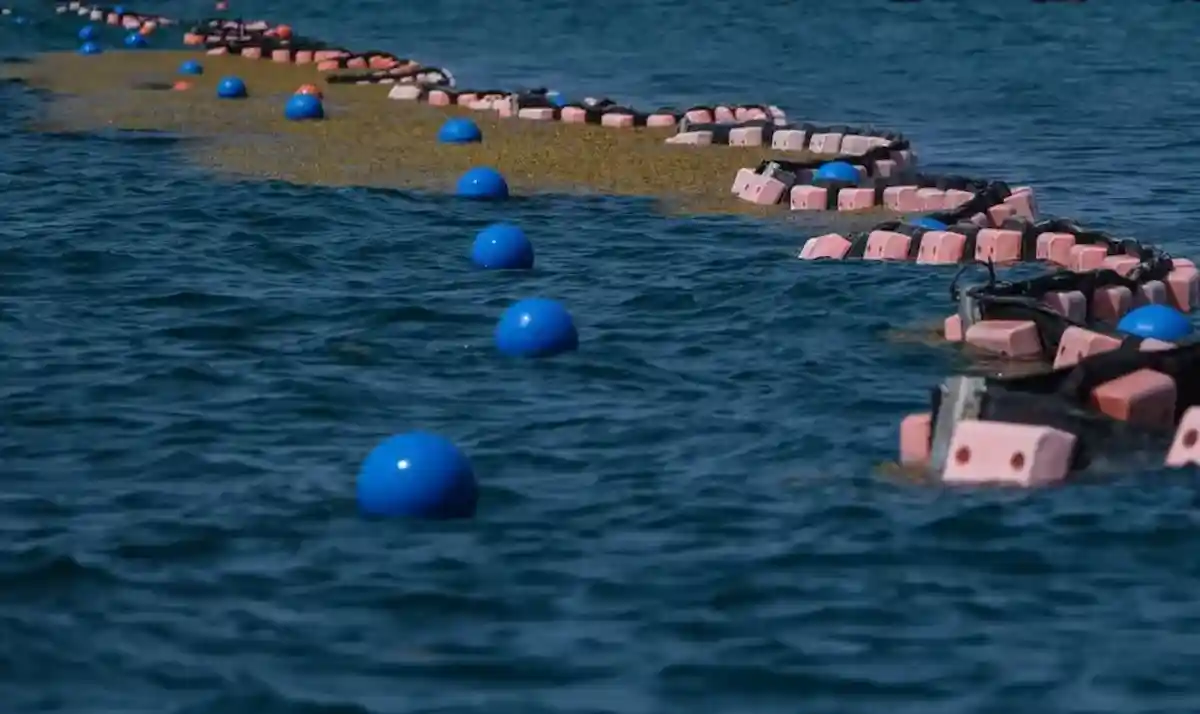
Rébora said about 11,000 of the 16,000 meters of anti-sargassum barriers purchased by the state government have been installed. The Mexican Navy is handling the installation, but work has been intermittent because of sea conditions, including waves, currents, winds and seasonal storms.
The goal is to complete all 16 kilometers this year. With the new federal investment announced by Mexico’s president, the state could expand its coverage to nearly 40 kilometers of barriers — roughly 35 kilometers more than the current infrastructure, Rébora said.
Barriers are already in place in coastal communities such as Puerto Morelos, Playa del Carmen, Tulum and Mahahual, among other sites.
The secretary also highlighted the Navy’s growing capacity to remove the algae offshore. At the beginning of the current administration, about 1,000 tons were collected in open water; this season the figure has already exceeded 16,000 tons, a result of greater operational capacity and accumulated experience in dealing with the seaweed before it reaches the beaches.
Rébora said one objective of the new federal investment is to strengthen that offshore strategy so more sargassum is collected at sea, easing pressure on the shoreline.
Wind direction plays a decisive role in the seaweed’s movement, he said. Westerly winds push sargassum toward the coast, while northerly and easterly winds can alter its path. Currently, northerly winds have led to a temporary reduction in arrivals in some areas.
Regarding the recent influx of sargassum into the Nichupté Lagoon, Rébora described it as an atypical event caused by an unusual combination of winds and currents, with no significant re-entry recorded since.
He also linked the increase in arrivals in recent years to environmental changes such as rising ocean temperatures, acidification and higher nutrient concentrations, which are modifying marine ecosystems.
With the Atlantic hurricane season under way, SEMA is monitoring weather conditions and their potential impact on coastal zones and mangrove areas near tourist developments, since changes in wind, waves and currents can affect both sargassum movement and the installation of barriers.
More Environment
- Nine Sick Dolphins Stranded in Abandoned Cancún Water Park
- Playa del Carmen Presses Federal Officials to Halt Wildlife Exploitation Permits
- Scientists Detect Early Signs of Groundwater Contamination in Quintana Roo
- 22 Hotels in Mexico’s Caribbean Join Dune Restoration Push
- Cancún Protesters Demand Answers on Fate of Big Cats Kept by ‘Pepe Tigre’
More Quintana Roo
- Measles Cases Surge 1,940% in Mexico’s Yucatan Peninsula
- Microplastics, Sunscreen Chemicals and Repellents Under Study in Quintana Roo Waters
- Quintana Roo to Present Mexican Caribbean Cenote Guide at DEMA Show 2026
- Quintana Roo Rethinks Tourism Model as Visitor Spending Falls
- Drainage Connection Gap Worsens Pollution of Cenotes and Beaches in Quintana Roo