
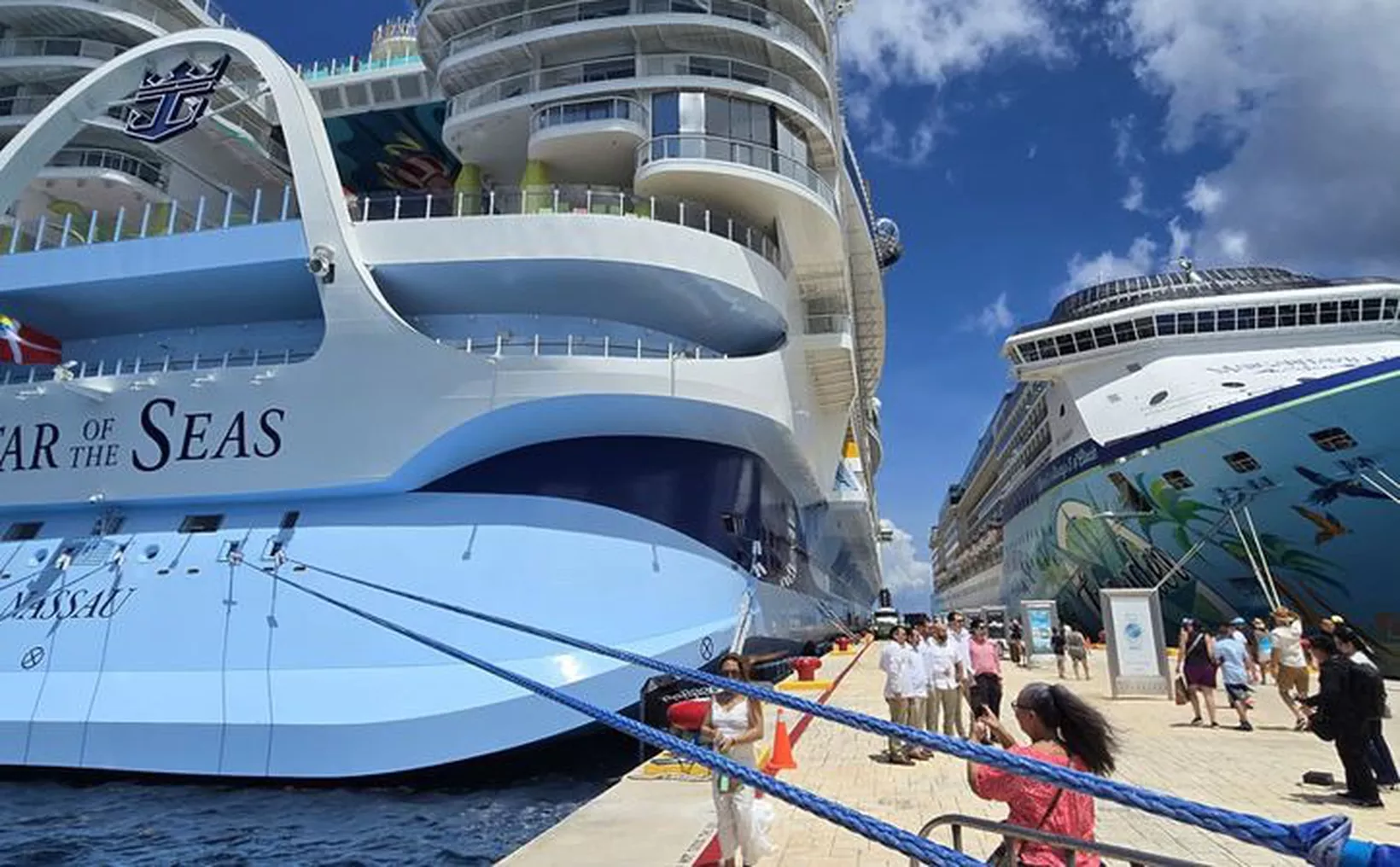
Cozumel, Quintana Roo — Mexico’s National Commission of Protected Natural Areas (Conanp) has concluded that Royal Caribbean’s proposed Royal Beach Club Cozumel is unviable, saying the 17.42-hectare project would sit partly inside a national park and conflict with the rules that protect it.
The finding is set out in a technical opinion signed by Conanp’s regional director, Juan Carlos Romero Gil, and forms part of the environmental assessment the project must clear before the Secretariat of Environment and Natural Resources (Semarnat) decides whether to grant it an impact authorization. Cozumel environmental groups obtained the document, numbered F00.9.DRPYyCM/SUTCMR/199/2026, through a transparency request.
Royal Caribbean’s subsidiary Desarrolladora Turística L.18 de México wants to build a day-use beach club with no overnight stays for up to 4,000 tourists daily, featuring restaurants, pools, bars, lounge chairs and palapa huts. Of the 17.42 hectares involved, 1.11 hectares lie in the federal maritime-terrestrial zone.
Structures inside a protected zone
According to the opinion, part of the site falls within the Cozumel Reefs National Park, in Zone III, designated for intensive use, and in the reef zone — territory governed by the park’s decree and management program.
Conanp objected in particular to the 2,000 lounge chairs and 24 palapa structures mounted on stilts 4.6 meters high. Although the developer describes them as temporary, the agency classified them as fixed infrastructure because they cannot be moved, and noted that the park’s decree bans any infrastructure that damages coral formations.
Tourism density and turtle nests
The agency also flagged excessive visitor density. The management program permits only low-density tourism in that zone, yet the club would double the park’s current visitation: the national park already receives about 4,000 visitors a day for diving and snorkeling, and the project would add another 4,000 without assessing cumulative effects.
Conanp documented two sea turtle nests next to the existing dock. It said the stilts, lounge chairs, lights aimed at the sea and sand compaction from daily operations would violate Mexican standard NOM-62-SEMARNAT-2012 on turtle protection, as well as Rule 56 of the management program, which prohibits altering the coastline, removing dunes and filling mangrove.
Wastewater and reef risks
Water management is another weak point. With 4,000 users a day, the proposed treatment plant and injection wells do not guarantee adequate handling of wastewater, the agency said. Cozumel’s highly permeable aquifer has no natural filter, so nitrogen and phosphorus enrichment could kill mangrove, seagrass — including Thalassia testudinum, listed for special protection — and reefs already damaged by the 2020 and 2024 hurricanes, by White Syndrome since 2019 and by bleaching events recorded since 2023.
The seagrass meadow begins just a few meters offshore in water no deeper than three meters. Boat traffic ferrying visitors would constantly churn up sediment, Conanp said, even though only vessels authorized by the agency with a draft of less than two meters may dock in the park.
Public beach and endemic species
The opinion also warns of creeping privatization of a public beach. Playa Sur is one of the beaches most used by local residents because of its free access, and the mass installation of lounge chairs would shrink public space, in contravention of the General Law on National Assets, which guarantees free passage on beaches.
Conanp further noted that the project does not guarantee preservation of 70 percent of native vegetation, as required by Rule 54. The site is home to protected and endemic species, including the Cozumel pygmy raccoon and the Cozumel vireo, which the developer’s environmental impact statement does not consider.
Inspectors also found that part of the property has already lost topsoil through demolition of the former club, and that the site has been operating with visitors without environmental impact authorization.
The opinion is not binding on its own. It is one of several technical reviews requested during the assessment process, and Semarnat must weigh it alongside soil mechanics and hydrology studies, reports from other agencies and the developer’s own impact statement before ruling on construction and operation.
A $75 million project
Governor Mara Lezama announced the investment in March 2024 as exceeding $75 million. It is the same company behind the Perfect Day México project in Mahahual, in southern Quintana Roo, where an investment estimated at between $600 million and $1 billion is currently suspended. That project faces injunctions filed by Mahahual residents, which the Supreme Court recently revived for a substantive review of possible environmental harm.
More Environment
- Dolphin ‘Mincho,’ Whose Abuse Sparked Mexico’s Captivity Ban, Dies at 37
- Inside the New Guide to Mexican Caribbean Cave Diving
- Flamingo Named Víctor Flies 262 Kilometers Across Yucatán’s Coastal Wetlands
- Dried Starfish Still Sold in Isla Mujeres Despite Permanent Ban
- Quintana Roo Launches No-Investment Solar Fund to Cut Business Power Bills by 30%
More Cozumel
- IMSS Approves Land for New 90-Bed Hospital in Cozumel
- Cozumel’s Punta Sur to Host ‘Bichos Night’ Insect Event on Oct. 29
- Cozumel Lights Candles and Prepares Its Procession of Souls
- First Monarch Butterfly of the Season Sighted at Cozumel’s Kuzá Park
- Quintana Roo Poised to Break Cruise Record in 2026 With Double-Digit Growth
