
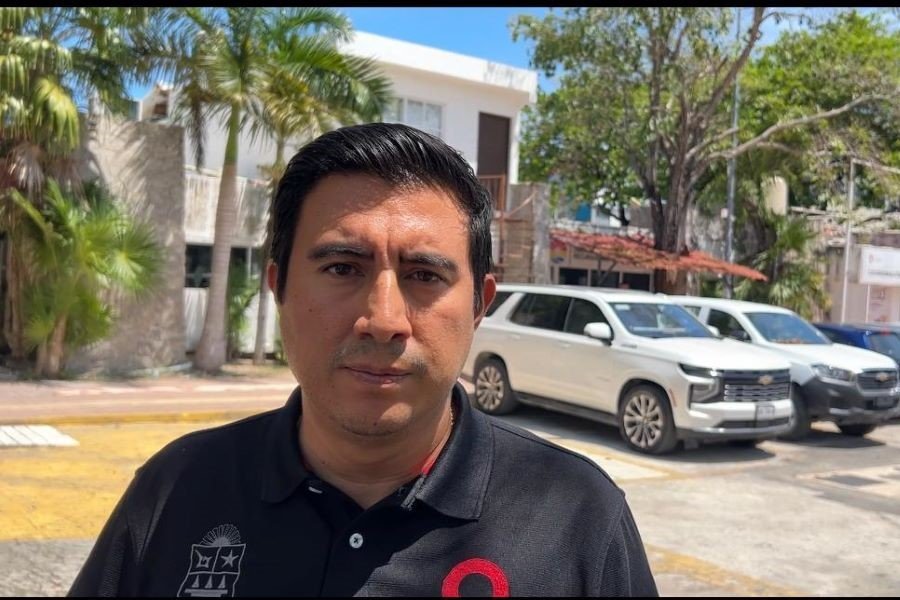
Cancún, Quintana Roo — The head of Quintana Roo’s mobility institute has denied that the state’s new public transport system will include 30-year concessions, clarifying that terms will be 10 or 15 years depending on vehicle type.
In an interview after meeting with municipal councilors in Benito Juárez, the official from the Institute of Mobility of Quintana Roo (Imoveqroo) said electric vehicle concessions will last 15 years, while those using conventional fuel will be 10 years. “I think there was confusion because it was said that concessions are for 30 years. No concession is for 30 years; they’re simply agreements for 10 or 15 years,” he explained.
The meeting aimed to convince municipal officials to sign a collaboration agreement with the state government to coordinate on implementing the Mobility of Quintana Roo Welfare System (MOBI). The official discussed implementation stages, coordination mechanisms, and benefits for residents of Benito Juárez municipality, which includes Cancún.
He noted that state law allows coordination agreements to address public transport issues, but any municipal agreement must be approved by the city council and state congress. Regarding the meeting, he said councilors showed good response with varying positions: some viewed it as the municipality abandoning responsibility, others as combining efforts, and some had genuine questions about municipal oversight and decision-making roles.
“As long as there are questions, it means there’s willingness to work,” he said, expressing confidence in achieving approval for the collaboration agreement.
The official also addressed concerns about municipal government roles, denying any attempt to “disengage the municipal government” from public transport regulation. Instead, he described a coordinated mechanism involving state and municipal governments, businesses, and concession holders to establish unified public transport policies.
“It would coordinate what exists today. For example, on the avenue behind us, some concessions were granted by the state, others by the municipality, with no coordination between them. Today we have 135,000 people without public transport and an avenue where 80% of routes pass. Rather than disengaging, we’d coordinate to offer service and ensure all transport means function as one,” he responded.
The official said he will also meet with councilors in Playa del Carmen and Othón P. Blanco, where the Mobi system is also planned for implementation.
More Business
- Cancún Airport Transporters Blame ASUR for Steep Fees
- Akumal Halts Turtle Swim Tours Through September
- Mexico’s Treasury Seeks Power to Ban Cash Payments Sector by Sector
- Quintana Roo Civil Protection Warns Against Fireworks Ahead of Independence Day
- Business Leaders Urge Playa del Carmen to Diversify Economy as Tourism Slumps
More Cancun
- Cancún Installs More Than 100 Traffic Signs Across the City
- Profeco to Inspect Businesses Across Mexico During Independence Day Festivities
- Cancún Commuters Face Waits of Up to Three Hours on Crumbling Public Transport
- Rising Crime Reports in Quintana Roo Signal Greater Trust, Official Says
- Cancún Braces for 30,000 at Grito de Independencia With Road Closures and Security Operation
