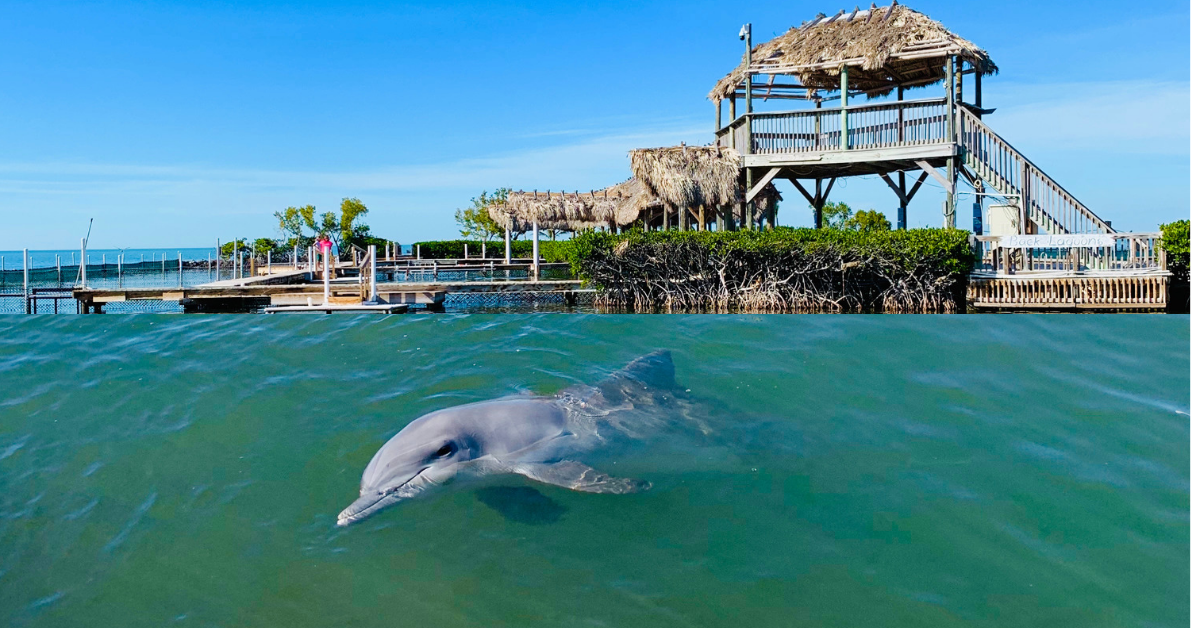
Cozumel, Quintana Roo — The Quintana Roo government is studying a proposal to create a permanent seaside sanctuary in Cozumel for dolphins retiring from entertainment facilities, a project that could become the first of its kind in Latin America.
SEMA Secretary Óscar Rébora Aguilera said Governor Mara Lezama would formally present the proposal. The announcement follows a July 18 appeal from PETA Latino urging state and federal authorities to establish a coastal refuge for dolphins currently living in Mexican entertainment facilities.
“We are looking for a suitable space where captive dolphins with health symptoms can be transferred to an area with all the conditions they require,” Rébora told local news outlets.
The proposal comes one year after Mexico enacted sweeping restrictions on the use of marine mammals in commercial entertainment.
Mexico Phases Out Dolphin Entertainment
In July 2025, Mexico amended the General Wildlife Law to prohibit the commercial use of marine mammals in fixed or traveling shows. The reform also restricts their capture and reproduction under intensive management, except for authorized scientific research and conservation projects involving reintroduction, population recovery or relocation.
The legislation, widely known as the “Mincho Law,” also requires cetaceans to be housed in marine pens instead of concrete tanks. When direct placement in the sea is not possible, facilities must provide open systems receiving seawater through tides or pumping.
The federal decree was published July 16, 2025, and entered into force the following day. Existing operators were required to submit inventories identifying each marine mammal by species, age, sex, health and individual identification. They were then given an additional period to adapt their facilities or move cetaceans into compliant marine enclosures. The Chamber of Deputies approved the reform unanimously with 415 votes.
The law does not mean that dolphins already living under human care can simply be released into the ocean. Many have spent most or all of their lives in managed environments and may lack the survival skills needed to feed themselves, avoid predators or integrate into wild groups. Older animals and those with chronic medical problems may require veterinary care for the rest of their lives.
A sanctuary is intended to provide that care in a larger, natural seawater environment without performances, breeding programs or direct tourist encounters.
Why Cozumel Is Being Considered
Quintana Roo has the largest concentration of dolphin entertainment facilities in Mexico. State legislative figures cited by 24 Horas place 18 of the country’s 33 registered dolphinariums in Cancún, Playa del Carmen and Cozumel, representing approximately 54.5% of the national total.
PETA Latino separately estimates that close to half of Mexico’s dolphinariums operate in Quintana Roo. The organization argues that the state’s concentration of captive animals makes it the logical location for a retirement facility. Its request called for a protected coastal area with natural seawater, room for social interaction and continuing veterinary supervision.
Cozumel already has marine science, diving and animal-care experience, but selecting a site would require extensive environmental study. The island is surrounded by coral reefs and protected marine areas, meaning planners would have to avoid sensitive habitat, heavy boat traffic, polluted runoff and locations exposed to severe waves or storms.
Héctor Lizárraga Cubedo, director of the Akumal Ecological Center, said a suitable location would need water approximately 8 to 10 meters deep, protection from strong wave action and good water quality.
The sanctuary would also require reinforced marine barriers, quarantine enclosures, an on-site veterinary hospital, continuous water monitoring and surveillance boats. Its staff would likely include veterinarians, marine biologists, animal-behavior specialists and divers.
Food would be another substantial expense. Lizárraga estimated that one dolphin could consume between eight and 16 kilograms of fish per day, depending on the animal’s age, health and activity. A facility caring for several dolphins would therefore need a reliable supply of inspected, properly stored fish throughout the year.
The animals would continue receiving individual medical care and prepared food. A seaside sanctuary would offer more space and natural stimulation, but it would remain a managed environment enclosed by marine fencing.
Long-Term Funding Remains Unresolved
Dolphins under professional care can live for several decades, making funding one of the proposal’s largest challenges. A sanctuary accepting an animal would assume responsibility for its food, medical care, staffing and habitat maintenance for the remainder of its life.
One option under consideration is a trust funded by government agencies, universities, private foundations and international animal-welfare organizations. No financial structure or estimated project cost has been announced.
José Adán Caballero Vázquez, a researcher with the Yucatán Center for Scientific Research, said Cozumel has useful infrastructure and operational experience but warned that the project will require clearly assigned responsibilities, health controls, biosecurity procedures and federal permits.
Those safeguards would be necessary to prevent a nonprofit retirement facility from gradually adopting the same practices as a commercial dolphinarium.
International Projects Show The Complexity
Large-scale seaside sanctuaries for captive cetaceans remain rare. The National Aquarium in Baltimore has been planning what it describes as North America’s first dolphin sanctuary for its six Atlantic bottlenose dolphins. The proposed facility would use natural seawater, flexible habitat areas, an on-site clinic and full-time veterinary care. However, the aquarium was still evaluating possible locations in Florida and the Caribbean as of 2026. Its dolphins are undergoing specialized transport training in preparation for an eventual move.
The Whale Sanctuary Project is developing a separate facility for whales in Port Hilford Bay, Nova Scotia. Site preparation began in 2026 after years of environmental studies, community consultation, fundraising and work to secure a long-term government lease. The project has acknowledged that construction and animal transfers depend on completing additional fundraising and regulatory steps.
Those projects illustrate the distance between announcing a sanctuary and receiving its first animals.
The Cozumel proposal must still pass through site selection, environmental assessment, permitting, engineering and fundraising. Authorities have not said how many dolphins the sanctuary might accommodate or which animals would be considered for transfer.
If those issues can be resolved, Cozumel could become a regional model for managing dolphins as Mexico moves away from commercial marine mammal entertainment. For now, the project remains a government proposal rather than an approved or funded facility.
How Many Dolphins Remain in Captivity?
The best current estimate is that approximately 200 to 240 dolphins remain in captivity across Quintana Roo, with nearly all concentrated in Cancún, Isla Mujeres, Cozumel and the Riviera Maya.
There is no current public inventory that reliably breaks that total down by location. The federal government required operators to register every marine mammal after the Mincho Law took effect, but those facility-by-facility inventories have not been published in a consolidated form.
A reasonable working estimate is:
| Area | Approximate Number |
|---|---|
| Cancún and nearby hotel zone facilities | 40–60 |
| Isla Mujeres | 20–25 |
| Cozumel | 15–25 |
| Riviera Maya, including Playa del Carmen, Maroma, Puerto Aventuras, Xcaret, Barceló and the Akumal area | 110–140 |
| Estimated Regional Total | Approximately 200–240 |
These ranges should be treated as estimates rather than a census. Animals can be transferred between facilities, and several locations have been suspended or closed while their dolphins remain on the premises.
The most recent regional reporting places the Quintana Roo population between 200 and 240 animals across 18 dolphinariums. The Mexican Association of Habitats for the Interaction and Protection of Marine Mammals previously estimated approximately 240 dolphins in the state. Por Esto reported in July 2026 that no fully updated official census is publicly available.
Some numbers are known more precisely:
- Dolphin Discovery says its Isla Mujeres habitat houses more than 20 dolphins. The company describes it as one of Latin America’s largest dolphin habitats.
- Nine dolphins remain under government supervision at the former Dolphin Discovery operation at Ventura Park in Cancún. PROFEPA says several have pre-existing illnesses, some serious. They remain at the closed facility because moving them prematurely could endanger their health.
- Four dolphins identified as Kai, Malú, Mati and Náutica reportedly remain at the permanently closed Barceló dolphinarium on the Riviera Maya. Animal-welfare organizations are requesting their relocation. The facility was closed following repeated regulatory and animal-care concerns.
- Delphinus reportedly cares for approximately 100 dolphins across seven facilities in Cancún, Playa Mujeres, Puerto Morelos and the Riviera Maya. That figure is companywide across its regional locations rather than a breakdown by municipality.
Would The Cozumel Sanctuary Take All Of Them?
No, at least not under the proposal described so far.
The proposed Cozumel sanctuary appears intended initially for dolphins with serious health problems, animals stranded in closed or noncompliant facilities and individuals that cannot safely remain where they are. SEMA Secretary Óscar Rébora Aguilera specifically referred to finding a suitable location for captive dolphins “with symptoms” that require specialized conditions.
That wording suggests the immediate priority would be vulnerable animals such as the nine dolphins under supervision at the former Ventura Park facility and potentially the four remaining at Barceló.
PETA Latino’s proposal is broader. The organization wants a permanent coastal retirement option for dolphins that cannot be released into the wild but should no longer remain in commercial entertainment facilities. Over time, that could include healthy dolphins retiring from other dolphinariums.
However, nothing announced so far suggests that one Cozumel sanctuary would house all 200 to 240 dolphins currently held in Quintana Roo.
A facility capable of receiving that many animals would be enormous. At the reported feeding range of eight to 16 kilograms of fish per dolphin daily, 200 dolphins would require approximately 1.6 to 3.2 metric tons of fish every day. It would also need multiple marine enclosures for socially incompatible groups, quarantine areas, veterinary facilities, boats and a large permanent staff.
Mexico’s new law places the primary responsibility on the existing custodians. Operators must adapt their facilities by moving cetaceans into marine pens or open systems receiving natural seawater. It does not require every dolphin to be transferred to a government sanctuary.
The Cozumel sanctuary proposal is still in its early stages. No site, construction budget, operating organization or opening date has been announced, but the state Secretariat of Ecology and Environment, known as SEMA, has confirmed that the project is under review.
More Environment
- Greenpeace Finds Contamination at 17 Yucatán Wells and Cenotes as Maya Communities Demand Action
- Quintana Roo Tops 152,000 Metric Tons of Sargassum as Playa del Carmen and Cancún Lead
- Profepa Shuts Down Los Rápidos Swimming Spot in Xul-Ha Over Missing Environmental Permit
- Court Gives Profepa 72 Hours to Clarify Tren Maya Closure Order
- National Geographic Names Maya Ka’an Among Top Destinations to Visit in 2027
More Cozumel
- Cozumel Hosts First Pueblos Mágicos Triathlon as Evelyn Rejón and Flavio Morandini Win
- Quintana Roo Names Winners of 2026 State Craft and Embroidery Prizes
- Cruise Tourism Trust Fund Spends 1.27 Billion Pesos Across Quintana Roo
- CFE and Playa del Carmen to Review Plan for Submarine Power Line to Cozumel
- Cozumel’s Museum of the Island Opens Exhibition by Architect José Manuel Sáenz ‘Txepo’