Mérida, Yucatán — Groundwater contamination and the suspected environmental toll of industrial pig farming have put Maya communities in Yucatán on alert, with local groups and Greenpeace Mexico demanding that federal and state authorities investigate the damage, impose sanctions and guarantee protection of the region’s aquifer.
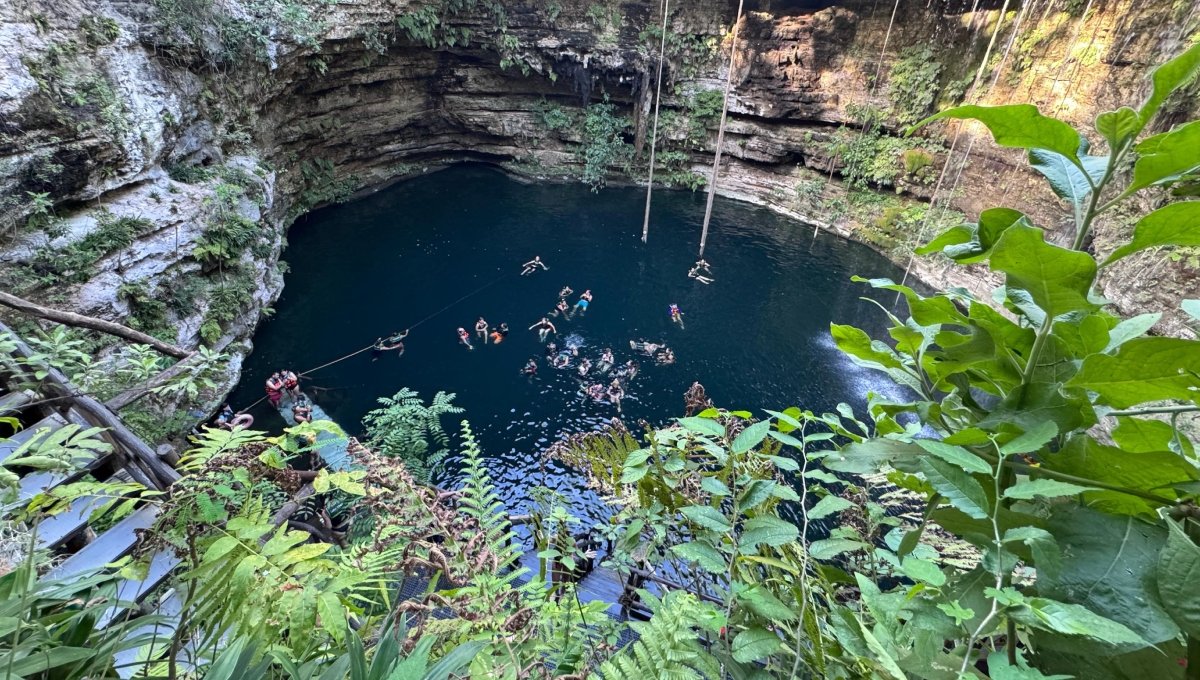
The demands come one year after the To’oné Ja’o’on Maya Water and Territory Defense Network filed a formal complaint, and follow a new water-quality study that Greenpeace conducted in August 2026. That testing documented contamination indicators at 17 sampling sites — wells and cenotes — in seven communities across the state.
Samples were taken in Kinchil, Sitilpech, Motul, Chocholá, Molas, Celestún and San Antonio Tedzidz. Laboratory analyses identified bacteria that indicate fecal contamination, elevated concentrations of nutrients and organic matter, and other parameters that together point to a significant contaminant load at certain sites.
Coliforms and Nitrates Among the Main Findings
According to the Greenpeace Mexico report, 16 of the 17 samples reached the upper measurement limit for total coliforms, while 13 recorded concentrations above 1,800 most probable number (MPN) per 100 milliliters of fecal coliforms. Four samples also hit the upper detection limit for fecal enterococci.
The study detected nitrates in most samples. In two cases — one in Motul and one in Chocholá — concentrations exceeded the 50 milligrams per liter reference level set by the World Health Organization.
Other parameters, including chemical oxygen demand, phosphorus and suspended solids, showed elevated values at various sampling points.
While the results are consistent with fecal contamination of animal origin, Greenpeace cautioned that its methodology could not establish with certainty where the waste came from.
The To’oné Ja’o’on network, however, maintains that research carried out in 2024 and 2026 at five sites — in Mérida, Izamal, Kinchil, Chapab and Maxcanú — identified pig feces using the Pig2Bac method, with analyses performed at laboratories of Johns Hopkins University in the United States and the National Autonomous University of Mexico (UNAM).
The organization argues that both sets of results reinforce the need to expand monitoring and investigate the specific sources of contamination, while continuing to pursue complaints already filed against pig facilities.
A Vulnerable Karst Aquifer
The concern stems from the geology of the Yucatán Peninsula, where water supply depends mainly on underground sources.
The region’s karst terrain, made up of porous limestone connected through cenotes, caves and underground currents, allows contaminants to seep from the surface into the aquifer.
Given that risk, Greenpeace and the Maya communities say strengthening environmental oversight and enforcement of regulations is a priority. Among the agencies they name are the Secretariat of Environment and Natural Resources (Semarnat), the National Water Commission (Conagua) and the Federal Environmental Protection Agency (Profepa).
Pig Farm Cases Still Pending
The To’oné Ja’o’on network says that despite the time elapsed since the complaint was filed, results of administrative proceedings, inspections, sanctions and measures to repair the reported environmental damage remain outstanding.
Among the cases cited are the GARY 5 and 6 farms in Chocholá; the MOBA facility in San Fernando, in the municipality of Maxcanú; and the Kekén 1 through 6 complexes near Kinchil and Celestún.
According to the organization, some of these files already include records of inspections, detected irregularities, fines and temporary closures. It also reported that Profepa carried out new inspections at GARY and MOBA facilities in June 2026, and that those results had not been made public when the group issued its statement.
For the communities, the existence of administrative files is not enough unless it translates into effective measures to prevent further damage, protect water sources and ensure that the companies involved comply with their environmental obligations.
Legal Challenge to Federal-State Agreement
Another point of friction is a coordination agreement signed by the federal and state governments to strengthen environmental impact assessments for pig production units.
The network contends the agreement was adopted without the participation of affected communities and that it would transfer to the Yucatán state government responsibilities for authorizing and monitoring these facilities.
The group filed an amparo challenge, and according to information it released, the Third District Judge in Yucatán granted a definitive suspension.
The network also criticized Profepa for holding meetings with business representatives from the sector and state authorities without including the communities that have reported damage in their territories.
Concern Over Herd Relocation Near Cuxtal Reserve
Added to the accumulated complaints is the situation at the Santa María pig farm, also known as San Gerardo, in Santa María Chí. According to the network, its closure left the environmental damage assessment and the definition of full remediation measures unresolved.
The organization also said that in September 2026 it was reported that thousands of pigs had been moved to facilities in the Tebacal and San Antonio Tzacalá areas, about 15 kilometers from Molas, allegedly linked to the same company that operated the closed farm.
The move raises concerns about effects on nearby communities and on the Cuxtal Ecological Reserve, where Molas is located and which is a strategic zone for Mérida’s water supply.
The network called for clarity on the transfer of the animals and related operations, verification of compliance with environmental rules, and publication of inspection results with the participation of potentially affected communities.
It also asked authorities to determine the extent of the damage in Santa María Chí and to establish restoration measures and safeguards to prevent contamination from recurring.
UN Rapporteur Flagged the Risks
Concerns about the effects of agro-industrial activity on water, health and the environment have also been raised internationally.
During his visit to Mexico in March 2026, Marcos Orellana, then the United Nations special rapporteur on toxics and human rights, toured several communities and addressed these risks in his final report to the UN Human Rights Council.
Among the factors he cited were the proximity of industrial facilities to Indigenous communities, the handling of large volumes of manure and wastewater, and the vulnerability of the peninsula’s groundwater systems.
The network noted that Maya communities and civil organizations have pushed since 2024 for a public health and environmental emergency declaration for the region. Greenpeace, for its part, proposes stronger monitoring, protection of Indigenous peoples’ rights and a moratorium on new industrial livestock facilities and expansions on the peninsula.
What Communities Are Demanding
The To’oné Ja’o’on network’s main demands include publishing the results of environmental inspections and administrative proceedings opened during 2025 and 2026, applying the corresponding sanctions and closing facilities when regulations require it.
It also called for an independent, periodic and participatory program to assess water quality in wells, cenotes and other supply sources, and for an investigation into a fish die-off reported in a lagoon between Kinchil and Maxcanú.
The organization requested verifiable information about the transfer of pigs to areas near Molas and the Cuxtal Ecological Reserve, as well as full remediation of environmental damage in Santa María Chí.
Finally, it insisted that authorities guarantee the Maya peoples’ rights to clean water, a healthy environment, access to information and participation in decisions that may affect their territories.
One year after the complaint was filed, the To’oné Ja’o’on network and Greenpeace Mexico argue that the monitoring results underscore the urgency of rigorous investigations, public information and coordinated action to protect the aquifer.
More Environment
- Quintana Roo Tops 152,000 Metric Tons of Sargassum as Playa del Carmen and Cancún Lead
- Profepa Shuts Down Los Rápidos Swimming Spot in Xul-Ha Over Missing Environmental Permit
- Court Gives Profepa 72 Hours to Clarify Tren Maya Closure Order
- National Geographic Names Maya Ka’an Among Top Destinations to Visit in 2027
- Quintana Roo Beaches Lose Up to 14 Meters of Sand a Year as Restoration Plan Advances