
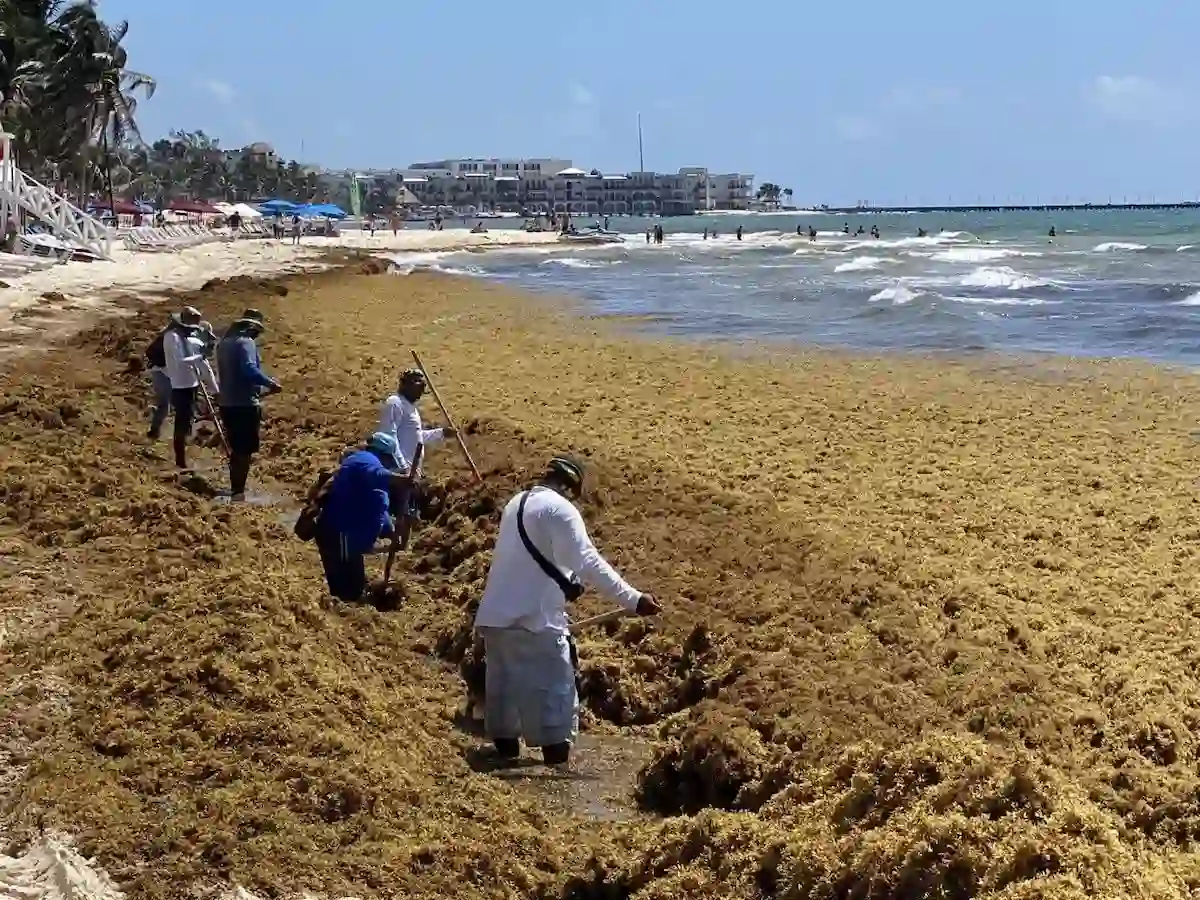
Cancún, Quintana Roo — Coastal municipalities in Quintana Roo had collected 152,304.05 metric tons of sargassum through Oct. 16, 2026, with Playa del Carmen and Cancún accounting for more than half the statewide total, according to a report from the state Environment and Ecology Department (SEMA).
The figure underscores the scale of the cleanup effort that authorities must sustain in the state’s main tourist destinations, where the arrival of the seaweed requires the deployment of crews, equipment and operations to clear the beaches.
Playa del Carmen leads the count
Playa del Carmen recorded the largest share, with 53,634.95 metric tons, or 35.2% of the state total — meaning slightly more than one-third of all sargassum collected in Quintana Roo this year came from that municipality.
Cancún, the seat of Benito Juárez municipality, ranked second with 33,372.40 metric tons, or 21.9% of the accumulated total. Together, the two municipalities account for 87,007.35 metric tons, more than half of everything removed statewide.
Remaining municipalities
- Puerto Morelos: 21,908.53 metric tons
- Tulum: 20,150.90 metric tons
- Othón P. Blanco: 17,331.52 metric tons
- Isla Mujeres: 4,313.90 metric tons
- Cozumel: 1,549.10 metric tons
- Lázaro Cárdenas: 42.75 metric tons
The distribution shows that collection is concentrated in the municipalities with the highest volume. The figures alone, however, do not establish how much sargassum reached each stretch of coast or allow comparisons of how efficiently each operation performed, since sea conditions, beach length and collection methods also play a role.
Navy accounts for more than 83,000 tons
In the breakdown by institution, SEMA credits the Mexican Navy (SEMAR) with 83,944.42 metric tons collected, while other efforts account for 68,359.63 metric tons. The two figures add up to the statewide total of 152,304.05 metric tons.
Beyond the tonnage removed, the challenge for Quintana Roo is to keep up the cleanup along its coasts and limit the environmental and tourism damage that accumulating sargassum can cause, particularly once it begins to decompose.
The report offers a measure of the work carried out during 2026, but it does not detail the cost of the operations, the final destination of all the seaweed collected or the environmental results achieved.
More Environment
- Profepa Shuts Down Los Rápidos Swimming Spot in Xul-Ha Over Missing Environmental Permit
- Court Gives Profepa 72 Hours to Clarify Tren Maya Closure Order
- National Geographic Names Maya Ka’an Among Top Destinations to Visit in 2027
- Quintana Roo Beaches Lose Up to 14 Meters of Sand a Year as Restoration Plan Advances
- FIRA Issues Mexico’s First Biodiversity Bond Worth Over 1.6 Billion Pesos
More Cancun
- Mexican Navy Issues 130 Citations Against Unlicensed Boats in Cancún
- Meliá Invests €50 Million in Paradisus Cancún Renovation
- Cancún to Host Climate Change Colloquium With Experts From Mexico, Guatemala and New York
- Tourism Slump Forces 35% of Skål México Businesses to Borrow to Cover Payroll
- Alleged Crime Boss ‘El Marce’ Arrested in Mérida Over Quintana Roo Killing
