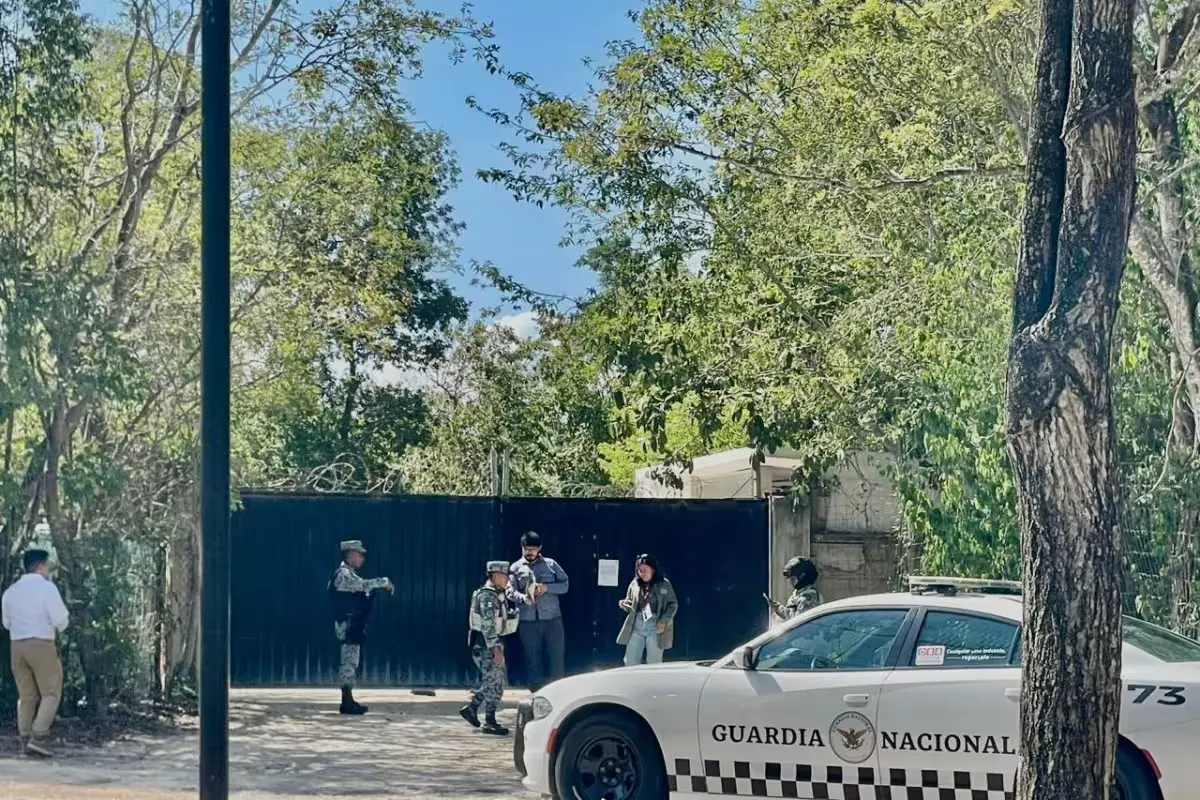
Playa del Carmen, Quintana Roo — A long-running environmental dispute involving one of Playa del Carmen’s best-known luxury real estate brands escalated over the weekend when federal authorities and National Guard officers secured a development site in Playacar after closure seals were reportedly removed.
The property is associated with a planned condominium project originally marketed as Legacy by AWA and now advertised by several real estate agencies as Aura by AWA. It is separate from the completed and occupied AWA Playacar Residences complex, although both developments are associated with Inzigna Capital and use the AWA name.
The distinction matters for current owners, prospective buyers and real estate agents familiar with AWA’s existing properties. The weekend intervention concerns the newer preconstruction project, not completed condominium units at AWA Playacar.
Seals replaced, then removed again
The latest confrontation began Sept. 3, when Playacar residents circulated photographs and videos that appeared to show machinery clearing vegetation at the development site despite an existing closure order.
Municipal inspectors returned Sept. 4 and placed new closure seals on the property. By the following morning, neighbors reported that those seals had also disappeared. Federal personnel and National Guard officers subsequently arrived and secured the site.
Authorities have not publicly identified who removed the seals, who authorized entry or whether construction workers had returned after the municipal inspection. The weekend intervention followed complaints from Playacar residents.
Removing government closure seals is not merely an administrative issue. Article 187 of Mexico’s Federal Penal Code provides for 30 to 180 days of community service for breaking seals placed by a public authority. Determining who was responsible would require an investigation.
Dispute dates back to 2025
The controversy began well before this month.
Federal environmental inspectors visited the property on May 29, 2025, following complaints submitted by the environmental organization DMAS. According to information from that inspection, approximately 14,292 square meters of vegetation had been removed. Those responsible for the work reportedly did not present federal authorization for changing the use of forested land during the inspection.
The federal issue was only one layer of the dispute. The project had received a conditional state environmental authorization in 2021, but that approval required measures to protect and relocate wildlife during land-clearing work.
In August 2025, Quintana Roo’s Secretariat of Ecology and Environment began proceedings to revoke the project’s state environmental authorization. State Environment Secretary Óscar Rébora said the developer had failed to comply with wildlife-protection conditions. Authorities connected that failure to the displacement and deaths of three deer, including a fawn.
Reports of wildlife being pushed into surrounding roads and residential areas had been emerging since 2023, while the deer deaths were documented in 2024. State authorities announced the revocation process in August 2025.
No final public resolution of that revocation process was located, leaving unanswered questions about the project’s current state authorization and what steps, if any, its representatives have taken to correct the violations.
Legacy or Aura?
The project was initially promoted as Legacy by AWA, with approximately 220 units planned for its first phase. Marketing described one- and two-bedroom condominiums and penthouses with swimming pools, a gym, spa, coworking areas, gardens, a children’s club and other resort-style amenities.
The name Aura by AWA is now being used on a dedicated project website and in active real estate advertising. However, some listings headed “Aura by AWA” still describe the property as Legacy by AWA in the body of the advertisement.
One current listing offers a two-bedroom preconstruction condominium for more than $414,000 and states that delivery is scheduled for 2027.
The mixed branding confirms that the project is being marketed under the new name, but it does not establish whether there has been a change in the legal owner, construction permits or environmental authorization. A commercial rebranding alone would not remove obligations or closure orders attached to the land or authorized project.
A familiar name in Playa del Carmen real estate
AWA is well known among foreign buyers because of the existing AWA Playacar Residences, a completed luxury complex with approximately 230 condominiums. The developer’s portfolio also includes AWA-branded residences in Corasol, north of Playa del Carmen.
That established presence makes the Legacy-Aura controversy particularly relevant to the expat and investment community. Buyers may encounter listings for the completed AWA Playacar property, the Corasol development and the disputed preconstruction project, all using related branding.
The environmental action against the new site does not establish wrongdoing at those separate, completed developments. It does, however, make it especially important for buyers to confirm the legal identity and status of the exact property named in a reservation agreement or purchase contract.
A closure does not automatically cancel presale contracts or determine that a development will never be completed. It can, however, delay construction while authorities investigate violations, require environmental remediation or prevent work from continuing until permits and conditions are resolved.
For buyers who have reserved units, the practical questions include whether their contract names Legacy, Aura or another legal entity; whether payments are held in a trust or paid directly to the seller; what the contract says about construction delays and refunds; and whether the permits supplied during the sale remain valid.
The property remains under heightened federal scrutiny. Authorities have yet to announce who removed the latest closure seals, whether anyone will face penalties or what must happen before work can legally resume.
More Development
- Cozumel Boardwalk Renovation to Keep Historic Features and Traffic Flowing
- Quintana Roo Hoteliers Push Regenerative Tourism Amid Beach Access Disputes
- Cancún’s Route 17 Leona Vicario Draws More Than 16,000 Riders on First Free Day
- Quintana Roo Beaches Lose Up to 14 Meters of Sand a Year as Restoration Plan Advances
- Meliá Invests €50 Million in Paradisus Cancún Renovation
More Playa del Carmen
- Judge Orders Five to Stand Trial for Drug Dealing in Playa del Carmen
- Quintana Roo Prosecutor’s Office Releases Seized Playa del Carmen Property, Leaving Two Dogs Locked Inside for Three Days
- Playa del Carmen Prepares Third Janal Pixán Festival With 300 Artists and Two Parades
- Playa del Carmen Parking Meter Operator Playaparq Ignores City Notices Over Broken Machines
- Playa del Carmen Cuts Administrative Offenses 8.5% as Peace and Civic Justice Council Convenes