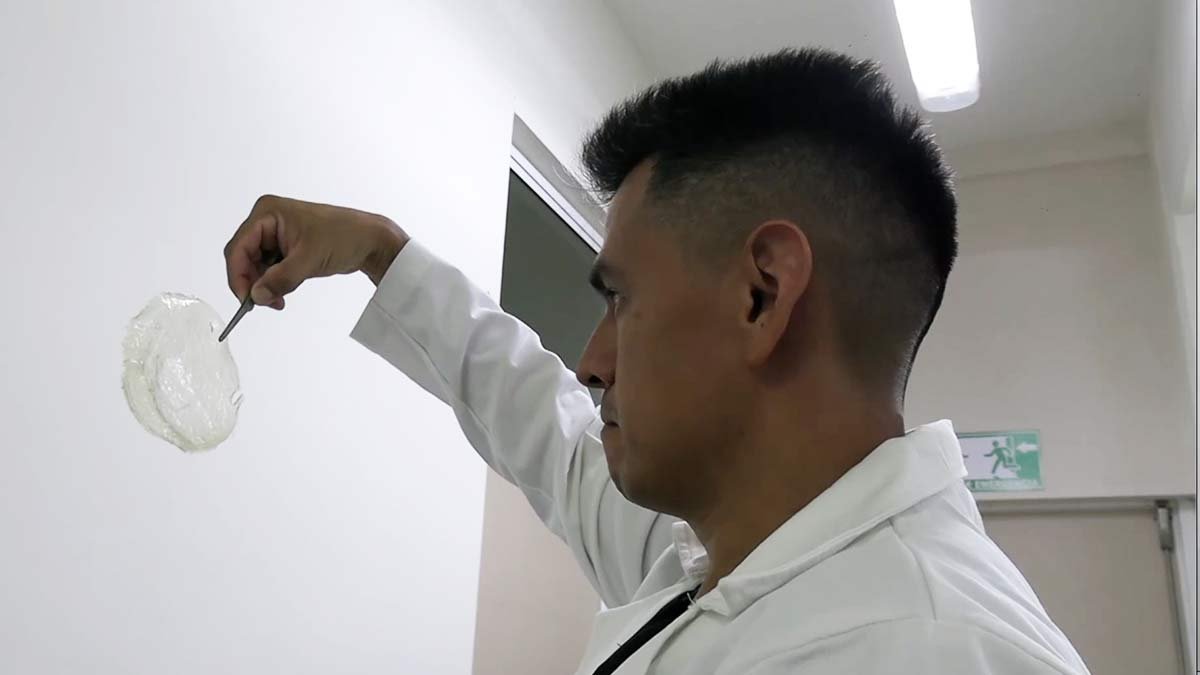
Mérida, Yucatán — Researchers at the Autonomous University of Yucatán (UADY) have developed filtration membranes made from sargassum and recycled PET bottles that can absorb pollutants from water, offering a potential solution to two environmental problems at once.
The project, led by the Faculty of Chemistry, aims to protect the region’s aquifers and cenotes — part of one of the most important underground water systems in Latin America — from contamination by microplastics, heavy metals, industrial dyes, and pharmaceutical residues.
Unlike conventional filters, the new membranes not only trap particles but also actively absorb contaminants. The team uses biomass that would otherwise be discarded, such as citrus waste and sargassum, to create more active filtration materials.
Irving González, project coordinator, said the goal is to develop membranes that can remove a wide range of pollutants. Maricarmen Chan, a master’s student in chemical and biochemical sciences, explained that one membrane uses pectin from citrus waste functionalized with copper oxide.
Another membrane, described by fellow student Martha González, is designed to exchange ions with heavy metals like cadmium and lead, which have been detected in cenotes and water sources used by local communities.
The technology is still under development but represents a step toward turning waste into tools for environmental remediation.
More Environment
- Two Atlantic Low-Pressure Areas Watched; One Shows 40% Cyclone Chance
- Tren Maya Freight Complex in Chetumal to Break Ground in 2027
- Lawmakers Propose One Tree Every 15 Meters in New Quintana Roo Developments
- Bacalar Aims to Show the World Its Appeal Goes Beyond the Lagoon
- Quintana Roo Weighs Permanent Revocation of Permits for Legacy by Awa Playacar After Closure Seals Broken
More Quintana Roo
- 40-Hour Workweek in 2027 Will Speed Up Robots and AI in Hotels, IMEF Says
- Quintana Roo Reports 282 Dengue Cases, Eight of Them Severe
- Trafficking Cases Keep Quintana Roo on Alert With 159 Reported in 2026
- INEGI Confirms Quintana Roo Surpasses 2 Million Residents
- Mexican Navy Opens Youth Photography Contest on Ocean Conservation