Playa del Carmen, Quintana Roo — A coral restoration project on Mexico’s Caribbean coast is reporting unusually strong results while also creating new opportunities for vulnerable young people in the region.
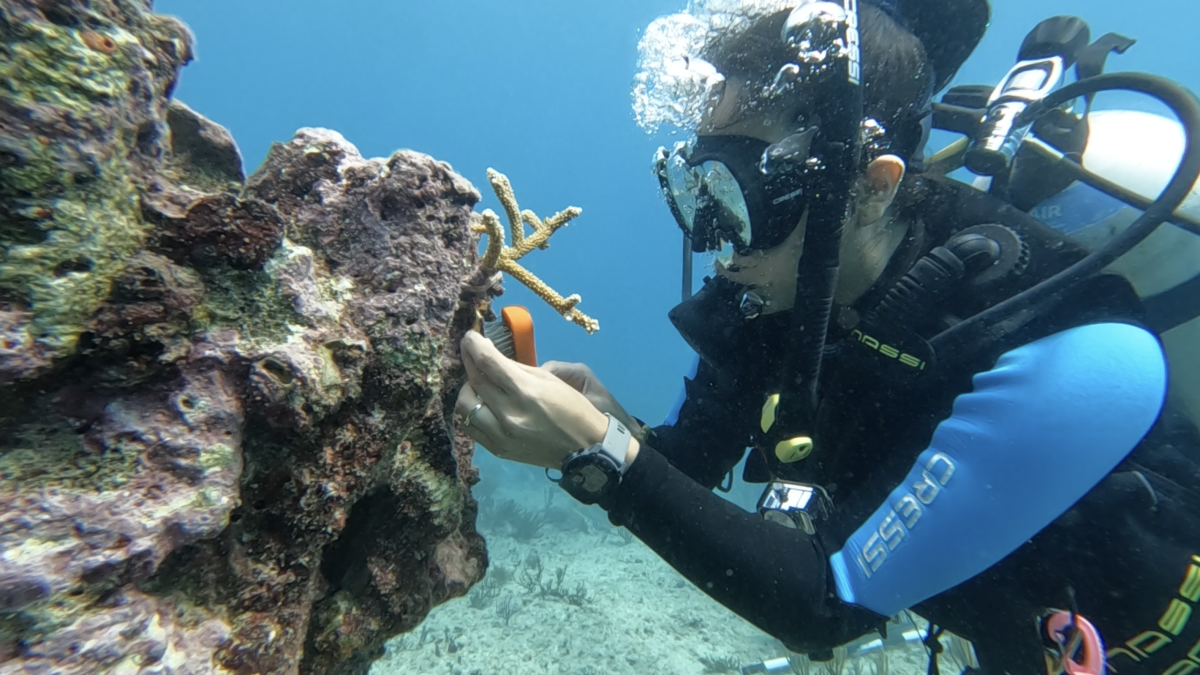
Hurakaan Eco-Táctica, an environmental organization founded in 2021, is combining reef restoration with social support and job training for at-risk children and teens. The group has restored 406 fragments of critically endangered coral species that had naturally broken away from the reef. After monitoring 1,500 linear meters of reef, its team of experienced divers reports a 90% survival rate and coral growth of about one centimeter per month.
That growth rate is especially notable. In many restoration settings, corals may grow closer to one centimeter per year, depending on species, water quality, temperature, disease pressure, and other environmental conditions.
“Our work began in 2021 when we arrived in the region, and it’s very difficult to express how good we feel contributing to these kids. I identify with them and with the corals, and not just me, but our entire multinational team,” said Héctor Torres, founder and CEO of Hurakaan Eco-Táctica.
The restoration work focuses on two key Caribbean reef-building species: Acropora palmata, known as elkhorn coral, and Acropora cervicornis, known as staghorn coral. Both are considered essential to reef structure in the Mexican Caribbean because their branching forms create habitat for fish and other marine species while helping protect coastlines from wave energy.
The work is concentrated on reefs off Playa del Carmen and Tulum, areas that some observers had already written off as too degraded to recover.
“Unfortunately, the great demographic growth in the area, with high anthropogenic activity, heavy loads of pollutants, wastewater, and sargassum, caused these reef systems to be overlooked for many years,” warned Dr. Félix Aguirre, head of the Biotechnology and Environmental Microbiology Area at UAM Campus Lerma.
According to Nika Frolova, coordinator of the Tejido AquaVida campaign, the results are already visible. Once the coral fragments begin growing, fish and other marine life start returning to the area. Fragments that initially measure just three to five centimeters can reach more than 12 centimeters after seven months.
“We have two technologies. At first we started fixing corals with plastic zip ties, then we received training to use a special cement that offers better results. We have five minutes to place these opportunity fragments before the mixture dries,” Frolova said.
The scientific side of the project is supported by water quality, sediment, and environmental condition studies. Those studies are being provided by Dr. Flor Arcega from the UNAM Faculty of Chemistry’s Sisal Unit in Yucatán and Dr. Adán Caballero from the Water Sciences Unit of the Yucatán Scientific Research Center, known as CICY.
The project’s social impact is just as important as its environmental work.
Through its Raíz Viva program, Hurakaan Eco-Táctica works with more than 400 vulnerable children from the DIF system in Playa del Carmen, DIF Benito Juárez, and the Temporary Care Home in Cancún. The children receive weekly environmental education workshops and job training designed to give them future employment options once they age out of state protection.
The goal is practical. Participants are introduced to skills that could eventually allow them to work as divers, boat captains, sailors, or in other marine-related jobs connected to conservation and tourism.
“We have children who have been rescued from trafficking, child exploitation, or whose families emigrated and have low productive possibilities. So when they finish elementary and middle school, we channel them to high schools outside the DIF system, now with the possibility of developing in the workplace,” said Deyanira Martínez, general director of DIF in Playa del Carmen.
For the students, the program offers both education and a first-hand connection to the marine environment.
Sohail Amayrani, a 17-year-old who faced family problems after the COVID-19 pandemic, said she hopes to continue her studies and work in marine conservation.
“I want to keep learning about the sea, continue discovering corals, and in the future work in a dive shop or as a sailor,” she said after snorkeling with sea turtles in Akumal, an experience made possible through the support of tourism service provider Manuel Jiménez Pío.
The initiative is also backed by Porsche Mexico, which funds sustainability and social responsibility projects.
“We understand that true performance is not only measured in the engineering of our vehicles, but in the impact we generate in the world around us,” said Camilo San Martín, CEO of Porsche Mexico.
For the Riviera Maya, the project points to a model that connects two urgent needs: restoring damaged reef systems and creating meaningful pathways for young people who face limited opportunities. The corals and the children may seem like separate stories, but Hurakaan Eco-Táctica is treating both as part of the same future.
More Lifestyle
- Taco Social Run to Bring Recreation, Live Music and Street Tacos to Cancún’s Avenida Yaxchilán
- Playa del Carmen to Renew Eight Blue Flag Beach Certifications, Eyes Two More
- Cancún Sets October Dates for Free Dog and Cat Sterilization Clinics
- Quintana Roo Governor Urges Youth to Help Draft New Rights Law
- Playa del Carmen Reviews Parking Meter Concession Over Alleged Violations