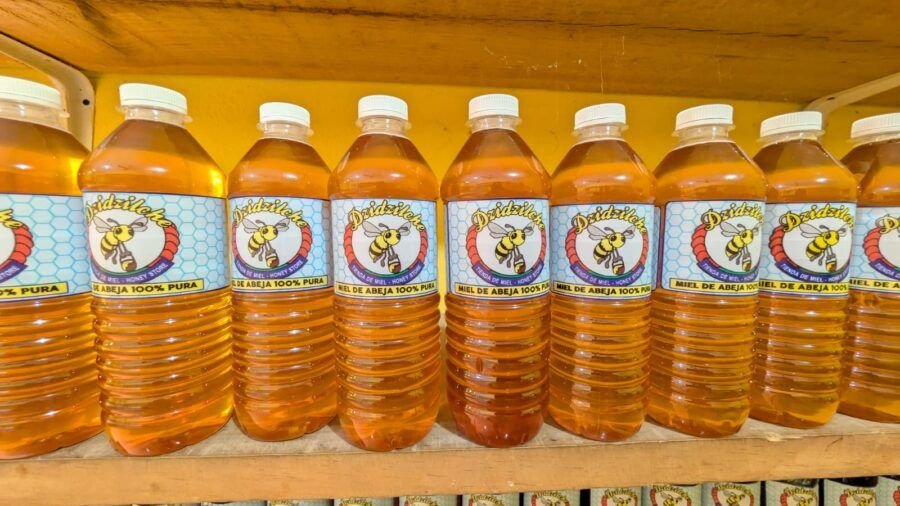
Tulum, Quintana Roo — After a disappointing tajonal honey harvest due to unseasonably cold weather, beekeepers in the Maya zone of Tulum are looking to the upcoming dzidzilche flowering season for an economic rebound.
Wilbert Palanche Mal, deputy manager of the honey store in the community of Macario Gomez, said low temperatures during the tajonal bloom period severely hampered pollination and slashed yields.
“The cold really affected the flowering, and there was hardly enough pollination. That caused a significant drop in production,” he said.
In February, the cooperative harvested only 100 to 120 kilograms of tajonal honey, compared to 200 to 300 kilograms in previous years, Palanche Mal reported. He noted that climate shifts are increasingly impacting the apiculture sector in the Maya zone, affecting both output and the economic stability of cooperatives.
Tajonal honey has lower commercial value because it crystallizes quickly, limiting its market appeal, he added.
Beekeepers are now pinning their hopes on the dzidzilche bloom, which produces a high-quality honey in strong demand from tourists and buyers in other municipalities. The cooperative aims to produce 300 to 400 kilograms of dzidzilche honey this season, up from about 200 kilograms last year.
Some of the harvest is sold directly in Macario Gomez, while the rest is distributed to tourist destinations and cities such as Valladolid and Tulum.
The cooperative brings together about 220 producers from communities including Coba, Chanchen, and Macario Gomez, who collectively maintain around 1,200 active beehives.
Despite challenges from weather and fluctuating honey prices, producers said the local bee population remains stable and they continue working to strengthen production and improve marketing conditions.
More Lifestyle
- Taco Social Run to Bring Recreation, Live Music and Street Tacos to Cancún’s Avenida Yaxchilán
- Playa del Carmen to Renew Eight Blue Flag Beach Certifications, Eyes Two More
- Cancún Sets October Dates for Free Dog and Cat Sterilization Clinics
- Quintana Roo Governor Urges Youth to Help Draft New Rights Law
- Playa del Carmen Reviews Parking Meter Concession Over Alleged Violations
More Tulum
- Riviera Maya Hotel Chief Calls Tulum Airport ‘Critical’ as Airlines Exit
- Tulum Rethinks Real Estate Growth Over Risks to the Great Maya Aquifer
- Tulum Hosts Nine US Universities and Team Mexico at NCAA Division II Golf Shootout
- Tulum Residents Identify Five Sites Where Homeless People Gather
- Volaris to Suspend Tulum Airport Flights, Second Mexican Carrier to Pull Out