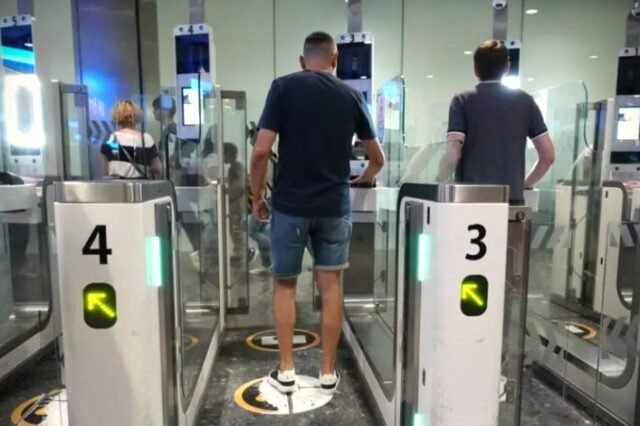
Cancun, Quintana Roo — Aeropuertos del Sureste (Asur) has confirmed the activation of 20 electronic immigration gates, or e-gates, at Cancun International Airport, with plans to reach a total of 40 in time for the 2026 FIFA World Cup.
The e-gates use biometric technology to scan passports and verify travelers’ identities through facial recognition, allowing entry into Mexico in seconds without direct human intervention. Half of the gates will be installed in Terminal 3 and the remainder in Terminal 4.
Governor Mara Lezama said the state government has been working closely with airport authorities to streamline tourist arrivals. “We have been working for a long time to make the arrival of tourists more efficient, and today we are talking about 40 new e-gates for passports from 35 nationalities, allowing entry into the country in seconds,” she said.
Traditional immigration checks take an average of 20 minutes, but the new technology is expected to reduce that to under one minute, addressing long-standing complaints from tourists and the business sector about congestion at Cancun’s immigration halls.
The push to speed up entry comes as Cancun International Airport is expected to handle more than 40% of the estimated 5 million tourists traveling to Mexico for the 2026 World Cup.
In April, Lezama announced the modernization of immigration control processes at the airport, including the expansion of biometric e-gates.
More Cancun
- Taco Social Run to Bring Recreation, Live Music and Street Tacos to Cancún’s Avenida Yaxchilán
- Cancún Sets October Dates for Free Dog and Cat Sterilization Clinics
- Quintana Roo Governor Urges Youth to Help Draft New Rights Law
- Rains and Port Restrictions Cut Cancún Nautical Tourism to 60%
- Cancún to Host First Claude Community Gathering for Hospitality in Latin America