
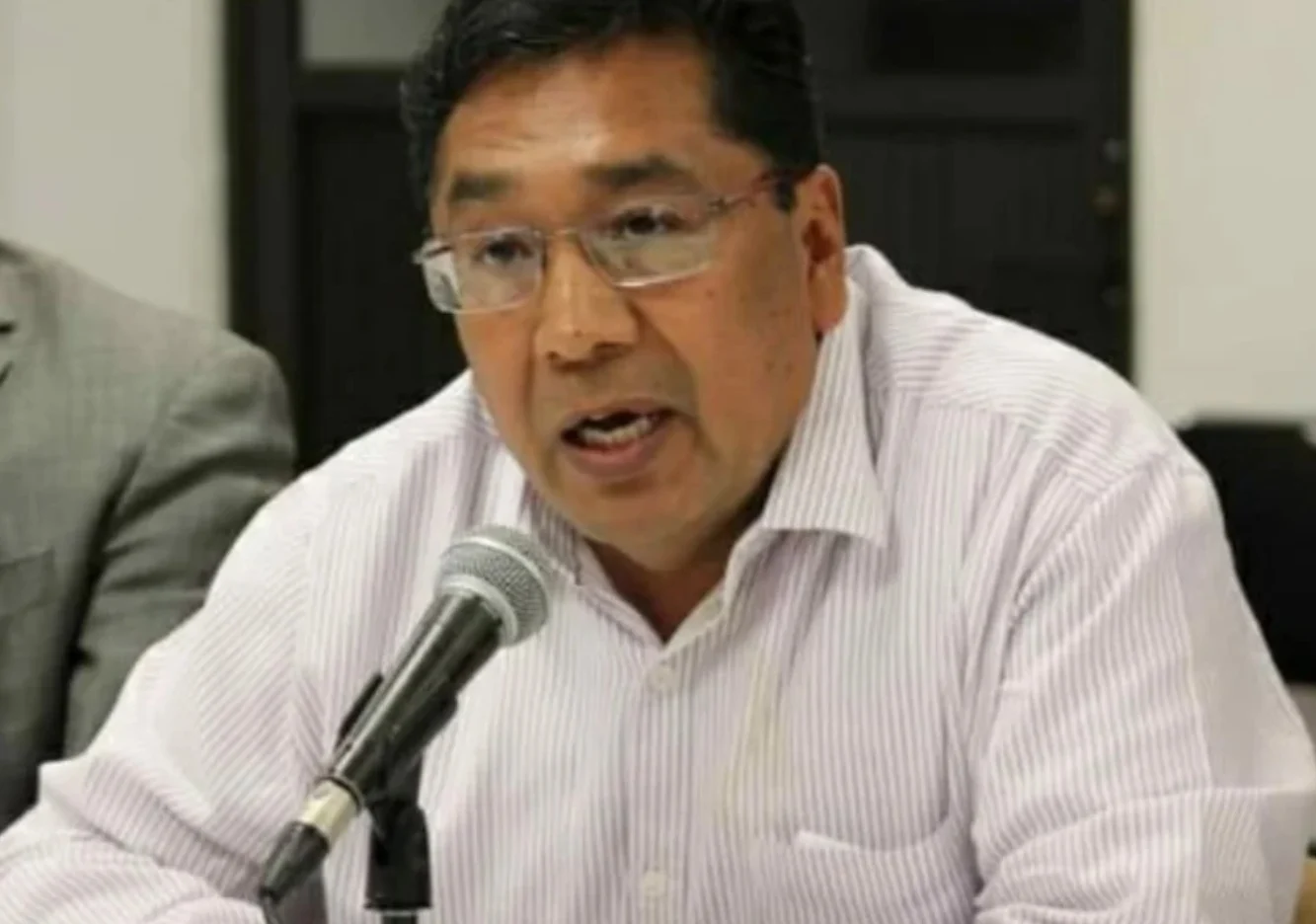
Playa del Carmen, Quintana Roo — The leadership of the Gran Consejo Maya of Quintana Roo has demanded that the federal government remove Oscar Banda Gonzalez from his position as Commissioner for Dialogue with Indigenous Peoples of Mexico, accusing him of undermining their legitimate representation.
The demand came during a protest on Saturday where the council joined canoeists opposing the cancellation of the 2026 Sacred Maya Journey at the Xcaret park. In a public statement read in Playa del Carmen, council president Simón Caamal Coh called on Interior Secretary Rosa Icela Rodríguez Velázquez to review and dismiss Banda Gonzalez from his post.
“They haven’t sought us out or even know us. How can they say who represents the Maya people just because they’re in the Interior Department?” Caamal Coh questioned, criticizing what he called the federal government’s bias in the ongoing dispute.
The council alleges that Banda Gonzalez, as head of the Commission for Dialogue with Indigenous Peoples, submitted a legal brief to the Supreme Court of Justice of the Nation (SCJN) that challenged the Gran Consejo Maya’s authority to represent the Maya people. The 23-page document argued the council does not validly represent the Maya Cruzo’ob people and that its actions have generated negative consequences for indigenous communities.
Caamal Coh asserted that instead of facilitating dialogue, Banda Gonzalez has “supported usurpers, not acted with truth, backed interests that don’t represent our communities, and confused authorities by presenting people who don’t have Maya representation.”
The council president emphasized that the Gran Consejo Maya has been the legally recognized representative of Maya people in Quintana Roo for 30 years under state law.
Supreme Court Ruling
The Supreme Court recently revoked a protective injunction that had shielded Xcaret from copyright restrictions imposed by the National Copyright Institute (Indautor). In its ruling, the court questioned the Gran Consejo Maya’s legitimacy to negotiate economic agreements on behalf of Maya communities.
The majority opinion stated that the council “is not authorized to dispose of the cultural heritage of the Maya people” and that its representativeness “is contested.” The court noted that the Maya people encompass the entire Yucatan Peninsula, a broader scope than what the Quintana Roo council represents.
Justices Hugo Aguilar Ortiz, María Estela Ríos González, and Lenia Batres Guadarrama specifically questioned whether the economic agreement between Xcaret and the council underwent proper consultation with the communities it claims to represent.
Background of the Conflict
The Commission for Dialogue with Indigenous Peoples was formalized in 2013 as a permanent body within the Interior Department, evolving from a commission originally created to negotiate with the Zapatista Army of National Liberation following its 1994 uprising.
According to the Gran Consejo Maya, the commission has failed to address internal conflicts within Maya communities since 2019, when the current leadership removed former council president General José Isabel Sulub Cimá. The council claims the commission has taken sides in the internal dispute rather than helping resolve it.
The current conflict centers on whether the Gran Consejo Maya has the authority to grant Xcaret permission to use and commercialize Maya cultural heritage, and whether such agreements require broader community consultation.
More Politics
- Texas’ Big Bend Becomes Border Wall Battleground
- Mexico Disables Four Drones Used to Monitor Migrant Smuggling at US Border
- Puerto Morelos Mayor Accuses Predecessor Laura Fernández Piña of 1.26 Billion-Peso Embezzlement
- Trump to Fed: Cut Rates or I’ll Halt Trade With Deficit Nations
- Sheinbaum, Trump Near USMCA Deal but New Demands Emerge
More Quintana Roo
- Quintana Roo Tightens Rules for Scuba Divers Arriving With Specialized Gear
- Rafael Martínez Ruiz Named New Head of Mexico’s Migration Institute in Quintana Roo
- Quintana Roo Regulates Rental Golf Carts With New Inspection Rules
- Mexico Drill Saturday Will Sound Alerts on 80 Million Phones
- Cancun Hotels Look to 2027 for Rate and Occupancy Rebound
