
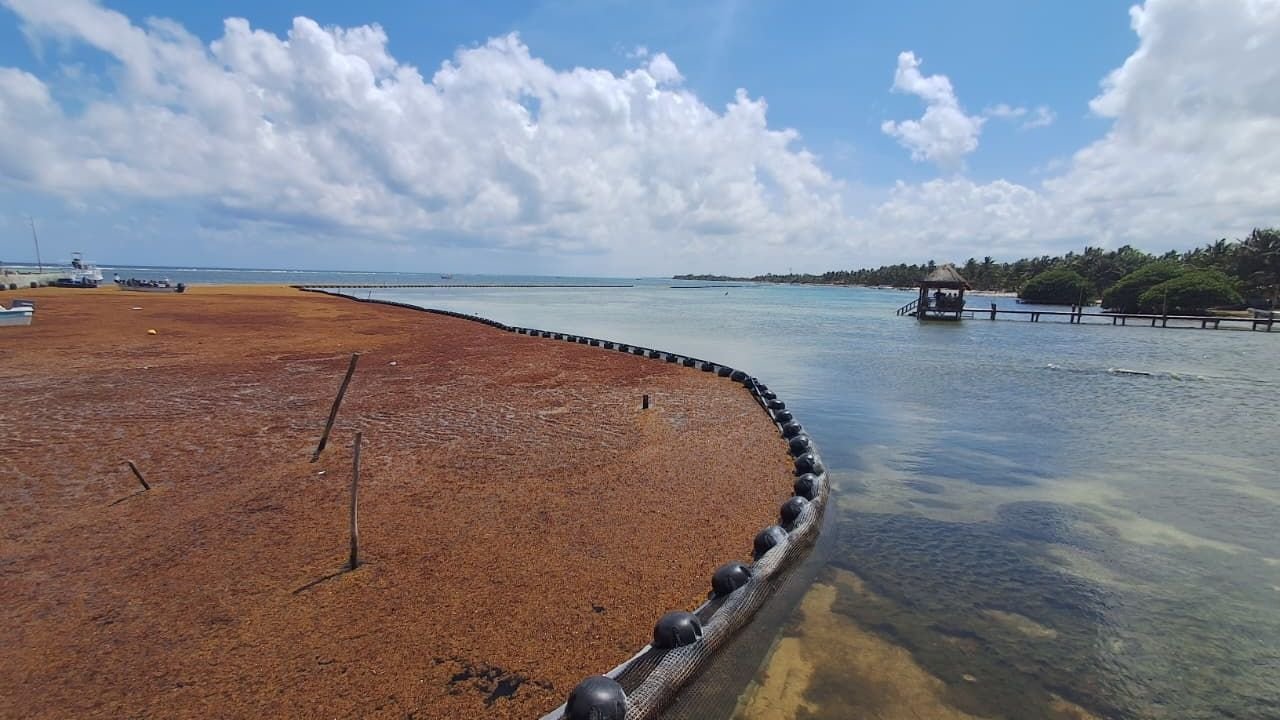
Chetumal, Quintana Roo — A scientific study using environmental DNA analysis has revealed how sargassum seaweed affects marine biodiversity at microscopic levels along the coast of Quintana Roo.
Marine ecology specialist Arely Martínez Arce presented findings from her research titled “Environmental DNA: Discovering How the Sea’s Tiny Guardians Respond to Sargassum,” highlighting the importance of analyzing nearly invisible organisms to measure coastal ecosystem health.
The study, supported by the Quintana Roo Council of Humanities, Sciences and Technologies (Coqcyt), uses environmental DNA to identify species without direct observation.
“The main advantage is that we don’t need the organisms themselves,” Martínez Arce explained. “We can take a water or sediment sample and know what species are present, even whales or dolphins, without seeing them.”
This method allows analysis of millions of genetic fragments simultaneously, representing a significant advance over traditional techniques that could only study organisms individually.
Marine Nematodes as Ecosystem Indicators
The researcher detailed that the study focuses on marine nematodes, microscopic organisms that perform key ecosystem functions.
“These organisms are like guardians of the sea because they help us understand what’s happening in the environment,” Martínez Arce said. “They’re at the base of the food chain, and their presence or absence reflects important changes.”
She added that these tiny creatures participate in nutrient recycling and serve as food for other species, meaning any alteration in their population directly impacts the entire ecological network.
Biodiversity Reduction in Affected Areas
One of the study’s most significant findings is a substantial reduction in species diversity in areas affected by sargassum. Martínez Arce indicated that beaches without sargassum can contain up to 200 nematode species, while areas with sargassum accumulation see that number drop to about 100.
“We’re seeing a drastic reduction in diversity due to conditions like low oxygen concentration and high hydrogen sulfide presence,” she warned.
Environmental DNA analysis has also detected species previously unrecorded in the region.
“We’re finding exotic species that probably arrived with sargassum or through runoff from land,” Martínez Arce commented. “We can’t yet confirm if they’ve established themselves, but it indicates ecosystem changes.”
Human Community Impacts
The specialist emphasized that these changes affect not only the natural environment but also human communities.
“If ecosystem quality decreases, the services it provides also decrease, like fishing or water quality,” she stated. “This impacts people who depend on the sea.”
Martínez Arce called for strengthening scientific outreach and attention to the most affected areas, particularly in southern Quintana Roo. She noted that unlike northern areas with greater cleanup efforts, some southern beaches continue experiencing uncontrolled sargassum accumulation.
“It’s important for people to understand what’s happening,” she concluded. “This isn’t about alarming people but informing them to make better decisions.”
More Environment
- Cancún’s Protected Natural Areas See Tourism Slump, With 600,000 Visitors Expected in 2026
- Bamboo Growers From 13 Mexican States Form National Association
- Hepatitis A Outbreak Prompts Class Suspension in Tizimín Village
- Cancún Animal Welfare Hospital Reaches 85% Completion in First Phase
- Up to 20 Sanctioned Offenders a Day Perform Community Service in Playa del Carmen
