
Cancun, Quintana Roo – Despite strict environmental laws designed to protect marine biodiversity, the illegal extraction and sale of marine species continues in parts of the Mexican Caribbean — with violators facing penalties of up to nine years in prison.
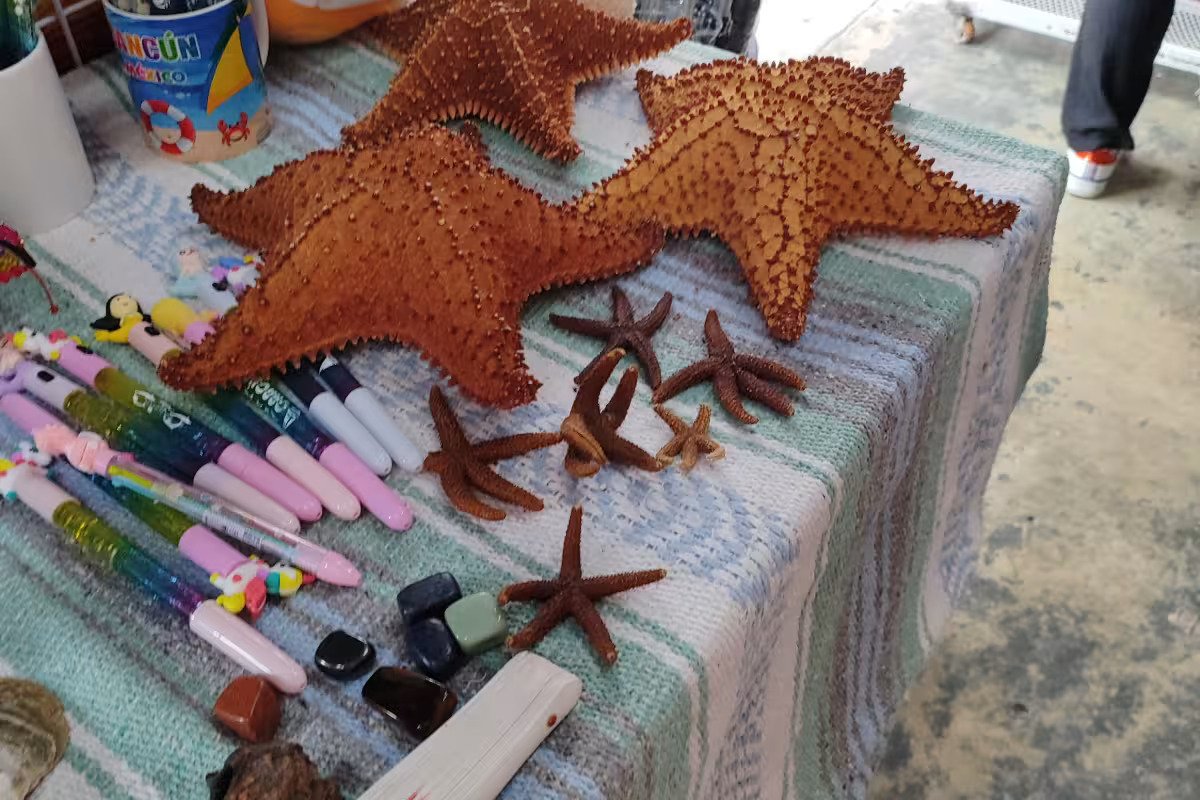
In popular tourist areas such as Cancún’s hotel zone, vendors commonly display sea stars and seashells for sale at inflated prices. A recent video showed a man harvesting sea stars in the hotel zone; however, authorities did not detain him because he was not in possession of the specimens during inspection.
Environmentalists have expressed outrage, emphasizing that removing marine species disrupts fragile ecosystems. Sea stars, for example, are not decorative objects — they are predators that help control mollusk populations and maintain reef balance. Removing even a small number can have ripple effects across a reef system.
What the Law Says
Mexico’s Federal Penal Code, Article 420, Section IV, makes it a crime to capture, possess, transport, collect, or trade protected wildlife without authorization. Penalties range from one to nine years in prison and fines of 300 to 3,000 days’ wages, with harsher penalties for commercial activity.
Under NOM-059-SEMARNAT-2010, numerous marine species are listed under protection categories that prohibit extraction, harm, or relocation without permits.
Enforcement is typically carried out by PROFEPA (the Federal Attorney for Environmental Protection), though prosecutions can be difficult if individuals are not caught physically holding the specimens.
It’s Not Just Starfish
Other marine life and materials commonly taken — and often illegal to remove — include:
- Coral (alive or dead): Coral reefs are protected ecosystems. Even dead coral fragments contribute to shoreline stability and reef regeneration.
- Queen conch (caracol rosado): Listed under special protection due to overfishing; its shell is frequently sold illegally.
- Sea turtle eggs and shells: All sea turtle species in Mexico are protected. Possession of eggs, meat, or shells carries severe criminal penalties.
- Sand dollars and certain mollusks: While some empty shells may appear harmless, many species are protected or play ecological roles even after death.
- Live shells and hermit crabs: Removing shells can displace living organisms and destabilize beach ecosystems.
Beyond criminal penalties, removing shells, coral, or sand from beaches can also violate local environmental regulations and customs laws. Tourists have faced confiscations and fines at airports when attempting to leave the country with marine souvenirs.
The Price — and the Cost
In Cancún’s Mercado 23, small sea stars can sell for just over 20 pesos, while larger specimens fetch 120–150 pesos. Online listings range from under 200 pesos to more than 300 pesos. In the hotel zone, prices can climb to 1,000 pesos or more.
What may look like an inexpensive keepsake can carry serious environmental consequences — and legal risk.
Marine ecosystems along the Riviera Maya and throughout Quintana Roo are already under pressure from coastal development, warming waters, and sargassum influxes. Removing wildlife, even casually, compounds that strain.
The bottom line: if it once lived in the sea — or supports life there — it’s best left where it belongs.
More Crime
- Two Found Shot Dead in Cancún’s Polígono Sur Neighborhood
- Yacht Strikes and Lodges Under Calinda Bridge in Cancún Hotel Zone
- Mexico Probes Sale of 12.9 Million Personal Records From Call Centers and Corporations
- Iván Mondragón Released From Prison in Cancún Child Abduction Case
- Body of Man Found Near Arco Vial in Playa del Carmen
More Cancun
- Deported Mexicans Flock to Quintana Roo as Support Services Strain
- Where to Buy the MOBI Card in Cancún and How Much It Costs
- Parque Cancún to Host First Olympic Cross Country Mountain Bike Race
- Quintana Roo Aims to Recover 500,000 Airline Seats, Targets 20 Million Tourists in 2026
- Cancún Airport Expansion to Continue Through 2028 With New Terminal 1 and Terminal 4 Upgrades
