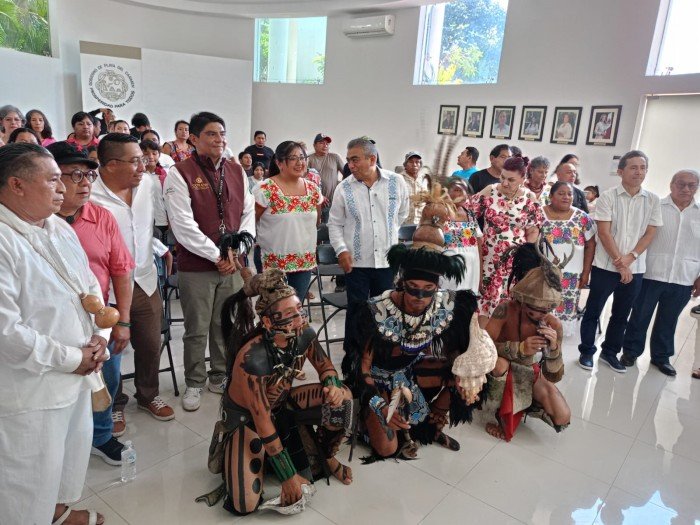
Playa del Carmen, Quintana Roo — Representatives of indigenous and Afro-Mexican communities in Playa del Carmen are gathering proposals on territorial recognition, native language preservation, community schools and social infrastructure to bring into the national debate over Mexico’s proposed General Law on the Rights of Indigenous and Afro-Mexican Peoples.
The demands are being collected during a community dialogue, with the input to be forwarded to the National Institute of Indigenous Peoples (INPI), said César Uuh Chi, head of the municipal Indigenous Affairs Unit.
“The idea of this assembly of indigenous and Afro-Mexican peoples is to strengthen all indigenous communities, and this is where we will collect proposals for this initiative,” Uuh Chi said. He added that anyone with comments, participation or proposals — even changes to the initiative itself — will have their input recorded and sent to the INPI.
Participants include community leaders, civil associations, collectives and representatives from communities such as Punta Laguna and Campamento Hidalgo.
One of the priorities is official recognition of community territories. Uuh Chi described that as a key issue from prior fieldwork. “One of those actions is the territorial issue — recognizing these communities as pluricultural,” he said.
The city’s rapid growth and migration patterns have brought people from many different indigenous communities to Playa del Carmen, so strengthening recognition and preservation of native languages is also on the agenda.
The local discussions follow a constitutional reform to Article 2 that expanded recognition of indigenous rights, including recognizing indigenous and Afro-Mexican peoples as subjects of public law with legal personality and their own assets, as well as broader provisions on self-determination, autonomy and participation.
Uuh Chi also pointed to the needs of indigenous children and adolescents and the strengthening of community schools. Another proposal calls for mechanisms that would give communities access to social infrastructure funds. “We also want to strengthen community schools and have the Social Infrastructure Contributions Fund begin to implement these mechanisms so communities can integrate,” he said.
More Community
- Polo strengthens to a Category 5 hurricane off Mexico’s Pacific coast in Record Time
- Cancún: 3 Kidnappers Get 80-Year Sentences Each
- Culture Ministry to Inspect Ceremonial Pole Ahead of Voladores de Papantla Return to Tulum
- Cozumel Launches Rabies Vaccination Drive With 3,000 Free Doses for Pets
- Erasmo Catarino Nearly Drowns at Cancún Beach, Rescued by Raúl Sandoval
More Playa del Carmen
- Lone Robber Steals 3,000 Pesos From Playa del Carmen Pharmacy
- Three Raids in Playa del Carmen and Cancún Net One Detention and Suspected Drugs
- Seña Fest to Bring Mexican Sign Language Events to Playa del Carmen on Sept. 26
- La Bamba por Playa 2026 Kicks Off With Community Peace Mural in Playa del Carmen
- Playa del Carmen to Block New Housing Projects Without Prior Electrical Infrastructure