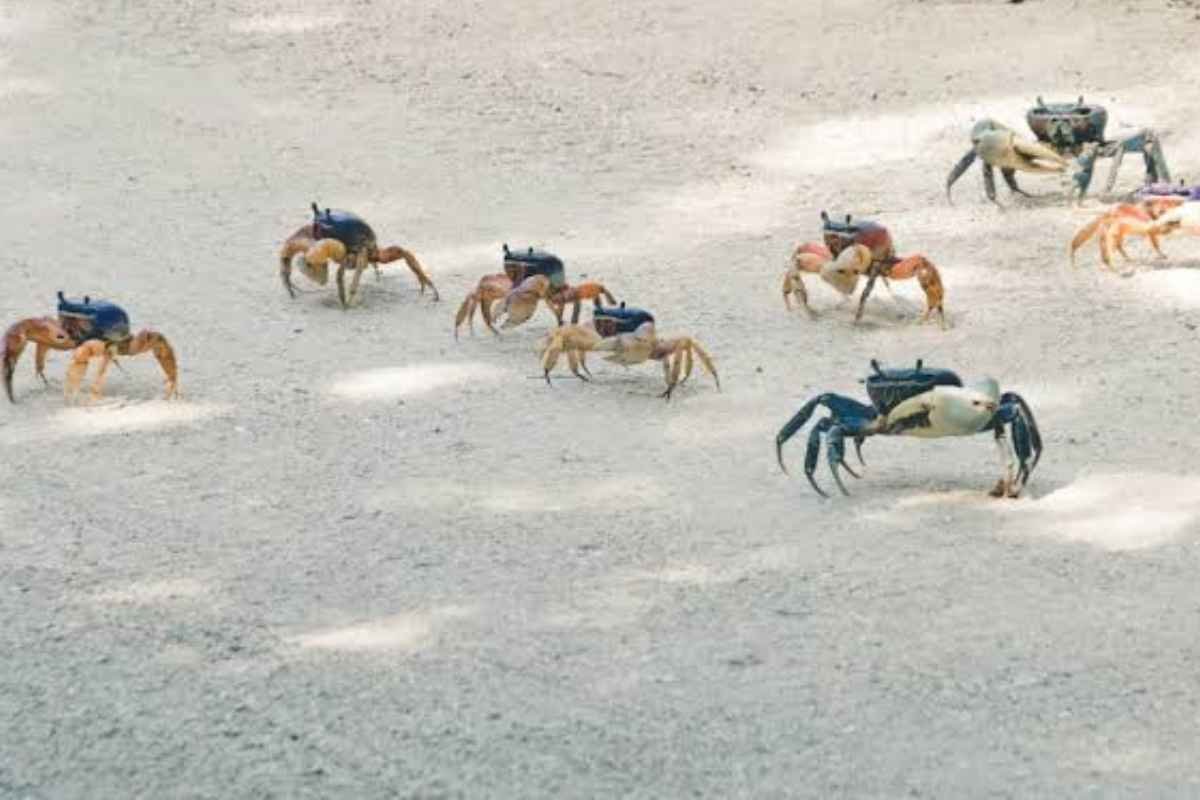
Cancún, Quintana Roo — Spreading construction over coastal ecosystems is becoming an obstacle to the survival of the blue crab in Cancún, a species that must leave the mangroves and move toward the sea every year to complete its reproductive cycle.
During the two breeding phases in September and October, the municipal protection program helped roughly 250 specimens reach the water — a figure that underscores the value of the brigades but also highlights the difficulties the species faces in navigating an increasingly urbanized city.
Fernando Haro Salinas, general director of Ecology for the Benito Juárez municipal government, said the growth of hotels, housing and other construction has fragmented the ecosystems, cutting off routes the crabs previously used to reach the coast.
The problem is not limited to the buildings themselves. Some properties have walls that act as physical barriers for the animals, preventing them from completing their journey to the sea on full-moon nights.
Against that backdrop, Haro Salinas said officials need to start talks with property owners and the agencies involved to examine possible adjustments to the structures, such as creating small openings in the walls to let the crabs pass.
Officials are also concerned about a decline in blue crabs recorded in recent years at some of the points where the brigades operate, although Haro Salinas noted that areas with a significant presence of the species remain, including the mainland section of Isla Mujeres.
Brigades Cover Beaches on Four- to Five-Kilometer Routes
This season, the brigades worked at Playa Las Perlas, Punta Nizuc and Playa del Niño, walking routes of between four and five kilometers to find and assist the crabs.
Some 324 people from various agencies and organizations took part, including Ecology, the Fire Department, traffic police and environmental authorities.
Haro Salinas said protecting even a single specimen has a significant conservation impact, because each female can release between 300,000 and 700,000 eggs during the reproductive process.
Beyond urban pressure, he said changes to ecosystems and weather conditions also influence the species’ behavior and its search for areas where it can complete its life cycle.
The official acknowledged that the challenge goes beyond organizing brigades twice a year: it requires reviewing how areas near the mangroves and the coast are built, so that urban development does not end up blocking wildlife’s natural corridors.
More Environment
- Mexican Navy Removes 181 Tons of Sargassum From Quintana Roo in a Single Day
- Flamingos Return to Ría Celestún as Winter Refuge Season Begins
- Mahahual Group Urges Wildlife Crossings and Road Signs After Animal Deaths
- Belizean NGO Warns of Rising Manatee Deaths in Chetumal Bay
- Monarch Butterfly Breeding Activity Documented in Cozumel for Third Consecutive Year
More Cancun
- Cancún Taxi and Airport Transport Drivers Clash Over Passengers in Front of Tourists
- Cancún Mayor Ana Paty Peralta Boosts Cultural Offer With Municipal Chamber Orchestra Concerts
- Aeroméxico Reminds Passengers of New US Sworn Declaration Requirement Over Ebola Concerns
- Parents Block Cancún’s Abraham Lincoln School Over Return of Student Accused of Assault
- Cancún to Host Second Expo Turismo Health & Wellness on Dec. 3