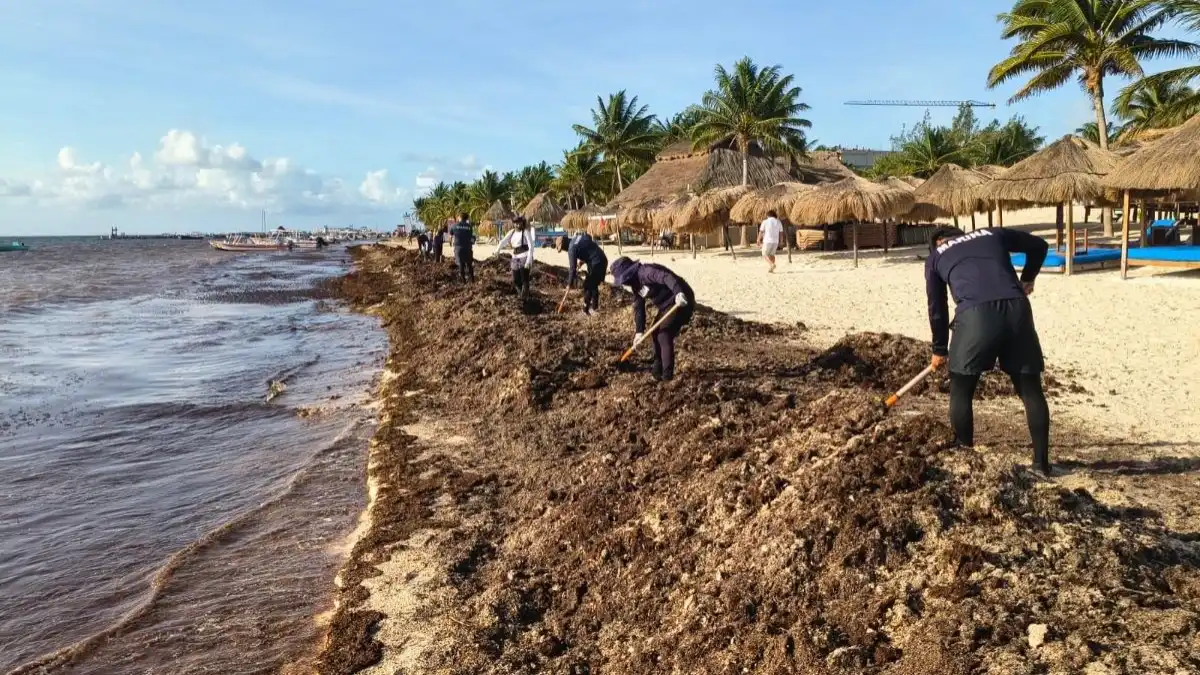
Isla Mujeres, Quintana Roo — The Mexican Navy collected 181.46 metric tons of sargassum from beaches and coastal waters of the Mexican Caribbean on Nov. 6, part of an ongoing effort to keep the macroalgae from piling up along Quintana Roo’s shoreline.
Naval personnel assigned to the Fifth Naval Region removed 141.46 tons from beaches on Isla Mujeres, Puerto Morelos, Mahahual and Xcalak, and gathered another 40 tons at sea off Mahahual, the Navy Ministry (Semar) reported.
So far in 2026, crews have collected 26,911.72 tons at sea and 45,903.48 tons on beaches, for a combined total of 72,815.2 tons.
Satellite tracking and barriers
The Navy said it relies on satellite monitoring and drone flights to spot sargassum patches and forecast when they will reach the coast. The operation also deploys one oceangoing sargassum-collection vessel, 11 coastal boats and 13,560 meters of containment barriers designed to intercept the seaweed before it washes ashore.
On land, emergency collection teams work with hand tools and heavy machinery, concentrating on areas with the heaviest buildup and the most tourist traffic.
In a social media post, Semar said naval personnel had collected roughly 72,000 tons of sargassum in 2026, almost four times the amount gathered in 2025, and described the work as permanent.
Coordination ahead of December holidays
The cleanup falls under the Comprehensive Strategy for Addressing Sargassum, which is coordinated with the environment, science and tourism ministries, as well as the Quintana Roo state government, municipal authorities and hotel companies.
Navy officials said they will keep the operation running through the December holiday season, when they expect new waves of sargassum to arrive on the state’s beaches. The stated goal is to protect coastal communities’ economies, particularly those that depend on tourism.
More Environment
- Cancún Construction Blocks Blue Crab Migration Routes to the Sea
- Flamingos Return to Ría Celestún as Winter Refuge Season Begins
- Mahahual Group Urges Wildlife Crossings and Road Signs After Animal Deaths
- Belizean NGO Warns of Rising Manatee Deaths in Chetumal Bay
- Monarch Butterfly Breeding Activity Documented in Cozumel for Third Consecutive Year
More Quintana Roo
- Quintana Roo Remains Mexico’s Second-Highest State for Suicides, With 80% of Victims Men
- Property Sales Fall Up to 40% in Quintana Roo as Economic Crisis Bites, AMPI Warns
- Banxico Cuts Rate to 6.25% in Surprise 3-2 Vote
- Quintana Roo Tightens Tourism Oversight to Curb Fraud Ahead of Winter Season
- Plant Growers in Lázaro Cárdenas Face Two-Month Stretches Without Sales