Chetumal, Quintana Roo — Eight of every 10 people who took their own lives in Quintana Roo in 2025 were men, according to death records compiled by INEGI, the national statistics agency, as the state holds onto its ranking as the second-worst in Mexico for suicides.
The Quintana Roo College of Psychologists warns that deeply held beliefs among men are, in most cases, what stops them from asking for help or admitting they are in emotional crisis.
Statistics show Quintana Roo has ranked second nationally in suicide cases since 2024. That year the state recorded 228 cases — 178 men and 50 women — while in 2025 the figure rose to 234 deaths, an increase of 2.6%. In both years, men accounted for close to 80% of the deaths, a public health challenge that officials say requires accessible psychological support and prompt care.
Gender stereotypes keep men from seeking help
Dr. Arlene Guadalupe Rivero Fernández, president of the Quintana Roo College of Psychologists, said the problem stems mainly from a cultural factor rooted in Mexican society, where the idea persists that men should not show weakness or express emotion.
“This is passed down from generation to generation. Admitting that they are facing situations they can’t handle translates into: ‘If I show vulnerability and ask for help, they’ll say I’m not a man.’ That is the meaning they give to masculinity, and it keeps them from seeking care or accepting that they need it,” the specialist said.
Responding to the INEGI figures, she said the college takes part in interagency working groups aimed at bringing care to the most unprotected sectors. But she stressed that the main obstacle to fighting suicide remains the social stigma surrounding psychological therapy.
Warning signs and risky behavior
Rivero Fernández said spotting the warning signs early is essential. Social isolation is often the first symptom, as a person gradually pulls away from family, work and friendships.
Another red flag is recurring thoughts of being unimportant or of contributing nothing to others, accompanied by sharp mood changes — episodes of aggression, irritability, distractibility, anxiety, distress, deep sadness or dysthymia — along with severe sleep problems.
In many cases the distress leads to risky behavior such as increased alcohol or drug use, causing a loss of functioning in daily life.
“They may keep going to work, but their productivity drops sharply and they stop communicating at home. When automatic thoughts lead to suicidal ideas as a way to stop the discomfort, asking for help becomes essential,” the psychologist said.
Support networks and prevention
She said the college works continuously with government agencies and municipal governments including Benito Juárez and Puerto Morelos to promote prevention campaigns, and that agreements are in place to refer people to public health institutions or provide care at very low cost. Support networks that begin within the family and extend to close friends are indispensable for preventing harmful behavior, she added.
Where to get help in Quintana Roo
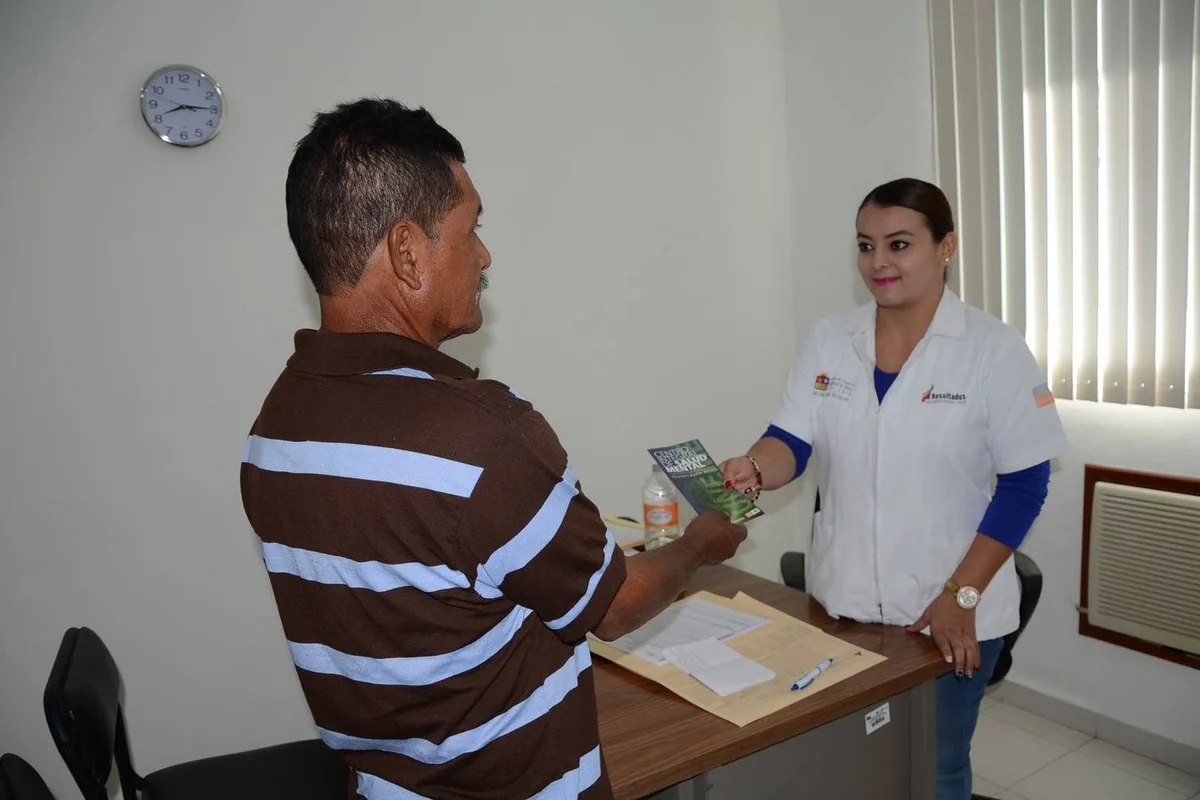
Several public agencies offer free or low-cost psychological care. One of the main options is the Centro Integral de Salud Mental (CISAME), run by the state Health Department, which provides psychological consultations, psychiatric assessment and crisis support.
- Chetumal: Rafael E. Melgar street, no number, Martínez Ross neighborhood. Phone: 983 833 9365.
- Cancún: Región 221, Calle 86. Phone: 998 132 8704.
- Línea de la Vida: 800 911 2000, confidential, anonymous support 24 hours a day.
The specialist reiterated that seeking professional support is not a sign of weakness but an act of courage and responsibility toward life. Breaking down prejudices about mental health is a collective task, she said, and normalizing therapy is the first step toward a more empathetic, fairer and genuinely healthy society.
Police under scrutiny
Last month, a state traffic officer allegedly killed his former partner and their 16-year-old daughter and then took his own life inside a home in Chetumal.
After the double femicide, the Public Security Department (SSC) said its officers undergo constant training programs, in addition to background checks, to ensure they comply with the institution’s rules.
Deputy Public Security Secretary Fernando Viveros Hernández said officers reported for domestic violence are sent to a workshop program called “Reeducando masculinidades” (Re-educating Masculinities), which involves weekly three-hour sessions over 20 weeks.
Any complaint against an officer goes to the Internal Affairs Directorate, which builds the case, and then follows an internal process until a ruling is issued, he said.
“It is a process that starts with a complaint before Internal Affairs, Internal Affairs carries out the corresponding investigation and passes the file to the Honor Council, and the council is the one that decides on suspension or, where applicable, definitive dismissal,” Viveros said.
Quintana Roo Government Secretary Cristina Torres Gómez urged the public to report any case of family violence, gender violence or abuse committed by public servants, “wherever they work.”
“Whenever a person has a situation in their family involving alleged crimes or violence by a public servant — a police officer, an official, a bureaucrat — we will always be attentive so we can act with consequences,” she said.
More Community
- Cancún Taxi and Airport Transport Drivers Clash Over Passengers in Front of Tourists
- CROC Backs Puerto Aventuras Mototaxi Drivers and Names Interim Union Leader
- Playa del Carmen Union Updates Registry of Musicians and Artists on Quinta Avenida
- Cancún Construction Blocks Blue Crab Migration Routes to the Sea
- Playa del Carmen to Open 100-Cart Corridor to Boost Local Sales
More Quintana Roo
- Mexican Navy Removes 181 Tons of Sargassum From Quintana Roo in a Single Day
- Belizean NGO Warns of Rising Manatee Deaths in Chetumal Bay
- Property Sales Fall Up to 40% in Quintana Roo as Economic Crisis Bites, AMPI Warns
- Banxico Cuts Rate to 6.25% in Surprise 3-2 Vote
- Quintana Roo Tightens Tourism Oversight to Curb Fraud Ahead of Winter Season