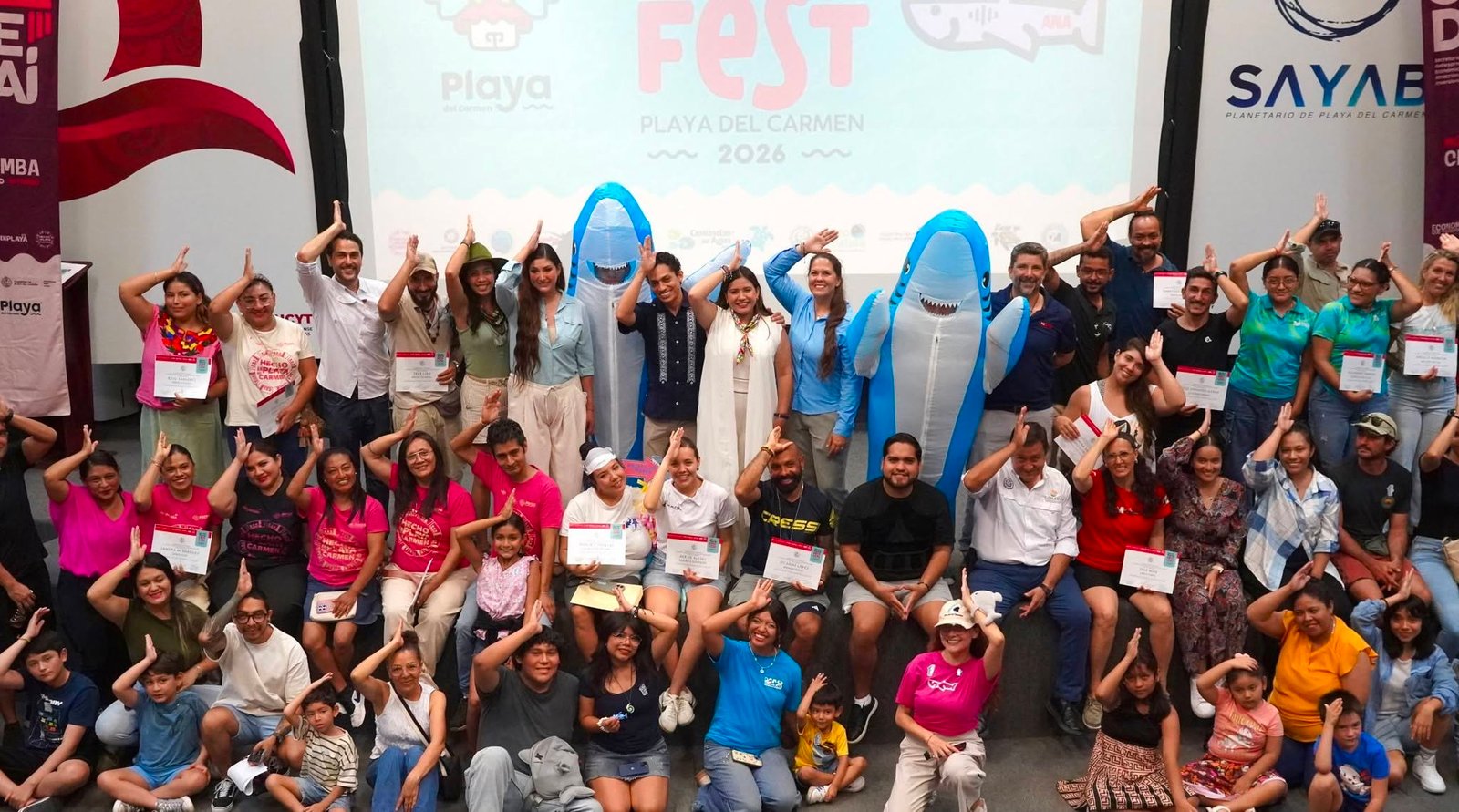
Playa del Carmen, Quintana Roo — More than 500 people attended the second Tiburón Toro Fest on Saturday, July 25, bringing scientists, conservation organizations, dive operators, artisans and local families together for an evening focused on one of Playa del Carmen’s most recognizable marine species.
Held at the Sayab Planetarium, the festival included more than 15 conferences, workshops, educational activities and public presentations examining the biology, conservation and economic importance of the bull shark. Information booths also allowed participating organizations to explain their research and environmental programs directly to visitors.
The event was organized with support from Playa del Carmen’s municipal government, Ba’alché Proyecto Azul and MarAlliance. Municipal officials said the collaboration has been underway for more than two years and forms part of a broader effort to treat the seasonal bull shark aggregation as both a conservation priority and an important element of the city’s identity.
Estefanía Hernández, Playa del Carmen’s secretary of economic development and investment attraction, formally opened the festival. She said the event reflected years of cooperation among researchers, environmental advocates, tourism operators, authorities and members of the diving community.
The municipality described the festival as an opportunity to translate scientific research into information that residents and visitors can understand. The program included an expert panel, documentary screenings, interactive activities and workshops designed for children and families. Local artisans participating through the Hecho en Playa program also created products inspired by bull sharks and marine conservation.
Organizations and businesses represented at the event included the National Commission of Natural Protected Areas (CONANP), MarAlliance; Ba’alché Proyecto Azul; Pepe Tiburón; Par de Aletas; EcoCaribe; La Galletita de Mar; and Dive Mike.
The festival focused partly on the unusual seasonal gathering of female bull sharks off Playa del Carmen. The animals generally appear between November and March, with many believed to be in advanced stages of pregnancy.
Researchers and members of the local diving community have used photographs to identify individual sharks by their scars, pigmentation, fin shapes and other physical characteristics. A community-science project analyzed more than 10,000 photographs over five years and identified approximately 50 females, according to MarAlliance’s description of the research. The published identification catalog includes the 25 sharks most frequently observed.
Other research uses acoustic transmitters and receivers positioned along the Quintana Roo coastline. Tagged sharks emit individual signals that allow scientists to study when and where they move through the region. The system is intended to provide information that can guide conservation policies and tourism-management decisions, according to the Saving Our Sharks research program.
The seasonal aggregation has also supported the development of a specialized diving industry. Municipal officials estimate that bull shark tourism and related services benefit more than 1,600 people and attract tens of thousands of visitors interested in marine wildlife. Those figures include economic activity generated through dive centers, boats, guides, accommodations, transportation and other tourism services, according to the municipal government’s account of the festival.
The festival took place as Quintana Roo pursues a Geographical Indication for the “Tiburón Toro de Playa del Carmen” tourism activity. The application was published in Mexico’s Official Gazette on May 29, beginning the formal review process before the Mexican Institute of Industrial Property.
If completed, officials say it would be the first Mexican geographical indication centered on a living animal and a nature-tourism activity. The proposal seeks to recognize the connection between Playa del Carmen’s waters, the seasonal shark aggregation and the specialized observation and diving practices developed locally.
The designation should not be confused with direct legal protection for the bull shark. A geographical indication primarily protects the name and place-based characteristics of an activity while supporting agreed operating standards. Wildlife protection, fishing regulations and management inside federal marine areas remain governed through separate environmental laws and agencies.
The Quintana Roo government said the application must complete legal review and a period for objections before recognition becomes final. Officials have indicated that the declaration is expected to be published on July 29. The state government’s original announcement emphasized conservation, responsible wildlife observation and economic opportunities tied to keeping the sharks alive.
Organizers said Tiburón Toro Fest will return in 2027, although a date for the next edition has not been announced.
More Environment
- Mexican Caribbean Has Lost More Than 70% of Its Corals, UNAM Scientist Warns
- Sargassum Barrier Installation Begins in Puerto Aventuras
- Cancún to Open Glass Collection Center as Part of Circular Economy Push
- Cave Divers Push to Revive Jacinto Pat Museum in Tulum to Showcase Caves and Underground Rivers
- Snakes Account for Nearly Half of Cancún’s Wildlife Reports, Firefighters Say
More Playa del Carmen
- Félix the Dog Rescued from Seized Villamar Home
- Two Women Arrested on Drug Dealing Charges in Playa del Carmen
- Prosecutors Seek Public’s Help to Find 24-Year-Old Missing Man in Playa del Carmen
- Facade Chunks Fall Onto Playa del Carmen’s Quinta Avenida, Prompting Closure
- Playa del Carmen New Urban Development Plan Approval Slated for Early 2027