
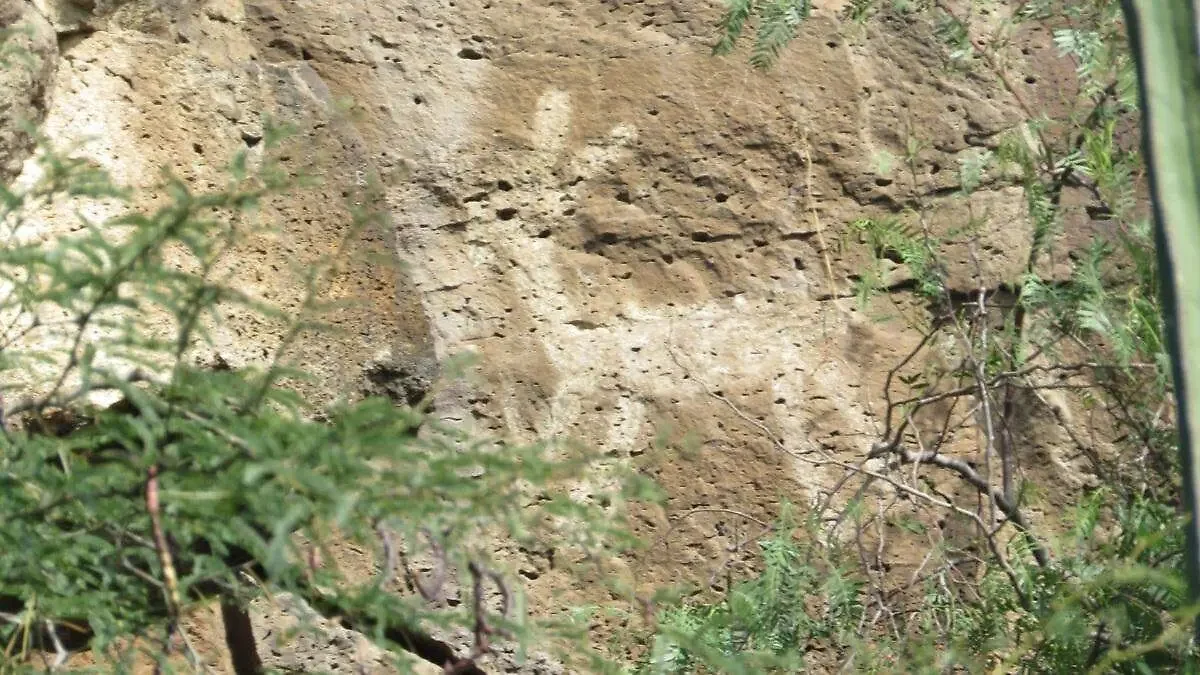
Tula, Hidalgo — Archaeologists have discovered 16 ancient rock paintings and carvings in central Mexico, a find significant enough to force the rerouting of a major passenger train project.
The National Institute of Anthropology and History (INAH) confirmed the discovery at Site 77, known as El Venado, located near the Tula River and La Requena dam in Hidalgo state. The site sits near the communities of San José Acoculco in Atotonilco de Tula and Benito Juárez in Tepeji municipality.
The artwork includes anthropomorphic figures, ritual symbols, and characters with headdresses linked to ancient beliefs. INAH officials say the findings could date from prehistoric times through the Postclassic period (900-1521 AD), with some possibly over 4,000 years old.
Among the documented figures are:
- Profile characters with stepped chest designs and shields in hand
- A representation with headdress and goggles similar to Tláloc, apparently carrying a club
- Another figure with a headdress, extended limbs, and a circular object between the legs
- A face with a nose ornament and headdress
- A quadruped possibly related to a deer
- A white negative stripe over red pigments
- A stylized anthropomorphic figure painted in red
- A line that could represent a snake or descending lightning
Project coordinator Víctor Francisco Heredia Guillén announced that some elements were discovered on January 3, 2026. He explained that the paintings were likely made with mineral or vegetable pigments, while the petroglyphs were created using a pointillism technique.
Archaeologist Abel José Romero García, part of the research team, noted the paintings are in good condition and estimated several pre-Hispanic works could relate to the final stage of ancient Tula.
The area had been registered since the 1970s as part of the Tula Archaeological Project coordinated by researcher emeritus Eduardo Matos Moctezuma. During that period, a painting alluding to a deer was located, giving the hill its current name.
Near the Tula River, researchers identified other representations including a figure with fangs, antennas, a breastplate, and goggles similar to Tláloc, with legs resembling those of a bird. These features recall expressions of the Mogollon culture, developed in the southwestern United States and northern Mexico, with comparable findings in Puebla.
Another image shows an anthropomorphic face with hair and limbs resembling bird legs or horse hooves, which specialists believe could correspond to a later period, possibly linked to contact between indigenous populations and Spanish colonizers.
After each discovery, INAH conducted photographic and photogrammetric recording of the manifestations for detailed analysis and comparative dating with other regional sites.
The significance of the find extended beyond academia. The original route of the Mexico City-Querétaro passenger train would have passed through the area containing the paintings and petroglyphs. In October 2025, President Claudia Sheinbaum Pardo announced the route modification to preserve this heritage.
INAH reported reaching agreements with the National Defense Secretariat to continue railway construction without destroying what they call one of the most surprising archaeological testimonies recently discovered in Hidalgo.
More Environment
- Quintana Roo Governor Invites Tulum Jaguar Park Vendors to Register for Certification
- Cancún Orders Removal of Grounded Boats From Nichupté Lagoon
- Profepa Shuts Down Work Damaging Coastal Dune in Yucatán
- Yacht Grounded on Mahahual Reef Caused No Coral Damage, Conservationists Say
- Playa del Carmen Awaits Federal Approval to Return 20,000 Tons of Sand Recovered from Sargassum
