
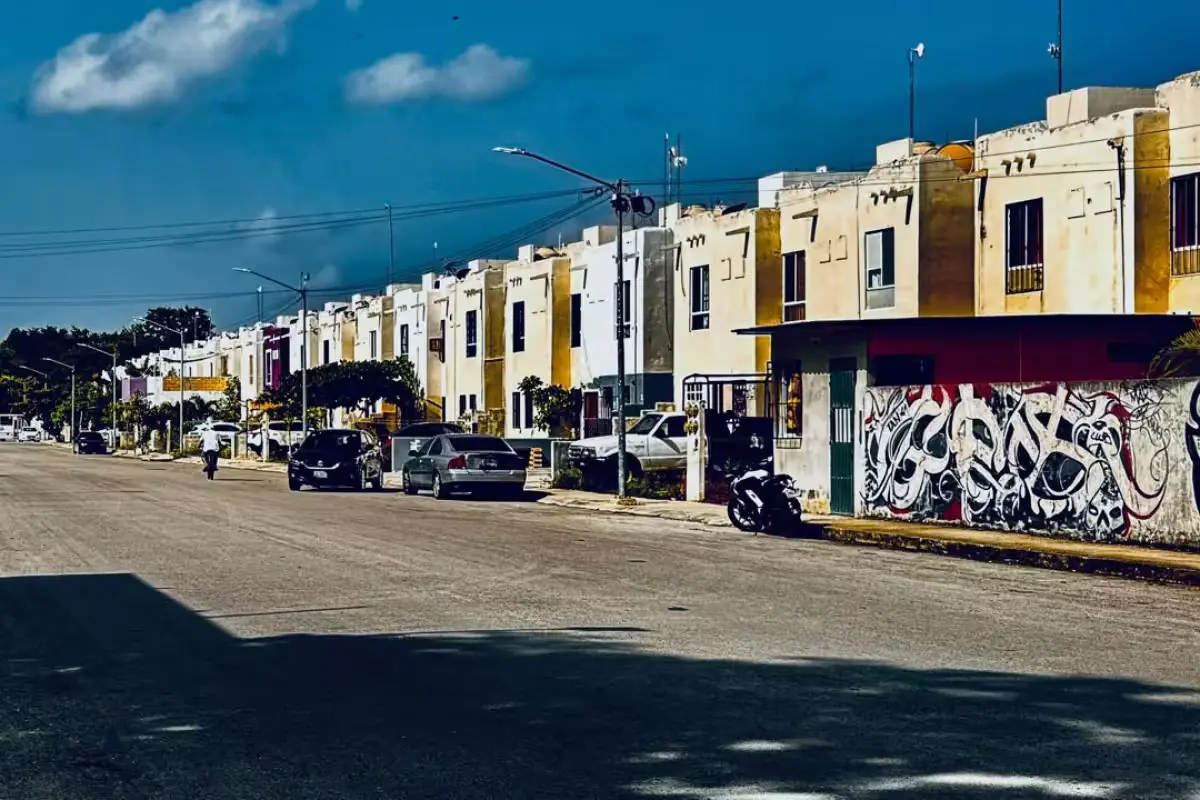
Playa del Carmen, Quintana Roo — Real estate development in Playa del Carmen is advancing without the planning it requires, threatening the area’s environment and straining public services, activists and specialists warn. They point to the sale of forest land and the construction of new projects across a region defined by karst soil, caves and cenotes.
Activist Alejandro Durán said lots are being sold without the corresponding land-use changes, a practice he said fuels deforestation and creates new social problems. He also questioned whether the authorities responsible for enforcing environmental law are doing their job.
Durán said vegetation in Playa del Carmen is being stripped away to make room for new real estate projects, while lots are marketed with little public information about the environmental condition of the land or what can legally be built on it.
“As long as urban development is not brought into order, urban anarchy is a serious threat in both the short and long term, because they are destroying all the vegetation without permits from the authorities,” he said.
He added that some plots are offered through payment plans and sold without studies establishing what type of construction is permitted, particularly because the region’s karst subsoil contains caves and cenotes that can shelter protected species.
Environmental Reviews Required Before Construction
Biologist Gabriel Robles said developers must complete the relevant environmental procedures before breaking ground on housing. Depending on the project, that includes obtaining approval of an Environmental Impact Statement, known in Mexico as a MIA, from the Secretariat of Environment and Natural Resources (Semarnat).
Robles said land-use changes on forest land must also be processed with environmental authorities where applicable. One of the central problems, he argued, is that some projects begin logging or clearing before they have complied with the law.
The specialist also cited Article 97 of Mexico’s General Law for Sustainable Forest Development, which restricts approval of land-use changes on forest land damaged by fire, logging or clearing for a set period, subject to exceptions allowed under the same legislation.
Engineer José Antonio López said the city’s infrastructure and services are already falling behind.
“We have problems with drinking water, electricity, public transport, mobility, road signage, public schools, markets, green areas, global warming and insecurity,” he said.
López said new real estate developments continue to be authorized despite those conditions, which in his view increases pressure on existing services and infrastructure.
Activist Luis Rodríguez agreed that the real estate expansion is displacing wildlife. He also said some plots containing cenotes are being sold for possible development, despite the environmental restrictions that can apply to such sites.
Rodríguez explained that land-use changes on forest land are subject to specific procedures, and that under the law authorizations must rest on technical studies and, where applicable, take into account the opinion of the State Forest Council.
Durán said the lack of planning is reshaping Playa del Carmen’s geography and encouraging the subdivision of land for sale. He called on authorities to step up oversight and to make sure real estate projects comply with environmental rules before vegetation is cleared and new construction goes ahead.
More Development
- Ejido Leona Vicario Orders Audit of 12 Million Pesos Land Regularization Contract
- Activists Find Archaeological Remains at Playa del Carmen Hotel Site
- Activists in Playa del Carmen Demand Resignation of Quintana Roo Environment Chief Over Alux 33 Approval
- Playa del Carmen Opens 30 New Businesses in August Despite Economic Slowdown
- Mexico Shuts Down Coastal Dune Works in Chabihau Over Destruction of Protected Vegetation
More Playa del Carmen
- Gunmen Fire on Ride-Hailing Drivers Along Playa del Carmen-Tulum Highway
- Restaurants Close on Playa del Carmen’s Quinta Avenida as Chains Eye Year-End Openings
- Playa del Carmen Launches ‘Parquemanía’ to Revive Public Parks
- Playa del Carmen Council Approves New Unit for Older Adults
- Cuban Man Arrested in Playa del Carmen Over Cancún Fatal Shooting