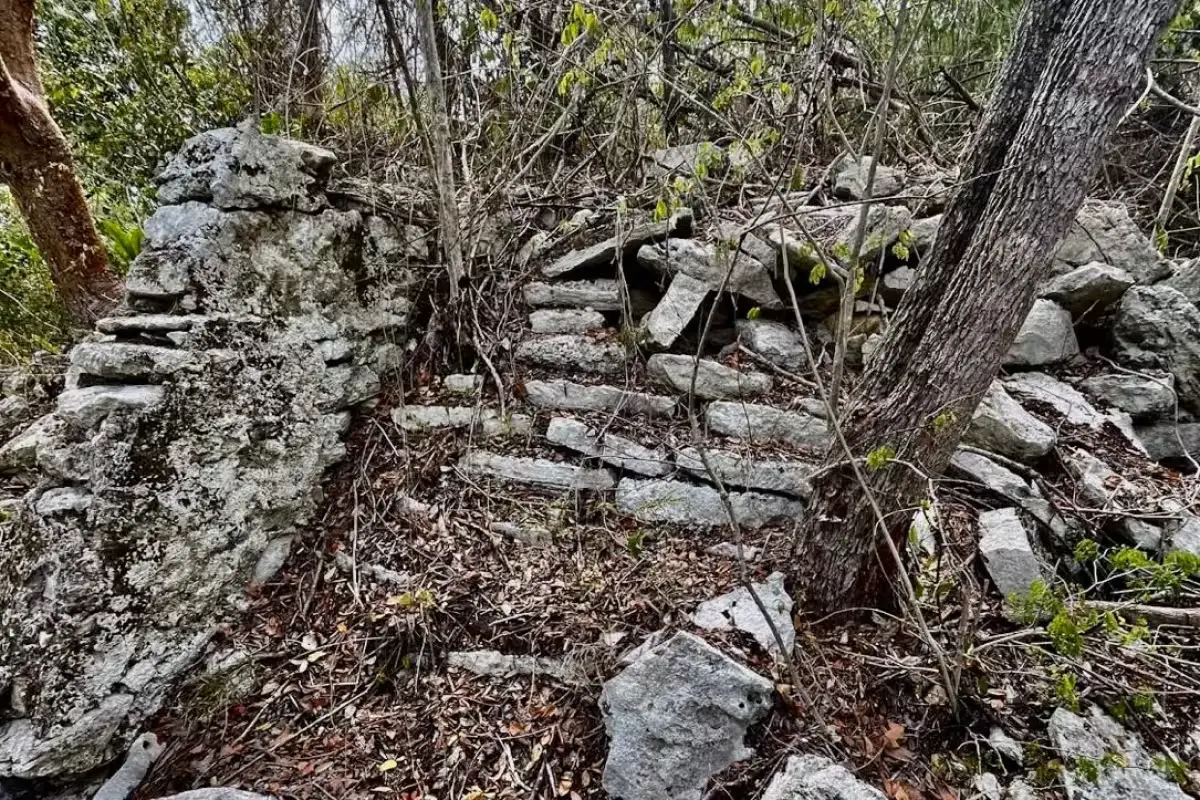
Playa del Carmen, Quintana Roo — Activists exploring the Punta Venado property in Playa del Carmen, where a hotel complex of more than 200 rooms is proposed, say they have documented archaeological remains and protected species, and are demanding thorough studies before officials authorize any construction.
Activist Elías Siebenborn said the archaeological remains found in the area are significant because they help reconstruct part of humanity’s past, its ways of life and its cultures, especially at sites where no written records exist.
“We have found not only caves with endangered fish, but also archaeological remains near the property, and we are still gathering information on them,” he said.
He argued that the National Institute of Anthropology and History (INAH) should carry out its own investigation to identify and protect these elements and prevent damage to historical heritage.
Fellow activist Natalia Méndez said authorities should conduct an in-depth investigation into the area’s real conditions and determine which species could be at risk before approving any hotel development.
Project Promoted by Oleum Joint Venture
The development is being promoted by Oleum Joint Venture S. de R.L. de C.V., which aims to build more than 200 rooms on a property considered fragile because of the range of ecosystems it contains. The technical report for the unified environmental impact document was prepared by Mercado Bejar, González Silva y Asociados.
Activist Roger de la Mora said volunteers with Cenotes Urbanos de Playa del Carmen are continuing to survey the property to document species protected under Mexican Official Standard NOM-059-SEMARNAT-2010, which sets risk categories for native wild flora and fauna.
Siebenborn said the developer appears to have submitted incomplete information about the property’s conditions to the General Directorate of Environmental Impact and Risk (DGIRA) of the Environment and Natural Resources Department (Semarnat). He called on municipal and state authorities to carry out field inspections to verify the contents of the environmental impact statement (MIA) and establish the site’s actual conditions.
In the reef zone alone, he said, activists have identified around 120 marine species, including 16 types of coral — 13 hard corals and three soft corals. Five of those species fall into a risk category and one is subject to special protection, among them the coral known as elkhorn coral, he said.
Siebenborn warned that determining the conservation status of the species requires longer observation periods and said some of the information gathered during their surveys was not included in the environmental impact statement submitted to Semarnat.
De la Mora said no complete record of the archaeological remains inside the property exists yet because of the dense vegetation, so volunteers will continue their exploration and documentation work.
More Development
- Drought Crisis Forces Quintana Roo Wildlife to Seek Water Near Roads and Towns
- Quintana Roo to Add 10,000 Hotel Rooms by 2028
- Farm and Cattle Expansion in Quintana Roo Squeezes Native Wild Bees
- UIMQROO to Build Student Dormitories With 19 Million Peso Investment
- Activists Warn Playa del Carmen Real Estate Boom Is Driving Deforestation
More Playa del Carmen
- Dead Sea Turtle Hatchlings Found With Dog Bites at Playa del Carmen Beach
- Former AMPI Playa del Carmen President Faces Fraud Case Over Undelivered Land
- Gender Identity Change Discount Benefits 10 People in Playa del Carmen
- Gunmen Fire on Ride-Hailing Drivers Along Playa del Carmen-Tulum Highway
- Restaurants Close on Playa del Carmen’s Quinta Avenida as Chains Eye Year-End Openings