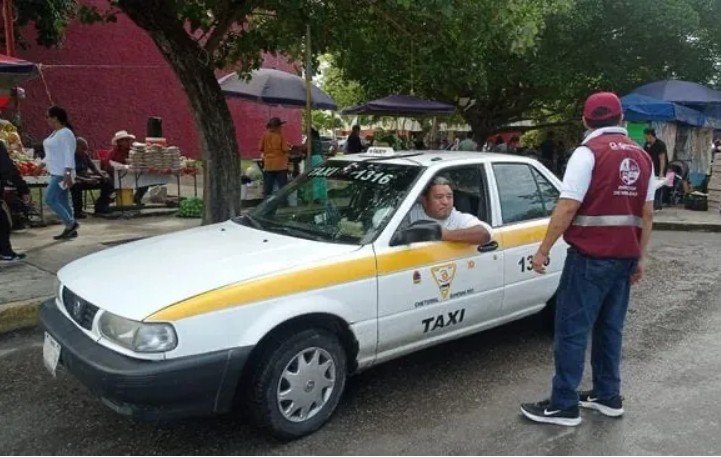
Cancún, Quintana Roo — The Quintana Roo Mobility Institute (Imoveqroo) has sanctioned 42 public transport operators — primarily taxi and minibus drivers — so far this year, following various infractions and citizen complaints.
Of the administrative proceedings, three resulted in the permanent revocation of driver’s licenses, while 11 cases remain under active investigation, the agency reported.
Rafael Hernández Kotasek, Imoveqroo’s director general, said the majority of incidents occurred in Playa del Carmen. He clarified that penalties were applied exclusively to drivers’ licenses, not to vehicle concession rights.
Under current regulations, the institute distinguishes between operator misconduct and vehicle condition. Complaints about mistreatment, overcharging, or traffic violations lead to license suspensions or revocations. Mechanical failures or lack of maintenance result in fines or seizure actions against the concession and its holder.
Hernández Kotasek noted that centralizing driver’s license issuance at the state level eliminated regulatory gaps from the previous system, where each municipality issued its own licenses. The unified system prevents a suspended operator from simply obtaining a new license in a neighboring municipality.
“The resource still belongs to the municipalities, but it is managed in a single state-level system,” he said. “Before, if I suspended you as an operator in Playa del Carmen, you would likely go to Puerto Morelos and get a license there. Now, when operators are suspended, it’s statewide.”
The institute also detected the proliferation of informal networks and instant messaging groups offering fraudulent driver’s licenses. Hernández Kotasek urged the public to avoid these illegal channels and report fake facilitators. He stressed that the only valid methods to obtain a license are through official Imoveqroo mobile modules or designated municipal offices.
He warned that using counterfeit licenses goes beyond administrative violations and constitutes a criminal offense. Individuals attempting to use fake documents at airports, banks, or federal agencies could face legal consequences, including criminal liability for both the forger and the end user.
More Law Enforcement
- Man Gunned Down in Playa del Carmen; No Arrests Made
- IMSS Hospital Deputy Director in Cancún Reports Death Threats After Viral Video
- More Than 200 Children Evacuated From Chetumal Daycare After Electrical Fault
- US Expands Visa Restrictions Targeting Birth Tourism
- Judge Binds Over Driver in Fatal Cancún Motorcycle Crash
More Quintana Roo
- Two Atlantic Low-Pressure Areas Watched; One Shows 40% Cyclone Chance
- 40-Hour Workweek in 2027 Will Speed Up Robots and AI in Hotels, IMEF Says
- Quintana Roo Reports 282 Dengue Cases, Eight of Them Severe
- Lawmakers Propose One Tree Every 15 Meters in New Quintana Roo Developments
- Trafficking Cases Keep Quintana Roo on Alert With 159 Reported in 2026