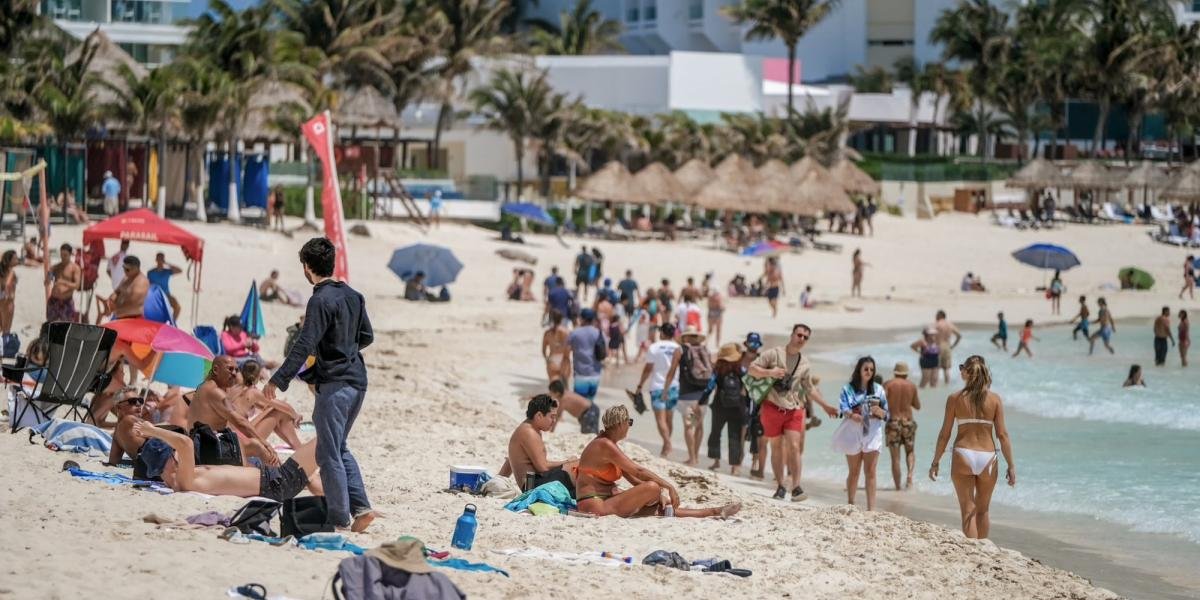
Cancún, Quintana Roo — The start of the 2026 FIFA World Cup has not delivered the tourism boost expected in the Mexican Caribbean, with hotel occupancy across the state hovering below 60%, far below the optimistic forecasts tied to the event.
Rodrigo de la Peña, president of the Hotel Association of Cancún, Puerto Morelos and Isla Mujeres, acknowledged that there was a widespread belief the tournament would bring significant benefits, but that has not materialized.
“There was a perception that there would be a major benefit for the destination, but the reallocation of flights by U.S. airlines has been decisive,” de la Peña said. “They have prioritized domestic routes in the United States, our main market, and that has significantly reduced available seats to Cancún.”
According to the hotel leader, carriers such as American Airlines and United Airlines shifted capacity to domestic flights during June, the key month for the World Cup’s opening.
Still, de la Peña noted that several weeks of competition remain and did not rule out a rebound, as summer reservations are currently between 65% and 70%.
Francisco Madrid Flores, director of the Center for Advanced Research in Sustainable Tourism (STARC), reported that a reduction of 900,000 airline seats from the United States to Cancún has already been counted for the summer 2026 season.
He said expectations regarding the World Cup’s tourism impact were set too high. He cited a study by consulting firm Deloitte titled “Get Ready for the World Cup: New Business Opportunities,” which offers a much more moderate outlook than federal government projections.
According to the document, the maximum number of international tourists expected to arrive in Mexico during the tournament is just over 800,000. Of those, the most realistic estimates point to only 280,000 foreign tourists, plus 556,000 Mexicans traveling to match venues.
The study compares the performance of the three previous World Cups: Russia 2018 attracted 2.9 million international visitors, while Brazil 2014 and Qatar 2022 each barely exceeded one million.
Deloitte emphasizes that not all matches have the same impact: only the most attractive games — based on FIFA rankings, squad value, and tournament stage — concentrate the largest flow of foreign fans, longer stays, and higher spending.
These figures contrast sharply with official estimates. The federal government had projected up to 5 million visitors nationwide.
In Quintana Roo, the state Tourism Secretariat estimated that at least 40% of international tourists — about 2 million — would arrive through Cancún International Airport, and that at least one million would stay in Mexican Caribbean resorts during the tournament.
More Economy
- Mexico City, Cancún and Puerto Vallarta Top Searches for Independence Day Weekend
- Coparmex Backs Bid to Add Bacalar to Chetumal Airport Name
- Unpaid Municipal Debt Worsens Garbage Crisis on Holbox
- US Pushes Rules of Origin for AI Hardware in USMCA Talks With Mexico
- Cancún Airport Posts Worst Day in Decades as Tourism Slump Deepens
More Cancun
- Cancún Orders Removal of Grounded Boats From Nichupté Lagoon
- Cancún Mayor Ana Paty Peralta Says She Will Finish Her Term and Skip ‘Gino’ Segura’s Campaign
- Father of Emma, Girl at Center of Cancún Abduction Case, Denies Being Violent
- Coparmex Cancún Tallies Economic Losses From Rolling Blackouts
- Cancún Urban Development Plan Reaches 50% as Officials Weigh Where City Can Grow