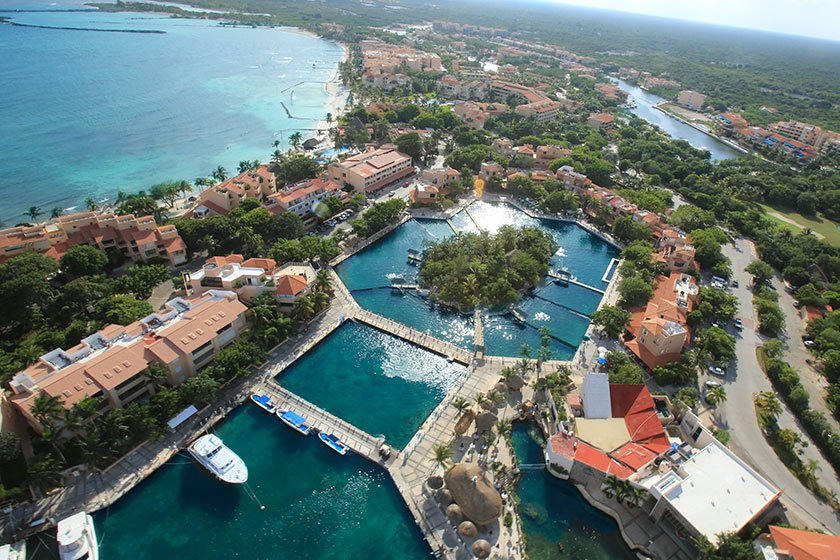
Cancún, Quintana Roo — A company closely associated with Grupo Xcaret has offered $20 million plus value-added tax for five Mexican operations owned by the financially troubled Dolphin Company, including marine parks in Cozumel, Isla Mujeres and the Riviera Maya.
The proposed transaction is not a purchase of The Dolphin Company in its entirety. It is an asset sale being pursued through the company’s Chapter 11 bankruptcy proceedings in the United States, and it still requires approval from the U.S. Bankruptcy Court for the District of Delaware and Mexican regulators.
According to a sale motion filed in the bankruptcy case, Delphinus Blue Planet, S.A.P.I. de C.V. has agreed to purchase specified real estate, operating assets, permits, concessions and marine animals connected to five operations:
- Aquatours in Cancún
- Dolphin Discovery Isla Mujeres
- Dolphin Discovery Cozumel
- Dolphin Discovery Puerto Aventuras
- Dolphin Discovery Maroma
The proposed sale also covers 87 dolphins, six sea lions and eight manatees currently housed at the facilities, according to a summary of the Delaware bankruptcy filing.
Under the proposed payment structure, Delphinus would deposit $15 million before closing. The remaining $5 million would be paid once specified Mexican regulatory requirements were satisfied. The purchase price would also be subject to Mexican value-added tax.
The bankruptcy court had not approved the sale as of July 30. Objections to the transaction and challenges involving the assumption of contracts were due August 7.
Delphinus operates dolphin habitats at Xcaret and Xel-Há, as well as facilities in Cancún and the Riviera Maya. Its public-facing website describes Xcaret and Xel-Há as partner locations. The proposed buyer is widely identified with the business network connected to Grupo Xcaret, although the court filing names Delphinus Blue Planet, rather than Grupo Xcaret itself, as the purchaser.
Bankruptcy Process Produced No Other Actionable Offer
The Dolphin Company’s parent, Leisure Investments Holdings LLC, filed for Chapter 11 protection in Delaware on March 31, 2025, following loan defaults, liquidity problems and a dispute over control of the company.
Court filings show that advisers Greenhill and Keen-Summit contacted 122 potential buyers during an approximately eight-month marketing process. The company told the court that the process did not produce another actionable offer for the Mexican assets.
The proposed sale would be conducted under Section 363 of the U.S. Bankruptcy Code, a process that allows companies in bankruptcy to sell assets with court approval. The debtors are requesting authorization to transfer the properties and operations free of most existing claims and liens, with those interests generally attaching to the sale proceeds.
The company has already sold or transferred other properties and interests in the United States, Europe and the Caribbean as its restructuring increasingly moves toward asset sales and an eventual wind-down or reorganization.
Former Management Challenges The Transaction
The sale has become another point of conflict between The Dolphin Company’s current restructuring team and founder and former chief executive Eduardo Albor.
Albor’s representatives argue that the $20 million offer is substantially below previous valuations of the Mexican properties. They also contend that Mexican court proceedings restrict the transfer of company assets and that the current management did not have the authority to place the business into Chapter 11.
The current restructuring team disputes those claims. Independent director Steven Strom and chief restructuring officer Robert Wagstaff maintain that they remain the company’s authorized representatives and that the Delaware bankruptcy is valid. They have accused former management of interfering with the restructuring and mischaracterizing Mexican court decisions.
A Delaware judge held an evidentiary hearing July 20 and 21 on the continuing dispute over company control and whether the Chapter 11 cases should remain in the United States. That matter had not been fully resolved when the Mexican asset-sale request was filed.
Albor ceased participating in the company’s operations in March 2025, when creditors replaced the previous leadership. The competing groups continue to dispute whether that removal was legally valid.
Competition Review Could Become A Major Issue
Albor’s representatives claim the transaction would give the buyer control over more than 90% of Mexico’s dolphin-habitat market. That percentage has not been confirmed by Mexico’s competition authority, and the relevant market would have to be formally defined before regulators could determine whether the sale creates an unlawful concentration.
Nevertheless, the competition question is significant. In 2023, Mexico’s former Federal Economic Competition Commission blocked a proposed acquisition involving dolphinariums in Cancún, Tulum and the Riviera Maya. The agency concluded that the transaction, as proposed, would reduce the number of competitors, potentially increase prices and create problems in a market with high barriers to entry. That decision specifically examined dolphin-entertainment services in Quintana Roo.
Competition responsibilities have since transferred to Mexico’s National Antimonopoly Commission. Depending on the transaction’s structure and financial thresholds, its authorization could be required before the sale closes.
The review would likely consider not only the number of facilities involved, but also the parties’ relationships with major tourism parks, hotels, travel agencies and excursion-distribution networks.
Animals Would Transfer With The Operations
The inclusion of 101 marine mammals adds another layer of regulatory oversight. Any transfer would have to comply with Mexican wildlife rules, veterinary requirements and the individual management plans and permits governing each facility.
Mexico also significantly tightened its laws governing captive marine mammals in 2025. The reforms restrict their use for entertainment and prohibit breeding and the acquisition of additional animals, while requiring plans for the care and eventual handling of animals already held in managed facilities.
Those changes mean the value and future operation of dolphin parks cannot be assessed under the business model that existed when many of the facilities were developed. The buyer would inherit the responsibility for long-term food, veterinary care, staffing and maintenance for animals that may live for decades, even as commercial activities are restricted.
For now, all five operations remain part of The Dolphin Company’s bankruptcy estate. Delphinus has submitted the leading purchase agreement, but ownership will not change unless the Delaware court approves the transaction and the parties satisfy the necessary Mexican competition, environmental and wildlife requirements.
More Business
- Quintana Roo to Add 10,000 Hotel Rooms by 2028
- Cancún’s Teatro de la Ciudad Nears 75% Capacity Ahead of Second Anniversary
- BBVA México and IMEF Warn Capping ISR Deductions Would Discourage Private Investment
- Mexico’s Customs Fines Jump 131% in First Half of 2026
- Former AMPI Playa del Carmen President Faces Fraud Case Over Undelivered Land
More Cancun
- Cancún Hoteliers Plan Rate Hikes of Up to 35% for Winter Season
- Cancún Taxi Driver Shot, Drives Himself to IMSS Hospital
- Cancún Travel Mart 2026 Sets Sights on More Mexican Caribbean Business
- Quintana Roo Marks 216th Anniversary of Mexico’s Independence With Statewide Celebrations
- Cancún Motorcycle Taxi Drivers Protest After Two Vehicles Torched