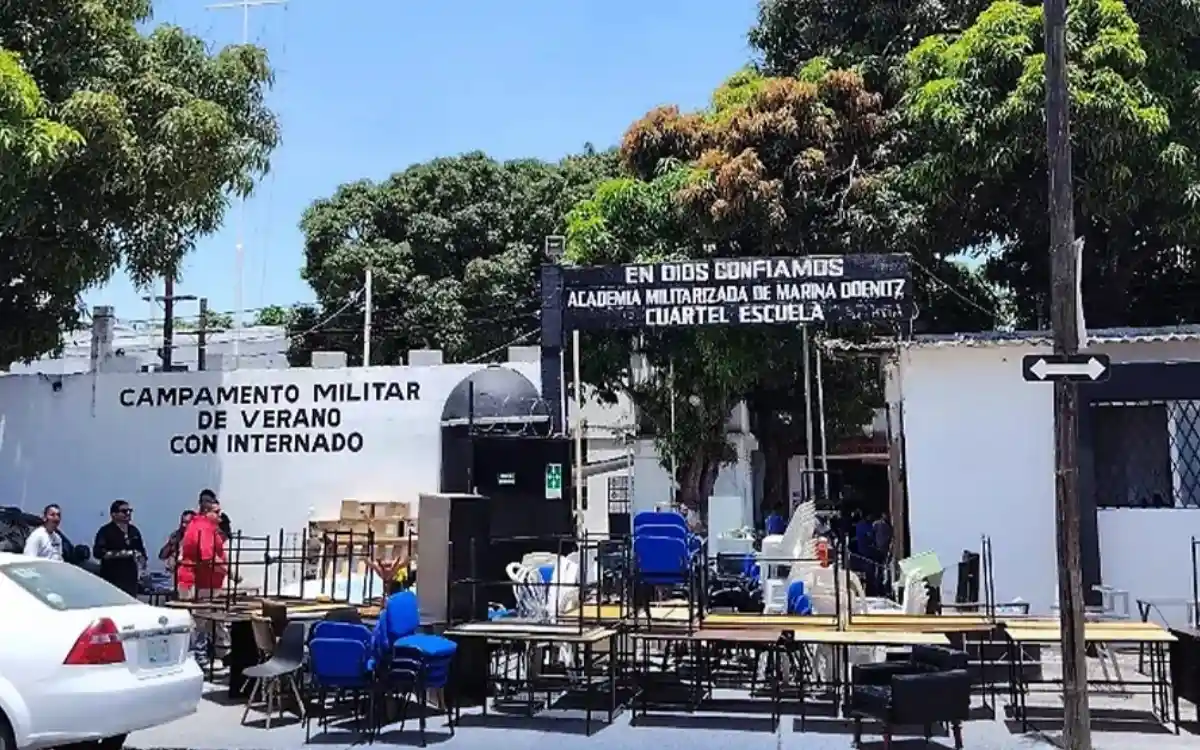
Mexico City — Mexico’s Education Ministry (SEP) has ordered the closure of all schools operating under a military-style model nationwide, effective before the start of the 2026-2027 school year.
Education Secretary Mario Delgado announced Wednesday that state and Mexico City education authorities must ensure that by August 31, 2026, no institution offers educational services under the designation “militarized,” “military,” “castrense,” or any similar term referring to military instruction or discipline.
In a statement, the SEP said Delgado instructed state education departments to conduct a thorough review of all authorizations, permits, and official validity recognitions (RVOEs) issued in their jurisdictions.
“When institutions operating under such names or modalities are detected, their activities will be suspended and administrative procedures for their definitive closure must be initiated,” the ministry said.
The SEP added that schools must immediately hand over all academic documentation to affected students, including partial or complete certificates, to ensure their education can continue at alternative institutions.
Any prepaid fees for services such as re-enrollment, school supplies, uniforms, or other concepts must be refunded promptly by the schools.
The order comes after the death of 13-year-old Dafne Zapata Quintos on July 16 during a summer camp at the Academia Militarizada Marina Doenitz in Ciudad Madero, Tamaulipas. The girl died days after entering the camp, and her death certificate classified the cause as homicide by drowning.
On July 25, the Defense Ministry (Sedena) stated it lacks the authority to supervise militarized schools, noting it has no power to authorize, inspect, or regulate such institutions.
Delgado said the measure aligns with President Claudia Sheinbaum’s New Mexican School model, which prioritizes human rights, a culture of peace, and humanist education.
More Government
- Playa del Carmen Launches ‘Parquemanía’ to Revive Public Parks
- Playa del Carmen Council Approves New Unit for Older Adults
- Quintana Roo Expands Tourist Police Force With Specialized Training Programs
- CURP Digital vs CURP Biométrica: What Mexico’s New ID Means for Online Bank Accounts
- Playa del Carmen Mayor ‘Very Upset’ With Parking Meter Operator Playaparq