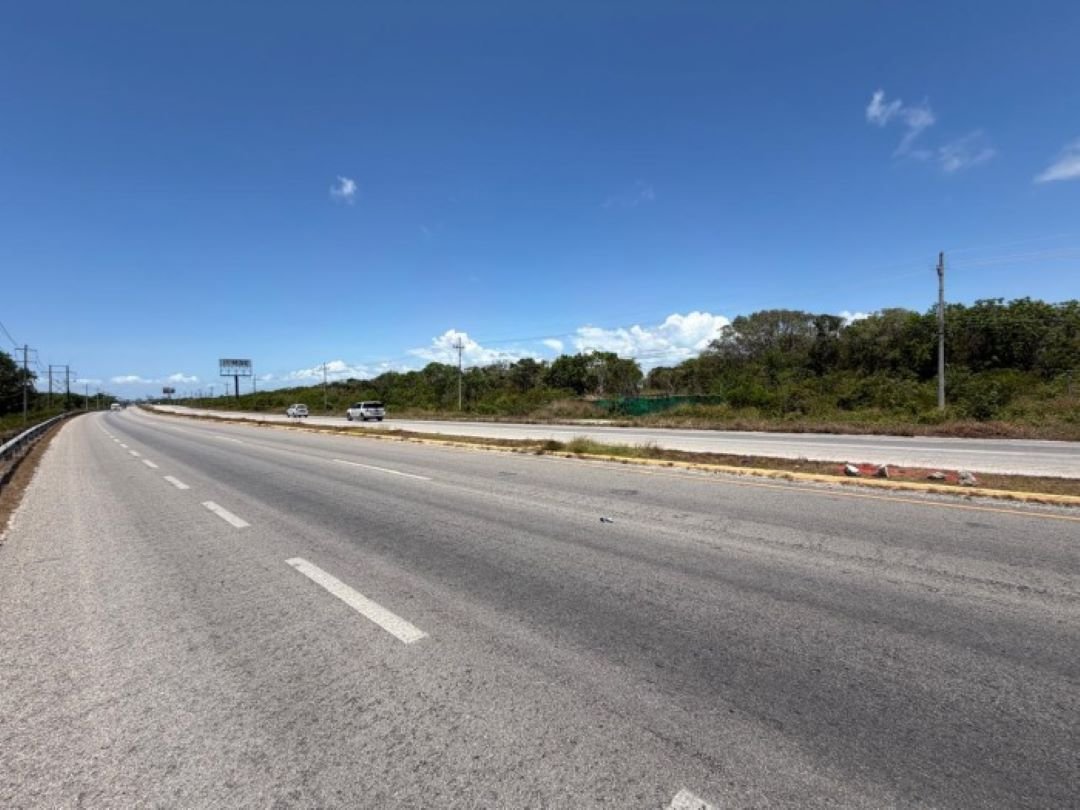
Tulum, Quintana Roo — The Tulum bypass project, a 26-kilometer highway designed to connect the Maya Train station, ease traffic on the main avenue, and link to the Felipe Carrillo Puerto International Airport, has become a flashpoint between development and environmental protection. The federal Secretariat of Infrastructure, Communications and Transportation (SICT) announced an investment of over 1 billion pesos for the road.
According to the federal government’s “Proyectos México” website, the project (registration number 0884) was listed as “completed, canceled, or without current or confirmed information” as of January 20, 2025. However, 17 months later, construction continues, with restricted access for the public and security preventing entry to the site.
The road, located on land belonging to the Jacinto Pat ejido, is described as a type A2 highway with two 3.5-meter lanes and 2.5-meter shoulders, totaling 12 meters in width. It includes three junctions: at kilometer 243+245 of Federal Highway 307 (past Cenote Dos Ojos), at Cobá, and toward Playa del Carmen.
First proposed in 2012 with an initial budget of 362 million pesos, the project was revived in August 2021 with a new cost of 1.2 billion pesos. The SICT justified the bypass as essential for mobility in the tourism-driven Riviera Maya region and for continuity of the Yucatan Peninsula corridor.
Environmental Impact and Land Speculation
Environmentalist José Urbina Bravo, of the group SelvameMX, warned that the road will spur demand for water, sewage, and electricity services, and damage the vast freshwater aquifer beneath Tulum. He also alleged that the construction site was closed by the Federal Attorney’s Office for Environmental Protection (Profepa) due to lack of permits, yet work continues illegally.
“The works are being carried out illegally, as the area was closed by the environmental authority,” Urbina Bravo said. He added that the project may be aimed at selling land for real estate developments, which would harm the jungle and local ecosystem.
Real estate developer Aztro Desarrollos Inmobiliarios published a note in December 2025 celebrating the project, stating it is 80% complete and undergoing technical and environmental adjustments. Grupo Constructor Urbica highlighted that the bypass will connect its Pandora Tulum and Pandora Av. 10 developments, increasing property values.
On-site observations show machinery from the company Madisa, including pickup trucks for personnel, water trucks for compacting sascab (limestone gravel), vegetation maintenance crews, and waste collection vehicles.
Local authorities did not respond to requests for comment. The Tulum Active Mobility Plan (Pactum) justifies the bypass as fulfilling the right to mobility, aiming for a quality, accessible, and sustainable transportation system.
More Environment
- Judge Halts Trump Border Barrier in Big Bend National Park
- US Coast Guard Seizes Cargo Ship Accused of Smuggling Fuel to Cuba
- Playa del Carmen to Renew Eight Blue Flag Beach Certifications, Eyes Two More
- Cancún Sets October Dates for Free Dog and Cat Sterilization Clinics
- Sargassum Influx Triggers Two Types of Wildlife Die-Offs in Quintana Roo
More Tulum
- Riviera Maya Hotel Chief Calls Tulum Airport ‘Critical’ as Airlines Exit
- Tulum Rethinks Real Estate Growth Over Risks to the Great Maya Aquifer
- Tulum Hosts Nine US Universities and Team Mexico at NCAA Division II Golf Shootout
- Tulum Residents Identify Five Sites Where Homeless People Gather
- Volaris to Suspend Tulum Airport Flights, Second Mexican Carrier to Pull Out