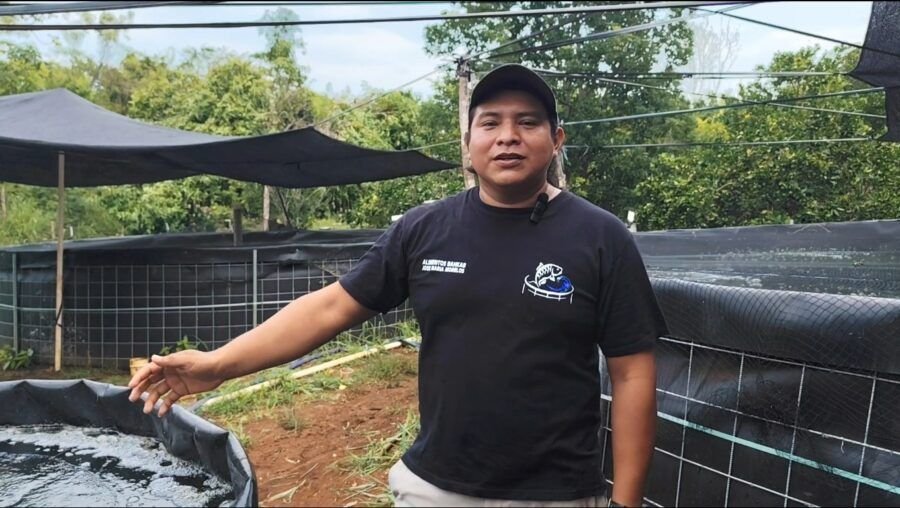
Jose Maria Morelos, Quintana Roo — Fresh tilapia production in this municipality is gaining traction as a new economic driver for the Maya zone, driven by rising local demand and consumer preference for freshly caught fish.
What began as an experimental aquaculture project has now hit an unexpected milestone: current output cannot keep up with existing market demand in the area.
Luis Bacab, a representative of the company Alimentos Bacab, said the initiative started after identifying a lack of local aquaculture production despite high fish consumption among residents.
After feasibility and cost studies, the company installed the first tanks for tilapia farming and quickly gained acceptance from consumers seeking fresh, locally sourced products.
According to Bacab, many families prefer to buy fish that is slaughtered on the spot rather than frozen products shipped from other cities, which often sit in storage for days before reaching the end consumer.
To meet growing demand, the company is expanding its infrastructure by building more ponds and incorporating automated systems to optimize production. The farm uses sensors to monitor oxygen levels in the tanks and smart feeders to improve yield and reduce operating costs.
Beyond fish sales, the project aims to generate new economic and tourism dynamics in the region. At its sales point, located on the road to Naranjal opposite the El Quebra mini-supermarket, visitors and families can observe the tilapia and even catch their own fish — an activity that has sparked interest among locals and tourists alike.
Although aquaculture still receives less institutional support compared to other primary sectors in Quintana Roo, Bacab believes such projects could become a significant source of food production and income for Jose Maria Morelos.
The growing demand and local market interest are positioning aquaculture as a viable option to diversify the economy in the state’s Maya zone.
More Business
- Mexico Extends Deadline for Electronic Customs Value Declaration to October 31
- Nacional Monte de Piedad to Reopen Chetumal Branches on October 7
- 20 Community Tourism Projects in Quintana Roo Seek to Formalize Their Operations
- Sargassum Influx Triggers Two Types of Wildlife Die-Offs in Quintana Roo
- Quintana Roo Development Agency Inherits Labor Disputes from Defunct Derimaya
More Zona Maya
- Quintana Roo Opens 2026 Poetry Contest for Indigenous and Afro-Mexican Girls
- Drought Damages Farmland in Felipe Carrillo Puerto as Quintana Roo Assesses Losses
- Aluxes Endure in the Beliefs of Maya Communities in Quintana Roo
- Search Operation for Missing People Deployed in Felipe Carrillo Puerto
- Mothers of Missing Children Ask Quintana Roo to Display Their Faces on Public Transport