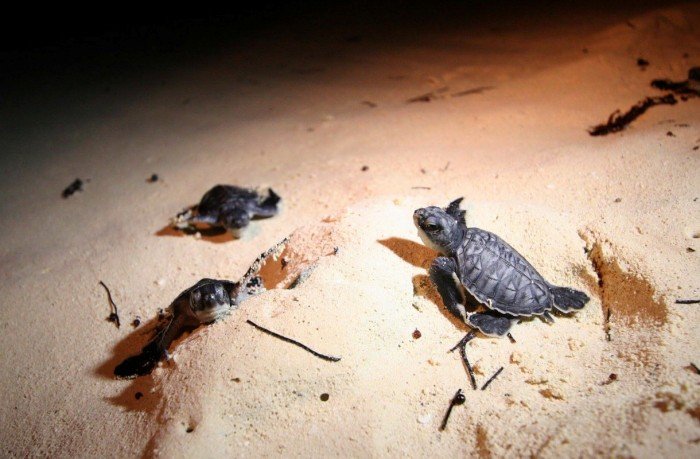
Playa del Carmen, Quintana Roo — Despite expectations of a slow nesting year, Playa del Carmen has recorded 1,200 sea turtle nests and the release of 22,000 hatchlings so far this season, putting the municipality on track to surpass last year’s totals.
Yamili Colli Cach, the municipality’s deputy director of environmental education and outreach, said sargassum does not appear to be affecting turtle arrivals or nesting.
“You know we have a high year followed by a low one. This one was considered low, but the numbers have been strong, and there are still two months left in the season,” she said.
The 2025 season was considered one of the most successful, with 1,700 nests recorded in total.
As of late August, 22,000 hatchlings have been released in Playa del Carmen, both in protected corrals and directly on the beach. Most are green sea turtles, the predominant species in the municipality.
“August is the peak for arrivals. They continue after that, but in smaller numbers. We’ve had arrivals even in November, and those hatch in December or January,” Colli Cach said.
More Environment
- Cozumel’s Reefs Get a 3D Map Divers Can Explore Before Entering the Water
- Documentary Exposes 30 Years of Pollution in Cancún’s Chacmuchuch Lagoon
- Crocodile Surprises Tourists Swimming at Cozumel’s El Cielo Sandbar
- Playa del Carmen Calls Volunteers to Clean More Than 7 Kilometers of Beach
- Tulum Fishing Cooperative Seeks Funds to Expand Facilities and Sustain 70 Families
More Playa del Carmen
- LIPU Bus Rear-Ends Van, Flipping It Off Highway 307 Near Playa del Carmen
- Woman Shot Dead on Motorcycle With Her Daughters in Playa del Carmen
- At Least Four Women Shot Dead Across Quintana Roo Over the Weekend
- Xcaret Says It Will Abide by Any Supreme Court Ruling on Use of Maya Culture
- Morena Launches 11 Municipal Races in Quintana Roo: Who’s In?