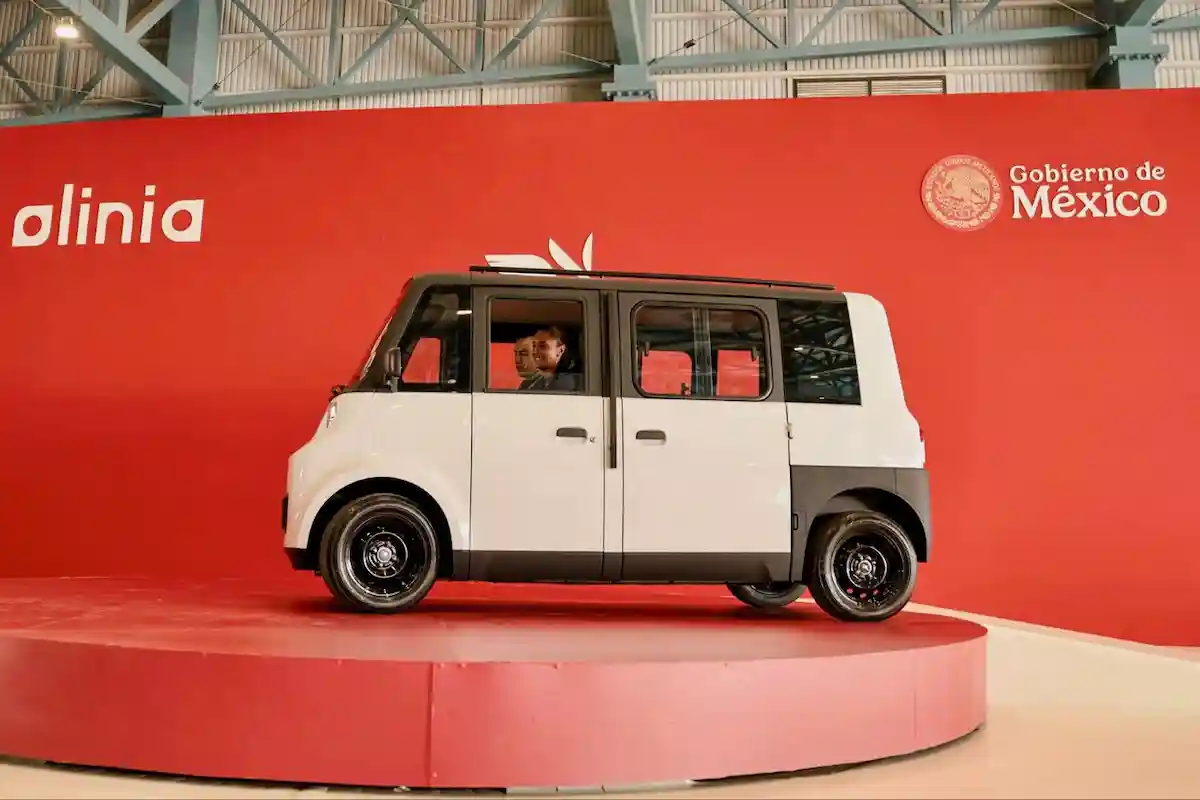
Mexico City — After 18 months of development, Mexico’s government-backed Olinia electric vehicle has been unveiled, but it cannot be sold because it fails to meet the country’s safety standards.
The vehicle, intended as a low-cost electric option, is smaller than expected — more akin to a golf cart than a traditional car like a Nissan March or Chevrolet Spark. Under Mexican regulations, all vehicles must comply with NOM-194-SE-2021, which mandates safety equipment including tire pressure monitors, electronic stability control, anti-lock braking systems (ABS), and airbags. The Olinia has none of these.
To allow the vehicle to reach the market, the government is working on creating a new vehicle category that would classify the Olinia as an intermediate between a golf cart and a conventional car. It is not designed for highways or high-speed roads, but for short trips within a neighborhood or to an adjacent one.
The concept is not new. In Europe, similar vehicles like the Fiat Topolino and Citroën Ami are classified not as cars but as heavy quadricycles. The Olinia follows the same logic: it is not meant to be a family mobility solution but a local alternative for people who live and move within a limited area without needing to access fast roads or highways.
The legal framework for selling the Olinia is still under development. Since the project is government-driven, it is expected that the legislation will be tailored to the vehicle. Key questions remain: Will a driver’s license be required? Will it need a registration card? Will it have to pass emissions inspections in states of the Megalopolis region? And most importantly, will it receive standard license plates or a special designation distinguishing it from cars and motorcycles?
More Business
- Mexico’s New Digital Law: What Happens to Cash?
- Cancún–Isla Mujeres Boat Cooperatives Sink Under Heavy Losses as Only 20 of 130 Vessels Stay Active
- Vacation Rental Host Confronts Visitax Charge at Cancún Airport
- Quintana Roo Grants Tax Breaks to Mototaxi Operators
- AMEXME Riviera Maya Holds First General Assembly of Members in Playa del Carmen